How to calculate your LTV to CAC ratio
Does each customer earn back what it cost to win them? Enter what a customer is worth over time (LTV) and what it costs to win one (CAC), then drag to see the shortest way to a healthy 3:1.
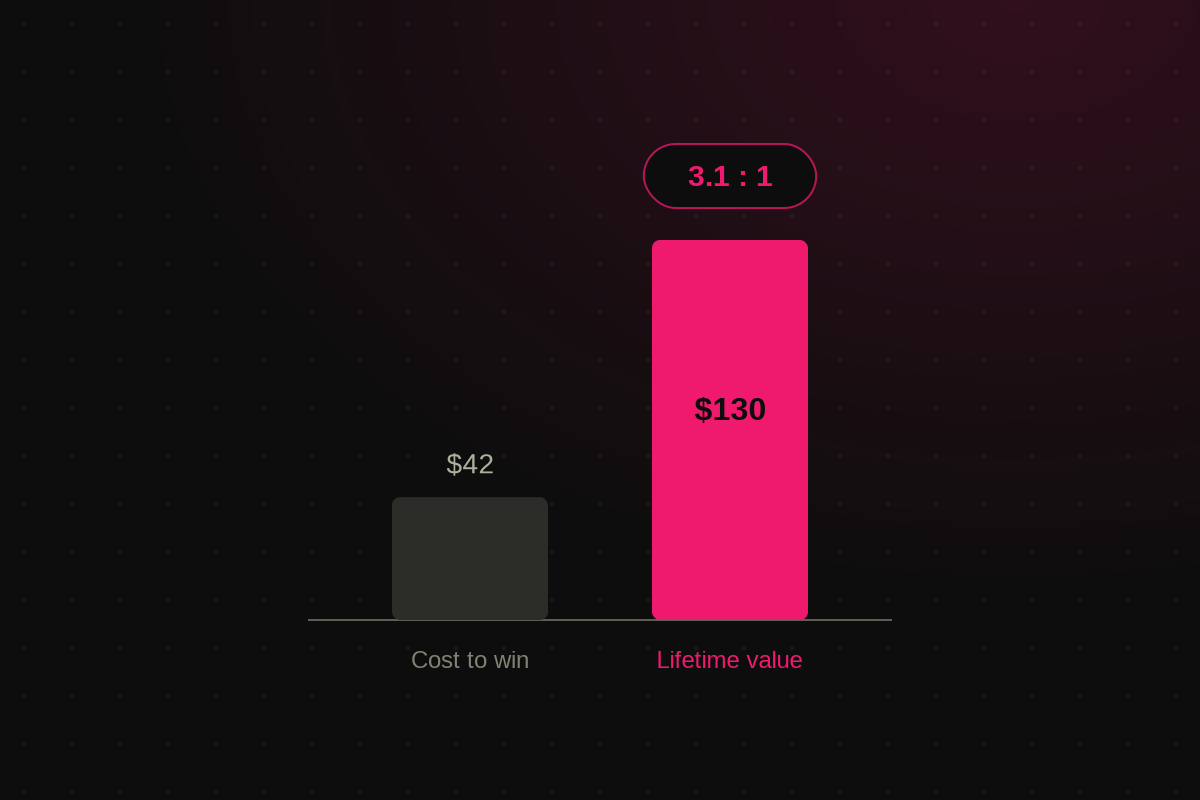
A customer worth Lifetime value (LTV): the gross profit a customer brings over every order they ever place, not just the first. Many DTC stores: $100 to $500. who costs Customer acquisition cost (CAC): what you spend on ads and marketing to win one new customer. Marketing spend ÷ new customers in the same period. to win is a ratio of 3.00 : 1.
ExcellentDoes each customer earn back what it cost to win them? Divide what a customer is worth by what they cost. Below 1 : 1 you lose money on every customer; 3 : 1 is the usual healthy mark.
- You: $300 worth, $100 to win
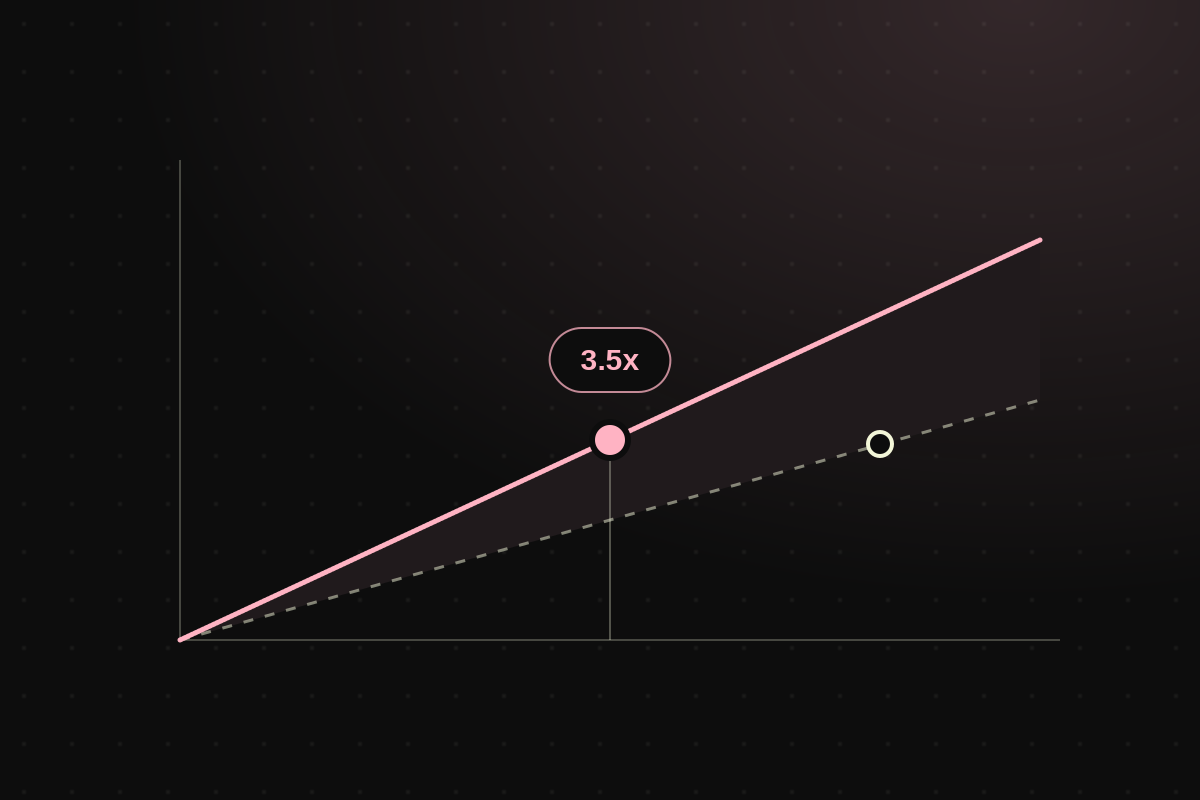
- Dashed lines: 1 : 1 break-even, 3 : 1 healthy, 5 : 1
- Across: what a customer costs. Up: what they're worth.
What it means
A strong position. 3:1 or higher is the usual benchmark for a healthy, scalable business, so focus on scaling what works.
Room before you drop below 3 : 1
You could spend up to $100 to win a customer, $0 more than now, and still be at 3 : 1.



Find trends in your business for free. Ask a question about your store and Replo answers it from every tool you connect.
Every morning
Get your LTV to CAC ratio in a daily report
Replo reads Shopify, Klaviyo, Recharge and Triple Whale and has your LTV to CAC ratio ready every morning, with what changed since yesterday and why.




Formula
The LTV to CAC ratio compares what a customer is worth over time with what it cost to win them.
LTV to CAC ratio = customer lifetime value ÷ customer acquisition cost
What Is LTV To CAC?
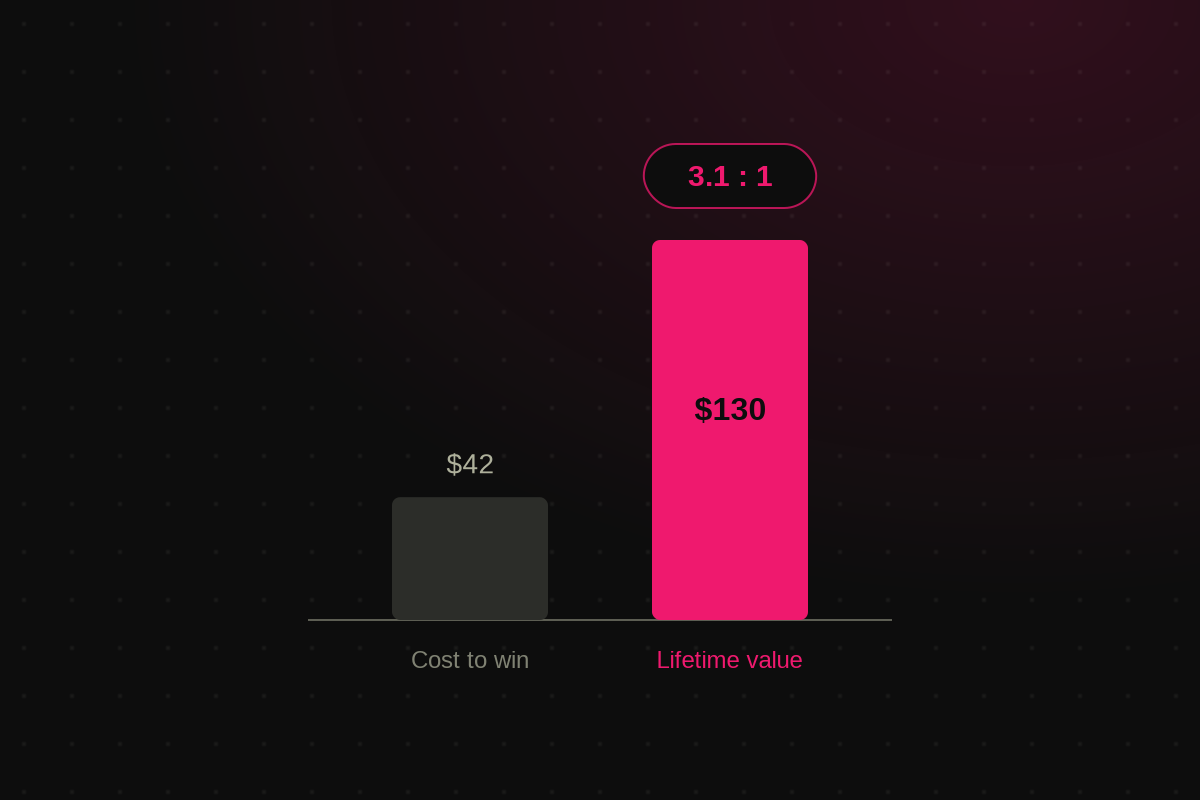
The LTV to CAC ratio compares what a customer is worth over time (customer lifetime value, LTV) with what it cost to win them (customer acquisition cost, CAC). A customer worth $300 who cost $100 to acquire is a 3:1 ratio. It tells you whether each new customer earns back what you spend to get them.
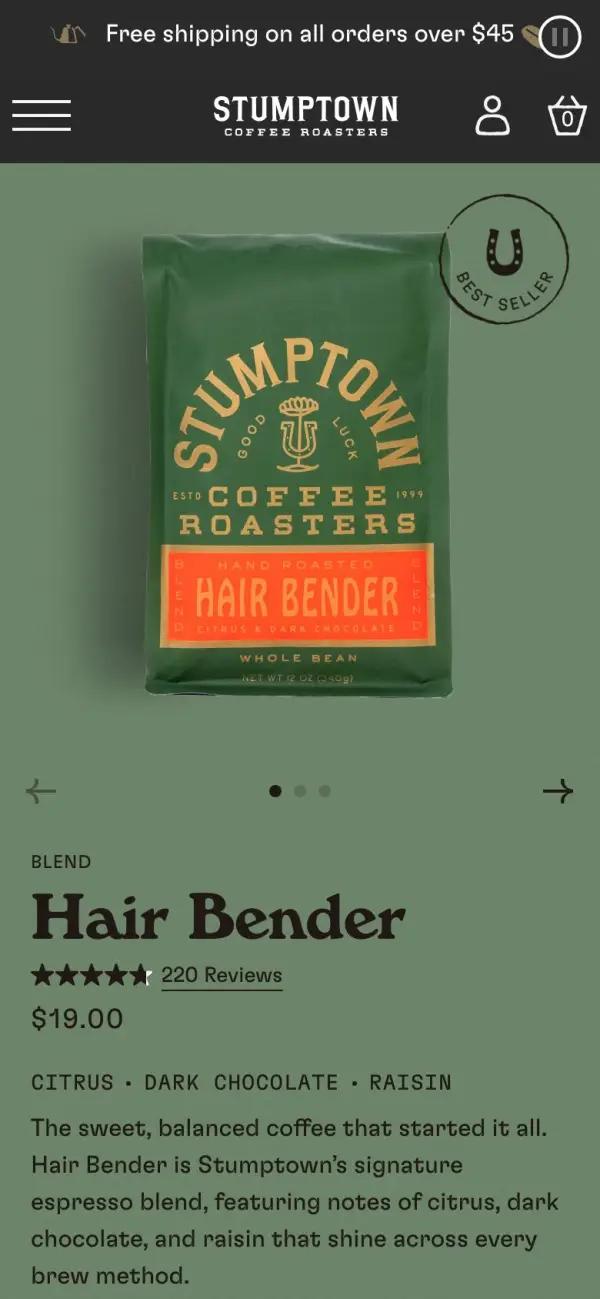
 Stumptown Coffee Roasters
Hair Bender coffee, 12 oz, $19
Stumptown's Hair Bender sells for $19.00. A customer who buys it once a month for a year spends $228.00; one who stops after three orders spends $57.00.
See the live pageTo understand what the ratio means, you’ll need to break the LTV to CAC ratio down into its two key components first: LTV (also known as CLTV) stands for Customer Lifetime Value. CAC stands for Customer Acquisition Cost.
What is Customer Lifetime Value
Customer lifetime value (CLTV or LTV) is the total revenue a business expects to earn from a single customer over their entire relationship with the brand. It indicates the long-term financial contribution of each customer, meaning a high LTV suggests strong customer loyalty and a sustainable business model.
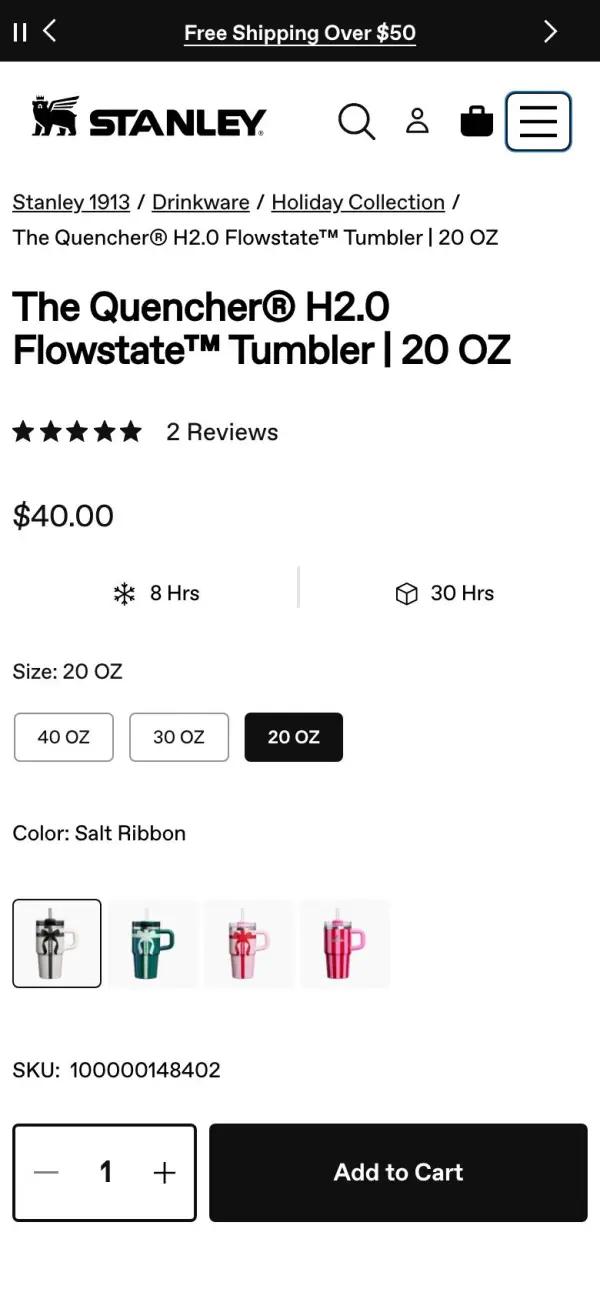
 Stanley 1913
Quencher H2.0 tumbler, 20 oz, $40
Stanley's Quencher sells for $40.00. A customer who buys it once a month for a year spends $480.00; one who stops after three orders spends $120.00.
See the live pageHow To Calculate Customer Lifetime Value
A basic LVT formula is:
Average Order Value × Purchase Frequency × Average Customer Lifespan = LTV
Here, purchase frequency can be synonymous to conversion rate, assuming the set definition of a conversion is a product purchase. (Note: A conversion can be defined as any action and depends on the end goal that you want audiences to achieve.)
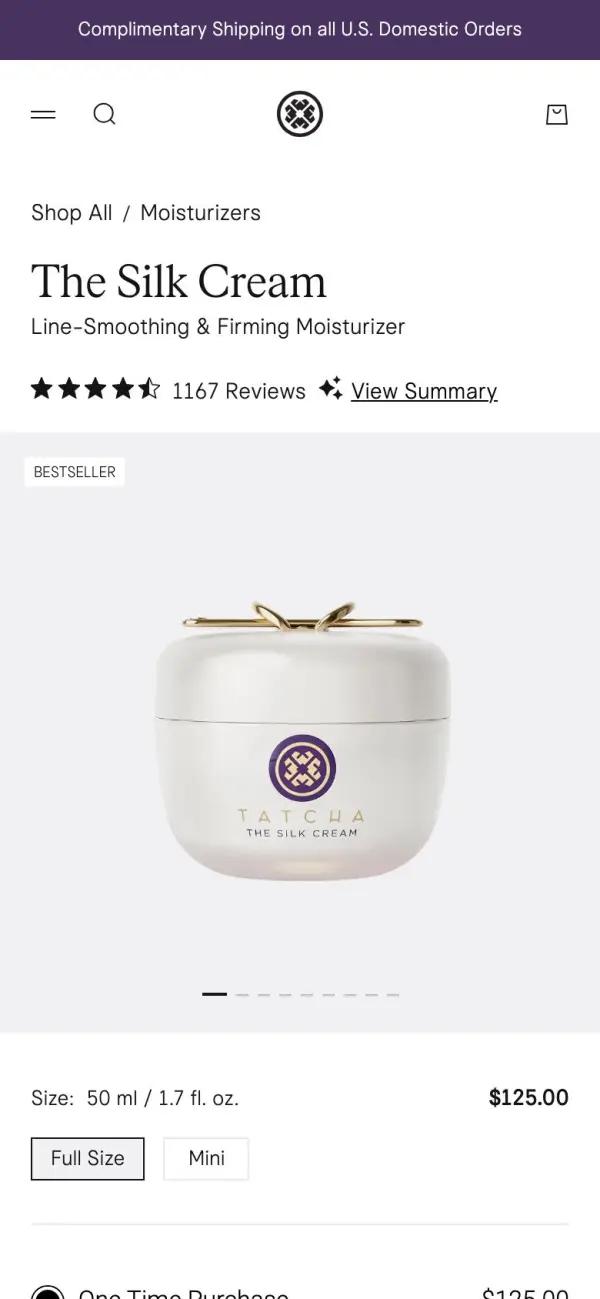
 Tatcha
The Silk Cream, 50 ml, $125
Tatcha's Silk Cream sells for $125.00. A customer who buys it once a month for a year spends $1,500; one who stops after three orders spends $375.00.
See the live pageMore complex formulas can include gross margin and churn rate. In some cases, Customer value (Average Purchase Value × Average Purchase Frequency) can also be used. More advanced (and usually more accurate formulas) are run by predictive LTV models that use historical data to forecast future lifetime value among customers.
What Is Customer Acquisition Cost
Customer acquisition cost (CAC) represents the total cost an ecommerce business incurs to acquire a single new customer. It's a crucial metric for assessing the profitability of customer acquisition efforts and the success of the chosen marketing or customer acquisition channels.

 Lodge Cast Iron
11 inch enamel cast iron skillet, $49.90
Lodge's enamel skillet sells for $49.90. A customer who buys it once a month for a year spends $598.80; one who stops after three orders spends $149.70.
See the live pageHow To Calculate Customer Acquisition Cost
Customer acquisition cost (CAC) is calculated by:
Total Marketing And Sales Expenses / Number of New Customers Acquired Within A Specific Period = CAC
The value of total marketing and sales expenses includes advertising spend, marketing software, employee salaries, and sales costs. A more comprehensive calculation may even include the Cost of Goods Sold (COGS).
What Is A Good LTV To CAC Ratio?
A good LTV to CAC ratio is 3:1 or higher: each customer brings in at least three times what it cost to win them. Below 1:1, you lose money on every new customer.
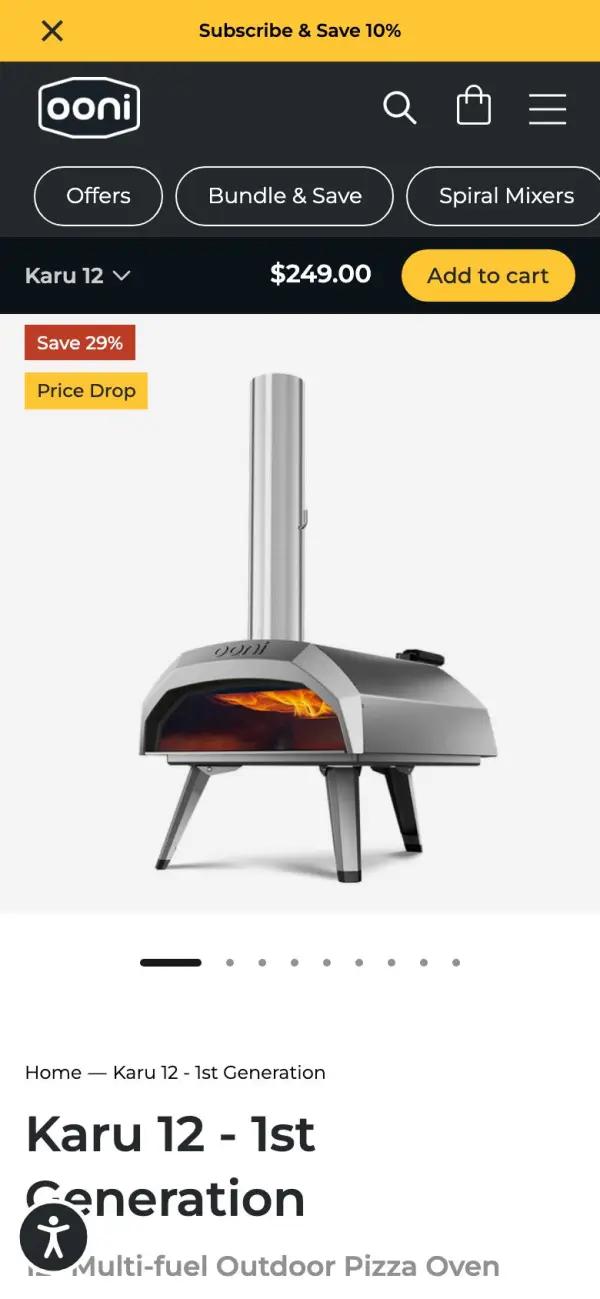
 Ooni
Karu 12 pizza oven, $249
Ooni's Karu 12 sells for $249.00. A customer who buys it once a month for a year spends $2,988; one who stops after three orders spends $747.00.
See the live pageA strong LTV/CAC ratio signifies that your business is generating more revenue from each customer than it spends to acquire them. This indicates efficient marketing, strong customer retention, and a product or service that delivers significant value. High-performing ecommerce businesses share these LTV/CAC characteristics:
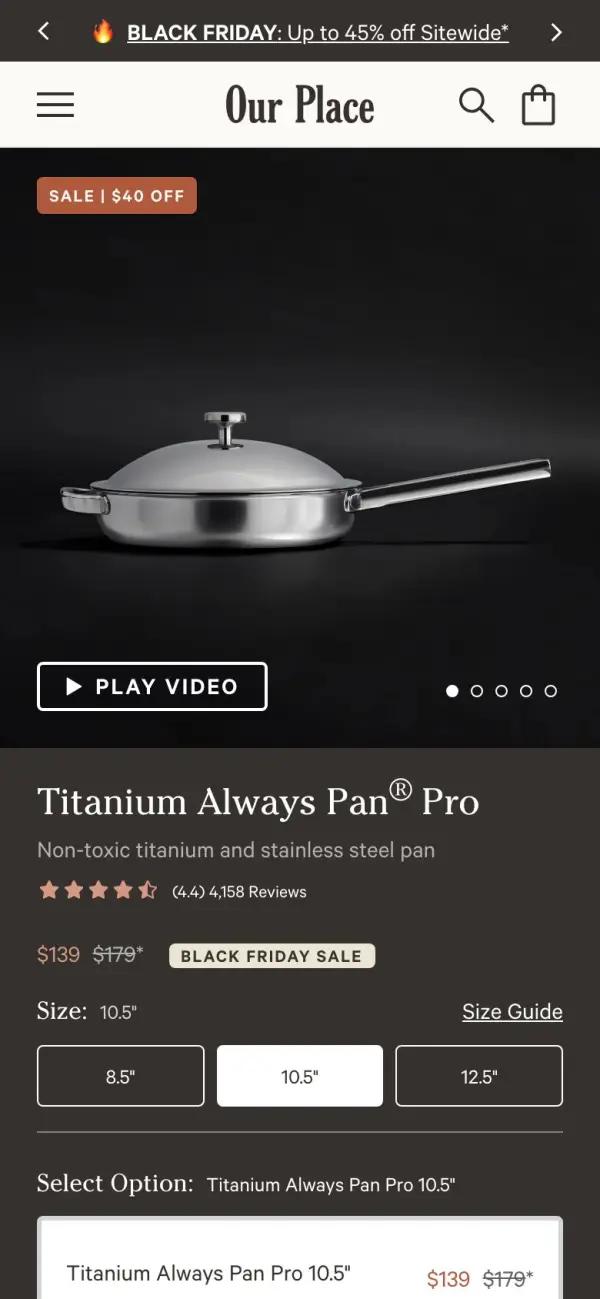
 Our Place
Titanium Always Pan Pro, 10.5 inch, $139
Our Place's Always Pan sells for $139.00. A customer who buys it once a month for a year spends $1,668; one who stops after three orders spends $417.00.
See the live page- Ratio Above 1: At a minimum, your LTV should exceed your CAC. A ratio above 1 means you're making a profit on each customer. A ratio at 1 means you are just breaking even for each customer.
- Ideal Ratio of 3:1 or Higher: An LTV/CAC ratio of 3:1 or greater is generally considered a benchmark for a healthy, scalable business. This means for every $1 spent on acquiring a customer, you're generating $3 in lifetime value.
- Consistent Monitoring: The LTV/CAC ratio isn't a static number. It's crucial to track it regularly to identify trends, react to changes in marketing effectiveness, and make data-driven decisions. Optimizing your LTV/CAC ratio involves strategies to both increase customer lifetime value and decrease customer acquisition costs.
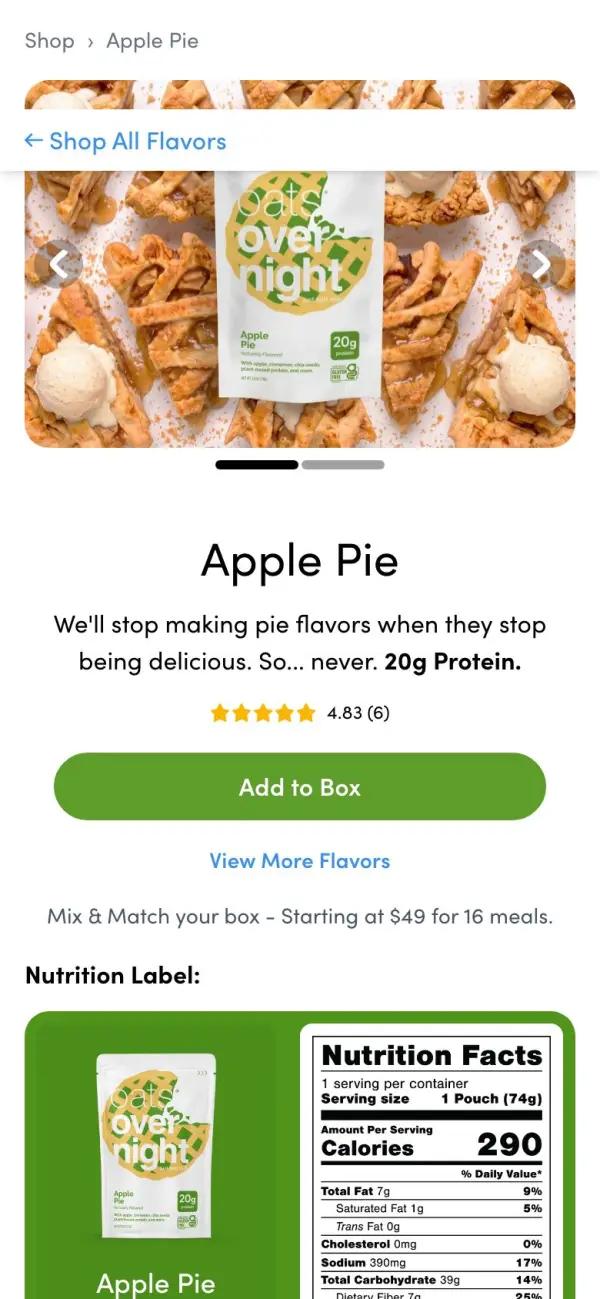
 Oats Overnight
Mix-and-match oatmeal box, 16 meals, $49
Oats Overnight's 16-meal oatmeal box sells for $49.00. A customer who buys it once a month for a year spends $588.00; one who stops after three orders spends $147.00.
See the live pageLearn more about LTV to CAC and how to improve your LTV to CAC ratio in our full guide.
Interpreting Your LTV To CAC Ratio Results
Here's what the qualitative assessment from our calculator means:
- Exceptional (5:1 or higher): Your brand is doing very well! Consider a more aggressive approach to customer acquisition on both sales and marketing fronts to expand your customer base. Your CAC will increase, but your total revenue will grow in the long run.
- Excellent (3:1 or higher): Your business is in a strong position. Focus on scaling your successful strategies.
- Good (2:1 - 3:1): Your business is healthy, but there's room for improvement. Explore strategies to further increase LTV or reduce CAC.
- Fair (1:1 - 2:1): Your business is breaking even or slightly profitable. Significant optimization is needed to achieve sustainable growth.
- Poor (Below 1:1): Your business is losing money on each customer. Immediate action is required to address this unsustainable situation.
The ad
Stumptown Coffee Roasters
Sponsored ·
Sweet spice, silky chocolate-covered orange, and a lush brown sugar finish walk into a holiday blend. It's Evergreen Season.

stumptowncoffee.com
Evergreen Is for Everyone
The page it opens
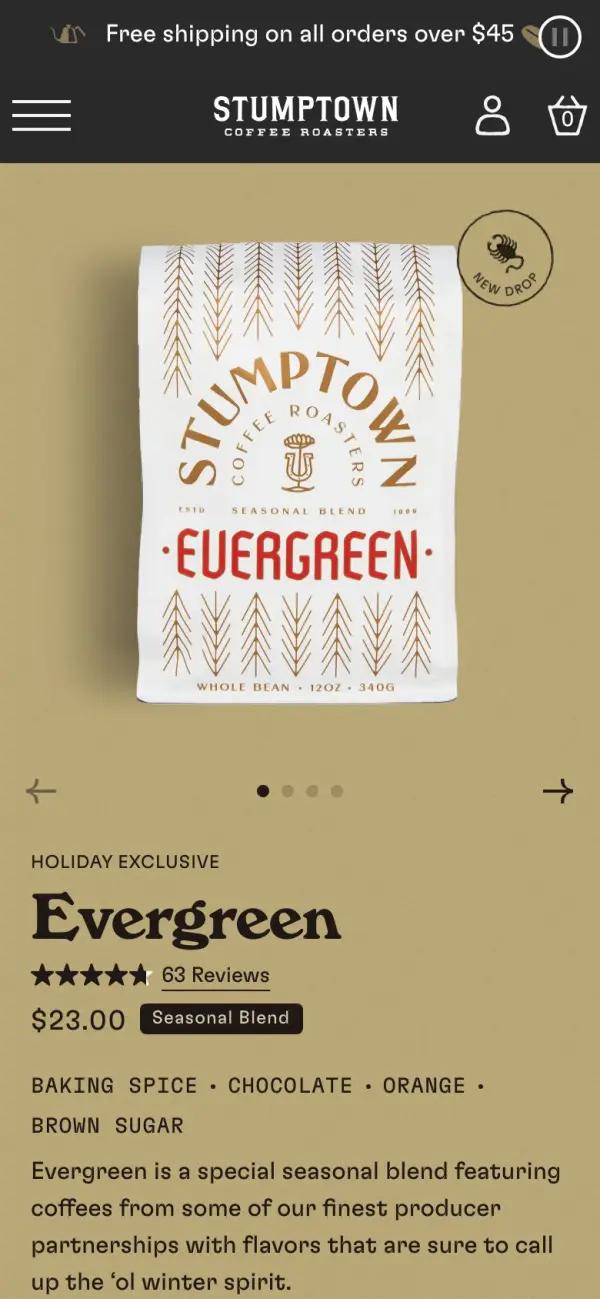 Stumptown Coffee Roasters
A real ad and the page it opens. Stumptown's Evergreen sells for $23.00. A customer who buys it once a month for a year spends $276.00; one who stops after three orders spends $69.00.
See the ad in Meta’s Ad LibrarySee the live pageCheck out our Ecommerce Toolbox for more free ecommerce and marketing resources: including calculators and industry benchmarking tools for key business metrics, Shopify theme detectors, and Schema markup generators!