


This article is brought to you by Robert Battle from QCK, a Trusted Replo SEO & Shopify Development Partner.
Last updated: 2026-02-19
—
With ecommerce evolving rapidly, Shopify brands must focus on quick, impactful strategies to stay competitive in 2025. Here are five quick wins to boost your store's visibility, traffic, and sales:
1. Leverage Collection Pages Scaling with AI Copy
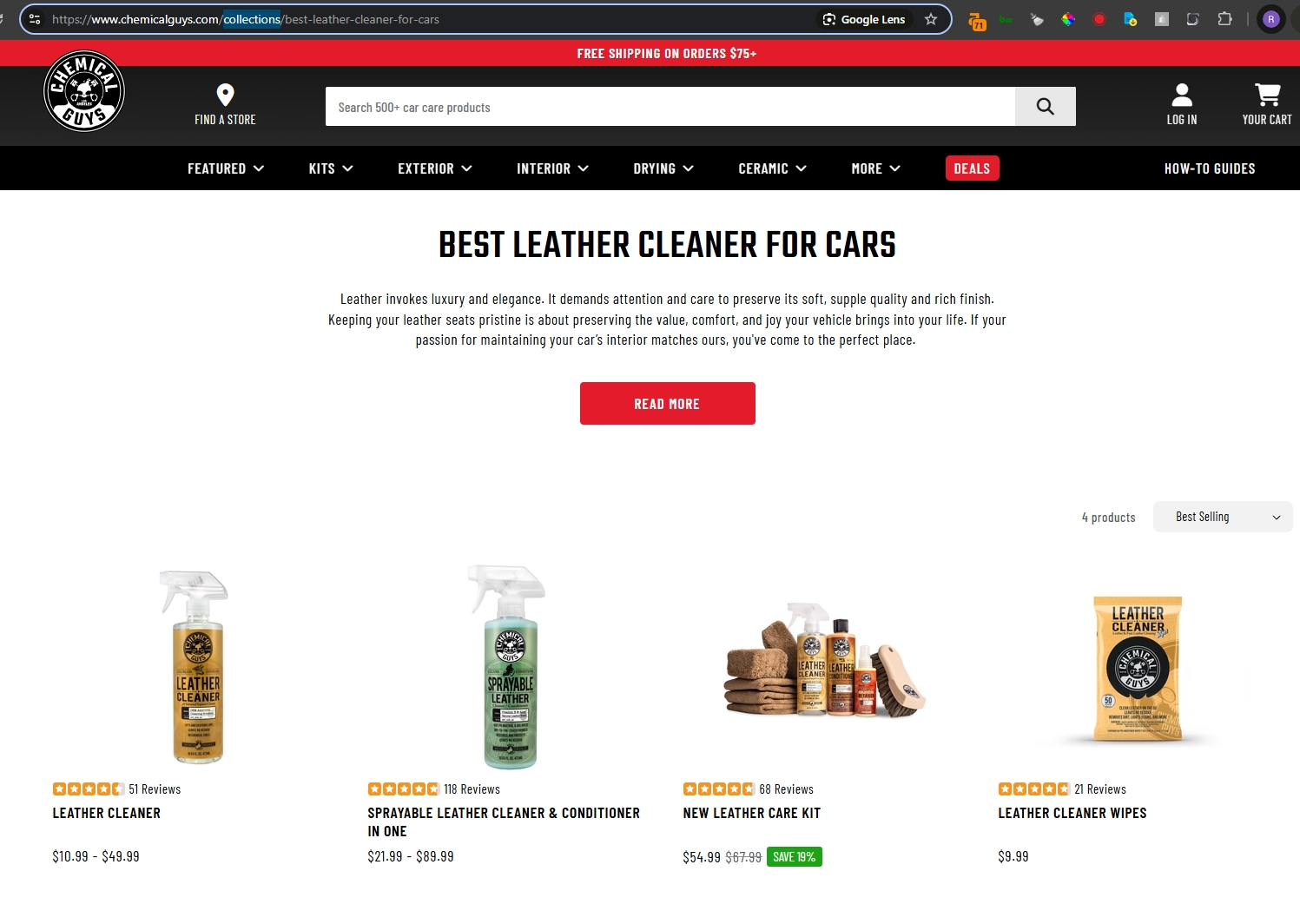
Hidden collection pages allow you to rank for valuable keywords without cluttering your main navigation. These pages are not linked in your primary menus but can still drive significant traffic when optimized and strategically linked internally.
🔍 Target High-Intent Keywords: Build content around high-converting commercial phrases like “X for Y” (e.g., “Gifts for fitness enthusiasts” or “Home decor for minimalists”).
🛑 Create Hidden Pages: Optimize for long-tail search queries without adding clutter to your main navigation. These pages work as SEO powerhouses behind the scenes and can be accessed via direct links or search results.
🔗 Strategic Linking: Boost rankings by linking these hidden pages internally from relevant blog posts, collection pages, or your footer.
✅ Example: A hidden "Eco-Friendly Yoga Mats for Beginners" Shopify collection page linked from a sustainability blog can drive targeted traffic without disrupting your core navigation.
⚡ QCK Tip: Hidden collection pages can rank for niche keywords without cluttering your main navigation, maximizing SEO opportunities effortlessly.
2. Optimize Schema for AI Search (and Google Shopping)
AI-powered search is evolving fast, and structured data is more critical than ever. Ensuring your Shopify schema is clean, optimized, and AI-readable means better rankings, richer search results, and a competitive edge in both Google and Bing.
🚀 Fix Shopify Schema Gaps: Shopify’s default schema does some heavy lifting, but many themes disrupt or omit critical markup—limiting your visibility in search results.
🔍 Get a Schema Audit: Ensure your products display rich details (pricing, ratings, availability) by optimizing schema for Google and Bing. A broken schema can mean lost sales.
💡 Bing Optimization Matters: Bing’s relevance is skyrocketing due to its integration with ChatGPT. Microsoft’s partnership with OpenAI means Bing is now a crucial search engine for AI-driven queries.
✅ Take Control of AI Search Results: Most brands haven’t tapped into AI search visibility—optimizing early gives you a first-mover advantage.
⚡ QCK Tip: A schema audit ensures your product listings are fully optimized, improving rankings and click-through rates on AI-driven search engines.
To get a schema markup for your landing page fast, use Replo's free Schema Markup Generator from their Ecommerce Toolbox.
.avif)
3. Write Blogs for Topical Authority
Search engines prioritize brands demonstrating expertise, and AI-driven search is no exception. Writing in-depth, educational blog content now ensures your store remains visible, authoritative, and competitive as search algorithms evolve.
🧐 Create Educational Content: Write top-of-funnel blog posts answering questions like “How to do X” or “X vs. Y.” These drive organic traffic and establish your brand as an industry leader.
🔮 Future-Proof Your SEO: AI-powered search prioritizes authoritative, in-depth content. Investing in well-researched blogs now ensures long-term ranking stability.
✅ Example: A blog like “Top 10 Sustainable Fashion Trends for 2025” attracts search traffic and positions your store as a go-to resource.
⚡ QCK Tip: Regularly publishing educational content builds trust and engagement—leading to higher conversions and better AI search visibility.
.avif)
4. Reuse/Recycle Content
SEO isn’t just about creating new content—it’s about keeping existing content fresh and relevant. Updating, repurposing, and optimizing old pages can drive significant traffic gains with minimal effort.
🛠️ Update Old Content: Keep existing pages fresh by updating keywords, refreshing product recommendations, and optimizing metadata.
🔄 Redirects for Seamless Traffic: Use 301 redirects or yearless URLs (e.g., “/black-friday-guide/” instead of “/black-friday-guide-2024/”) to maintain rankings and traffic flow.
⚡ Manually Reindex for Faster Results: Don’t wait for Google to crawl updates—submit URLs manually via Google Search Console and watch the clicks pour in.
📲 Repurpose Social Content: Revamp and repost high-performing social campaigns, tailoring them to 2025 trends for maximum impact.
⚡ QCK Tip: A quick content refresh can drive significant results with minimal effort—Google rewards up-to-date, relevant pages.
.avif)
5. Optimize Your Shopify Store for Speed and User Experience
Site speed and user experience directly impact both SEO and conversions. A slow or clunky store frustrates customers, lowers rankings, and leaves money on the table—optimizing performance is an easy win.
📉 Streamline Apps: Too many Shopify apps slow down your site. Audit and remove unnecessary ones to boost speed.
📲 Improve Mobile Performance: With mobile shopping dominating in 2025, ensure your site loads in under three seconds for peak conversions.
💰 Faster Load Times = Higher Sales: Even a minor speed improvement can increase conversion rates and search rankings.
🔍 Use Speed Tools: Leverage Google PageSpeed Insights or Shopify’s built-in speed reports to diagnose performance issues.
⚡ QCK Tip: A fast-loading store isn’t just an SEO win—it keeps customers engaged and drives higher sales.
Use Replo's Shopify Theme Detector to find out what top Shopify brands have been using for their landing pages, and see how it impacts their page speed and user experience.
.avif)
{{get-started="/components"}}
Implement these quick SEO wins to stay ahead in 2025!
📅 Replo customers can book a complimentary SEO site audit from QCK to supercharge your Shopify landing pages and maximize growth this year! 🚀