Marketing
What Is A Marketing Funnel: Bottom Of Funnel Marketing
Answering all your most common questions about bottom of funnel marketing, from our recommended DTC brand examples to key tactics and best practices.
Key Takeaways: What Is A Marketing Funnel? A marketing funnel is a roadmap that guides shoppers from discovering your brand to purchasing a product to becoming a loyal customer. The end goal is to build long term relationships with shoppers, nurturing them from brand strangers into repeat buyers. What Is Bottom Of Funnel Marketing? Bottom of funnel marketing in ecommmerce describes the end stages of the marketing funnel when you are driving the shopper to convert, usually by making a purchase. At this stage, prospects understand their problem and are ready to buy. The goal is to address any objections, to fully convince them that your product or service is the solution to a problem they have, and to facilitate the buying process.
What Is A Marketing Funnel?
A marketing funnel is a roadmap that guides shoppers from discovering your brand to purchasing a product to becoming a loyal customer.
One model of understanding the marketing funnel involves breaking it into 5 stages—awareness, consideration, conversion, retention, and advocacy—with each targeting a different customer intention per stage. We go into detail about that marketing funnel model in this guide.
Another model (the one we are talking about in this article), is structured around 3 general stages: top of funnel, middle of funnel, and bottom of funnel.
While marketing funnels can be online and offline, we are focused solely on online marketing funnels for this article—specifically those that apply to ecommerce.
Ecommerce marketing funnels are different from offline marketing funnels, because every interaction online generates trackable behavioral data that brands can then use to better target potential customers across various online channels.
Examples of this include personalizing content to target customers more accurately at scale, as well as using real-time optimization and A/B testing different landing page variants.
Each stage can have many touchpoints, and many times, a shopper can go back and forth between stages before finally making a purchase. The end goal is to build long term relationships with shoppers by guiding them through each step of the marketing funnel, nurturing them from brand strangers at the first stage of awareness to become repeat buyers at the final stage of advocacy.
What Is Bottom Of Funnel Marketing?
The model of marketing funnels we are focusing on today involves the top, middle, and bottom of funnel methods. This model breaks the marketing funnel into fewer and larger steps, with the funnel ending once a purchase is made.
In contrast, the 5 stage marketing funnel emphasizes the importance of what happens after conversion—specifically with retention and advocacy. That doesn’t mean that one model is necessarily better than the other.
Their purposes are simply different.
The 5 stage funnel prioritizes building a retention loop, a longer term strategic cycle. On the other hand, the top, middle, and bottom of funnel model are better for thinking about the tactics and execution required to drive new leads towards conversions (whereas the 5 stage marketing funnel includes stages past initial sale as well).
For this article, we are covering bottom of funnel marketing, which refers to the stage when prospects know about their problem and have decided to purchase your product or service as the solution to their problem.
These people are highly interested prospects who need the brand to remove any final objections or concerns and to facilitate the buying process so they can convert. Here, brands need to optimize for landing page user experience, social proof, and page performance metrics.
At the bottom of the funnel, brands have the least number of users and the fewest touchpoints and platforms for a purchase to be made. We cover strategies to target bottom of funnel users below.
Key Bottom Of Funnel Strategies You Should Know
Bottom of funnel strategies include the following 6 elements: Conversion Rate Optimization, Cart Abandonment Flows, Urgency and Scarcity, Social Proof at Point of Purchase, AOV and LTV Optimization, and Retention and Loyalty Programs.
1. Conversion Rate Optimization
This is the bread and butter of a good product landing page—conversion rate optimization.
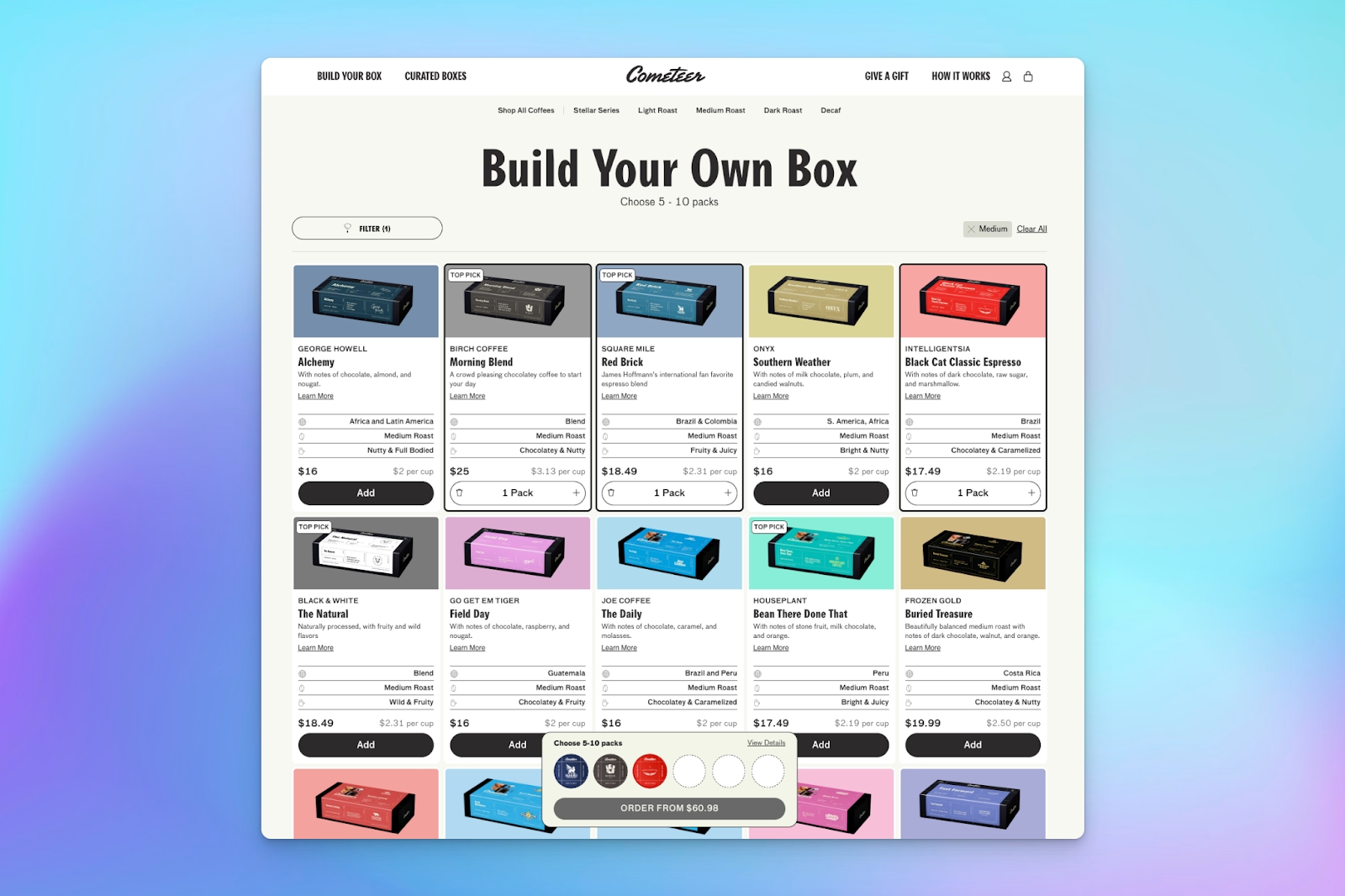
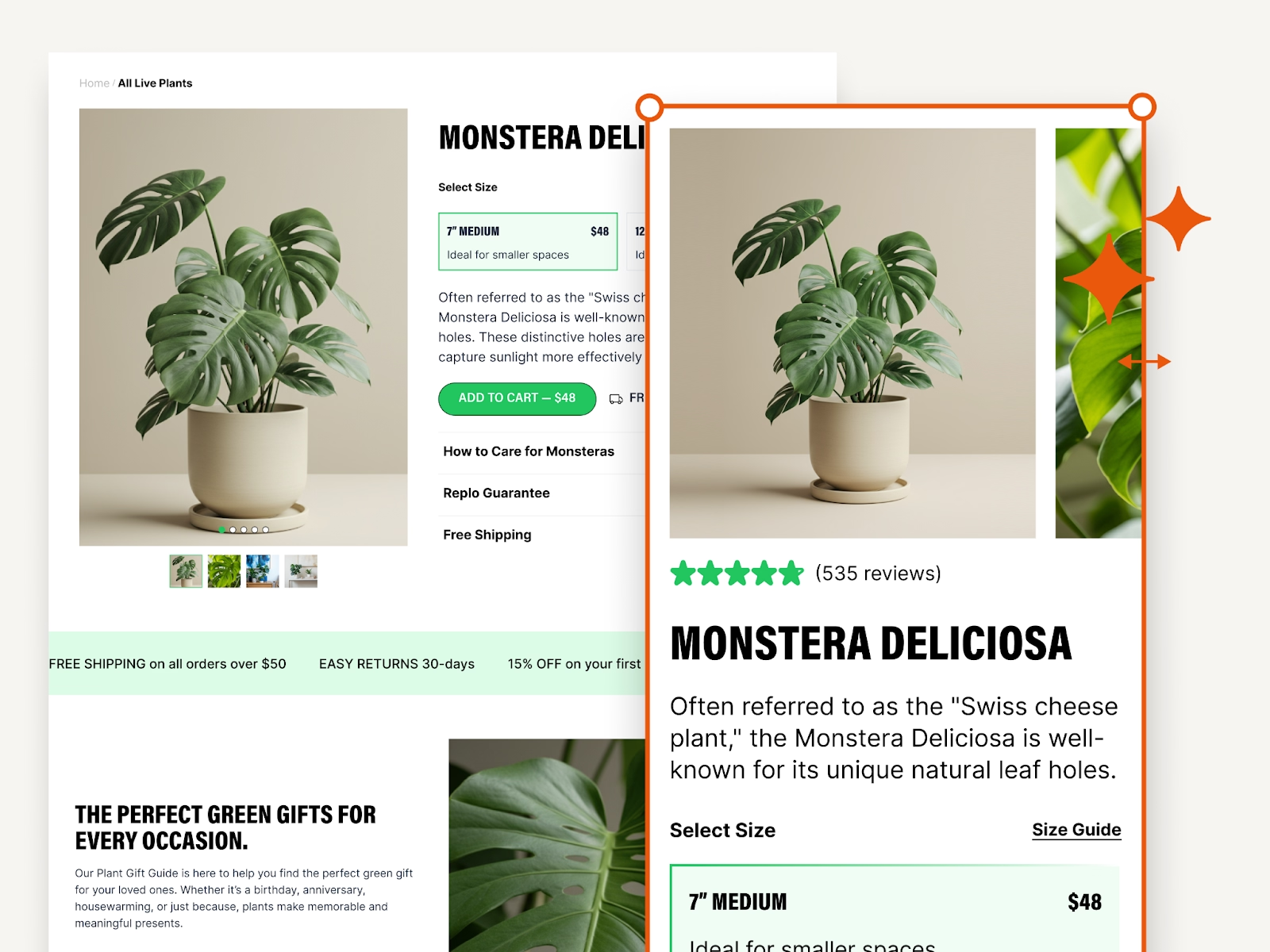
You want high quality visuals to help customers visualize your products, clear benefit statements to differentiate your offering from competitors, mobile optimization, and fast loading speeds on your site.
To shorten the conversion path even further, some brands even just make their homepage the product page so there are no additional sources of content that distract from checkout. This method works well for single or limited-SKU brands. Experiment with different combinations of elements to see which variants drive the most conversions.
You also want to optimize your checkout, too; make sure you don’t miss a single detail in getting your shoppers over the finish line to become customers. Tactics for creating a seamless checkout flow, include:
- Offering a guest checkout option reduces barriers for purchase and prevents users who don’t want to create an account to buy from searching for other alternatives.
- Progress indicators show customers their checkout progress and are great for motivating users to reach checkout “completion.”
- Offer multiple payment options to prevent abandonment. According to Shopify, around 11% of shoppers abandoned their carts in 2024 because not enough payment options were available.
- Adding strong guarantees on return policy, security badges, and past awards won are all key to strengthening shoppers’ trust in your brand. Make sure you are transparent about your checkout prices and do not surprise customers with any hidden fees upon checkout.
- Make sure your checkout process is not too long. Too many forms to fill creates friction, and that’s the last experience you want to give shoppers who are so close to converting.
2. Shopping Cart Abandonment Recovery
Just because shoppers have abandoned their carts doesn’t mean all is lost. Research from Moosend shows that shopping cart abandonment recovery emails have an open rate of more than 40%—a significant jump from the benchmark of 21% for the average retail email. Higher engagement rates means that there is still continued interest, and brands should not miss an opportunity to reengage potential customers. Here’s our suggested recovery email flow:
- 1 hour: Gentle reminder with product images
- 24 hours: Educational content about product benefits
- 3 days: Social proof and customer testimonials
- 7 days: Incentive offer (discount or free shipping!)
- 14 days: Final call with urgency messaging
In addition, many brands tap into Facebook Dynamic Product Ads to show exact abandoned items, Google Shopping Campaign for product-centric retargeting, and even direct SMS reminders for mobile users.
3. Urgency and Scarcity
Elements such as countdown timers and limited quantity displays can work wonders in getting customers to purchase fast. It motivates shoppers to “lock-in” their purchase before it’s gone.
Here’s our tips for implementing this on your product page or landing pages:
- Use prominent visual times that are positioned right above the “add to cart” buttons
- Ensure your timers don’t reset when a page reloads
- Use flash sales, limited-time product offers, and shipping deadlines to motivate action
- Add result-time stock levels in the product buy box to display accurate inventory counts
- Notify customers via email or SMS text when a product they have in cart is running low
4. Social Proof at Point of Purchase
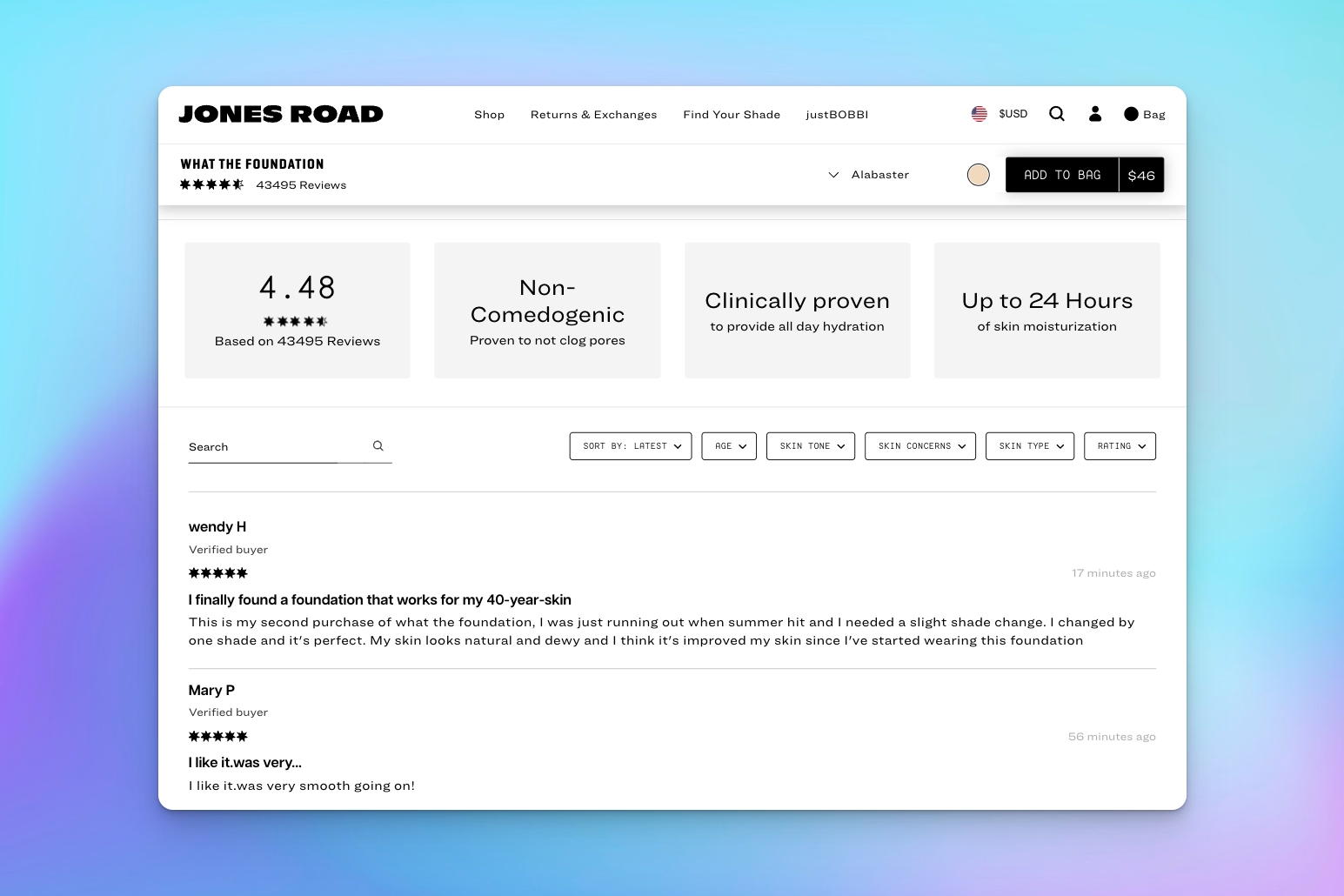
As we’ve said before, 97% of customers read reviews before purchasing, and 98% of shoppers say that reviews are an essential resource for making purchase decisions. You might’ve included it already on your landing pages or in your social media and email content for middle of funnel marketing, but it belongs at the bottom of the funnel, too. There is no such thing as too much social proof. Shoppers want as much evidence of brand trustworthiness as possible, and that means leaning into both positive testimonials and trust badges or certifications. To build custom product pages fast with the help of AI, check out our list of recommended AI tools. Tips for integrating social proof include:
- Display star ratings or quantity of product reviews right above the fold in the product box on product pages.
- Highlight photos and videos from reviews.
- Make sure you feature any industry certificates or awards won, if available.
- Add security certificates, payment security signs, and strong money-back guarantees to reduce buyer anxiety.
5. AOV and LTV Optimization
Brands should always design their bottom of funnel pages with boosting average order value and customer lifetime value in mind. This means optimizing for both business metrics before and after the customer checks out.
Key tactics include:
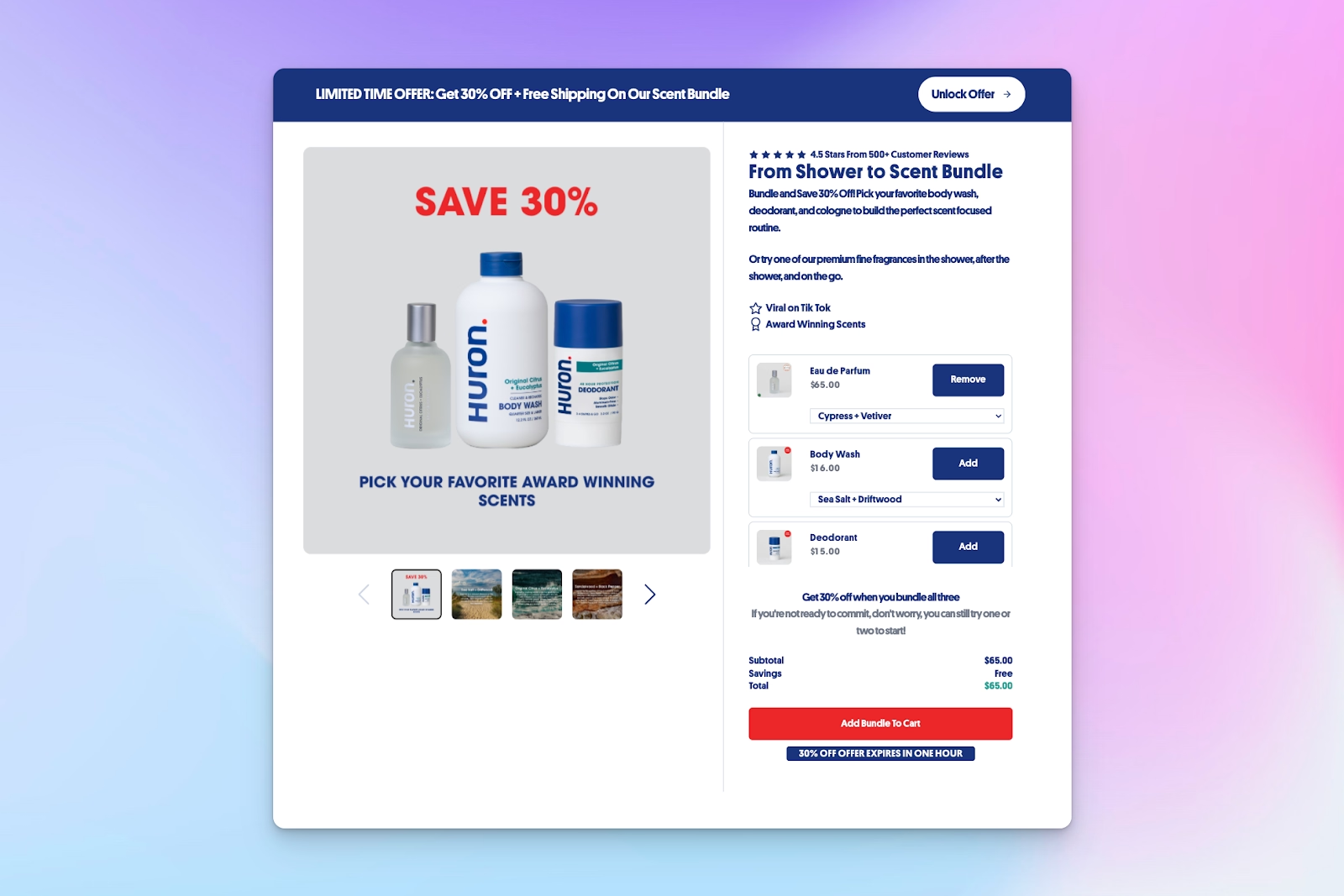
- Offering pre-made bundle suggestions or custom bundle builders in your product boxes to upsell and cross-sell different items. This encourages customers to buy more products or related products at discounted rates.
- Offer customizable and easy-to-cancel or -pause subscription plans with discounts on unit pricing! This helps put their repurchasing on autopilot.
- After checkout, add in thank you page offers that present complementary products or send email follow-ups in 24-48 hours with personalized product recommendations.
- Add one-click upsells right before checkout to enable additional purchases without re-entering payment information. Remember, the more convenient the action, the more appealing the option to customers!
- Place new customers in an onboarding sequence that welcomes them into the brand community, with brand instruction content, relevant product guidelines, support resources, interactive community content, and feedback collection.
6. Retention and Loyalty Programs
Loyalty programs are key to increasing customer lifetime value. They build a long term connection between your brand and customers, and encourage more frequent interactions with your store.
Common program types include point-based systems that grant points for purchases, tiered programs that have status levels with increasing benefits, cashback programs, and programs that offer exclusive access to sales and new products
Here’s our recommendation implementation framework:
- Make sure you have a clear and transparent earning structure that can easily communicate customers’ progress and program status.
- Offer diverse redemption options, so customers can find greater value in your loyalty rewards.
- Personalize rewards based on customers’ purchase history and preferences to add in that “delight” factor loyalty members.
- Last but not least, make sure your program is accessible and easy-to-use via mobile. A mobile app for loyalty program management would be the most ideal.
Bottom Of Funnel Marketing Examples To Learn From
Bottom of funnel marketing is where brands finally get shoppers over the line to become customers.
At this stage, your shoppers are problem-aware and solution-aware, but that does not mean that you should save any effort on optimizing your landing pages. In fact, one can argue that the last stage is also the stage where the most can go wrong.
Shoppers can abandon their carts; your product pages might not be well-optimized for conversions and discourage shoppers from hitting buy; a bad review and low star rating might shoppers distrust your product; they might only buy once from your brand and never agan—these are all situations that brands should be on the lookout to fix.
One of our favorite bottom of funnel examples manages to target all of the strategies mentioned earlier. We created unbranded and interactive assets modeled off of in-real-life examples for you to explore.
Check them out below, or feel free to access the full interactive Figma file to see all marketing funnels.
Cart Abandonment Flow To Checkout And Loyalty
Cart abandonment funnels help reel back in shoppers who’ve been considering your brand but have not made a purchase. According to Dynamic Yield, the average shopping cart abandonment rate globally from June to 2024 to May 2025 has been 75.44%.
That’s a lot of revenue potential left on the table.
This funnel is designed to target shoppers who’ve browsed on your store, added items to cart, and then left your site without buying anything. These shoppers are already at the bottom of your funnel, as their adding items to cart means they've been considering making a purchase to begin with.
The goal is to direct shoppers to follow through on their purchases using targeted content, promotions, and urgency.
Using a Google Analytics pixel or Meta pixel, brands can identify the target group to run advertisements to (usually on Google or Meta).
Browse ready-to-run workflows in the Replo use case library.
The ads will feature products that shoppers have placed into their carts, but not purchased, reminding them to not forget these products.
Shoppers are already familiar with the brand, even before they ever saw your targeted ad, therefore the content of these ads should be to drive action and highlight urgency, and not to introduce the brand to a newcomer.
Include limited time discounts on their added products or seasonal product releases to pique their interest.
The CTA should link to a product detail page (or PDP) that features that particular item mentioned in the ad. A landing page in between ad and product page is optional, but not required. In fact, in some cases, it is better to cut straight to the chase in delivering your product page.
Browse ready-to-run workflows in the Replo use case library.
The PDP is where you want to start getting serious about communicating product information and leaning into social proof.
If your ad talks about a specific clothing product, then make sure that product page features that exact product and displays related items. Clarify your value proposition, add detail to the product, and build brand trust.
The shopper might have been considering your product already, but wasn’t convinced enough to add anything to cart or hit checkout. This is your second chance to make a convincing case for your brand.
Include clear and detailed product descriptions, high quality product imagery, user generated content, high ratings and reviews, comparison charts, and an enticing offer. Offers can include bundled discounts with complimentary products, subscription plans, quantity breaks, and limited time promotions to drive urgency and boost your average order value.
Show related product sections and recently viewed product sections, as well as any complimentary educational content that can help shoppers envision how your product fits into their daily lives or specific use case.
For example, an informative “how to style” or “style inspiration” section is great for the PDP of a clothing brand.
If you’re trying to upsell your product, you should start diving into the benefits of your product early.
Taking a value-forward approach (rather than a product feature focused approach) from the top of your PDP helps set up expectations for a higher priced product, or encourage purchasing in greater quantities.
For example, if you are a health supplement brand, then you should include statistics from lab testing on the efficacy of your product, notable testimonials from famous and credible sources, and ingredient lists.
Browse ready-to-run workflows in the Replo use case library.
The cart page is the final step before shoppers convert by making a purchase. You want to make this page as simple and easy to understand as possible. Be transparent about pricing, service fees, and delivery timelines upfront. Customers want to know what they’re signing up for before they pay.
Make sure to include any compelling offers here, but only where relevant. Don’t cram the space, as it detracts from the user experience.
Examples can include a bundle offer with a discount, complimentary products for shoppers to consider, a form fill to insert discount codes, or a free gift if shoppers buy above a certain threshold.
A positive user experience is key to making sure first time customers come back if they like your product.
Browse ready-to-run workflows in the Replo use case library.
Finally, the checkout page is the page where conversion occurs. Again, simplicity and clarity is key.
Keep things informative, easy to use, and include any product offers to improve average order value where relevant.
Also make sure to include strong guarantees on delivery timeline, product satisfaction, refund or exchange policies, and delivery address information. Keep your bases covered on all fronts, even at the final stage.
The goal should be to pre-emptively address any possible uncertainty or concern a potential customer may have about purchasing on your checkout page.
Ask for contact information to keep shoppers informed on any delivery timelines and product updates; you can also use their contact info to enroll shoppers into welcome email flows, upsell flows, and abandonment flows in the future.
With shoppers’ contact information, brands can focus on strengthening customer relationships over the long term by delivering timely, relevant, and engaging content.
Browse ready-to-run workflows in the Replo use case library.
The best examples of this would be weekly or biweekly newsletters. Make sure the content of your emails are relevant, engaging, and add value to readers’ lives; this will keep your brand top of mind and build a positive impression over time.
Do not be too sale-sy or product focused or pushy in the content of your email and be selective when delivering promotional or product focused content.
Better yet, enroll customers into loyalty or rewards programs that deliver long term value to participants. This can include reward points systems, access to exclusive product drops or early product releases, or even personalized gifts during birthdays for that element of customer delight.
The more you show customers that you value them, the more they’ll be loyal to your brand in the long term!
That’s a wrap for our guide today on bottom of funnel marketing! To learn more about top of funnel or middle of funnel marketing, check out the related articles below.
To access the full interactive Figma file examples—covering top, middle, and bottom of funnel, with step by step assets—click on the link below.