How to start a clothing brand
To start a clothing brand, pick one product for one kind of customer, choose how it gets made (print on demand, private label or cut and sew), test it with preorders, then build a store your first ads can point at. Print on demand lets you start with no stock and very little money.
- Startup cost
- About $60 on print on demand
- First sale in
- 2 to 4 weeks with preorders
- Hardest part
- Pricing from real costs per piece
How to start a clothing brand, step by step
Pick one product for one customer
The clothing brands that spend the most on ads tend to sell a few things very well, not everything a little. Their ads point at one hero piece or one tight collection, and new pieces arrive as colors of something that already sells.
Write your product in one line: who it's for, what it is, and why it beats what they wear now. "House shorts with pockets for people who work from home" is a brand. "Streetwear" is a category with thousands of brands in it.
Choose how your clothes get made
Print on demand: a partner prints your design on a blank shirt, hoodie or tote after a customer orders, and ships it. You hold no stock, but the garment is theirs and margins are thin. Private label: a maker produces a garment it already makes, with your label and small changes, for a minimum order. Cut and sew: a factory makes your own pattern from your own fabric, the only way to make something truly yours, and the most expensive way to start.
Testing a design idea? Start with print on demand. Testing a product idea, like a better fit or a new fabric? You'll need samples from a private-label or cut-and-sew maker.
Name it and check the name is free
Search your name in the USPTO trademark database, which is free, then check the .com and the social handles. Clothing is one of the most crowded trademark classes, so do this before you pay for a logo or print a single label. Filing your own trademark application costs $350 per class.
Get samples and price from real costs
Order samples of every piece in at least two sizes. Wear them, wash them and photograph them yourself. Get quotes from three makers so you know what a first run costs per piece, then price from there: cost per piece, plus shipping, payment fees, returns and what you'll spend on ads to find each customer.
Don't set a price before you have a real cost per piece. It's the most common way new brands find out, after launch, that every sale loses money.
Sell it before you make it
Take preorders before your first production run. Put the product page live with your sample photos, a clear ship date and the sizes you'll make. Every preorder tells you which sizes and colors to produce, and the money pays for the run.
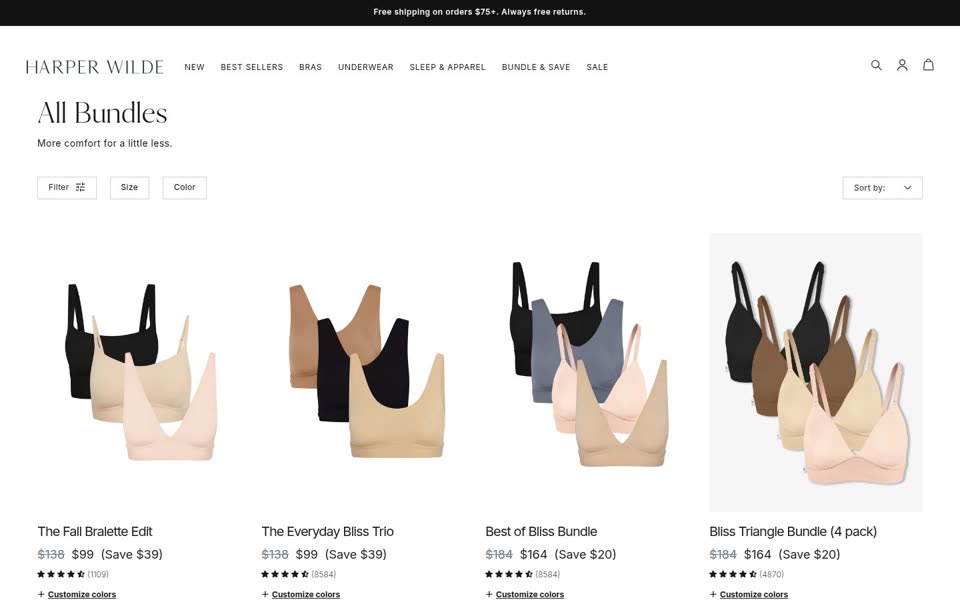 Harper Wilde sends ads to a bundles collection, a way to raise order value from day one.
Build a store your ads can point at
Your site has one job at launch: turn someone who clicked an ad into an order. Clothing brands send most of their ads to collection pages and product pages, and very few to the homepage (the numbers are below). So you need three pages first: a product page for your hero piece with every size, a size guide, fabric details and photos on real people; a collection page that groups what you sell by use or look; and a homepage that says in one line what you make and who it's for.
Clothing needs sizes and colors on every product, so use a store that handles variants. Shopify does. Replo builds the product, collection and launch pages on top of your Shopify catalog and checkout, from a description of your brand or a link to your current site.
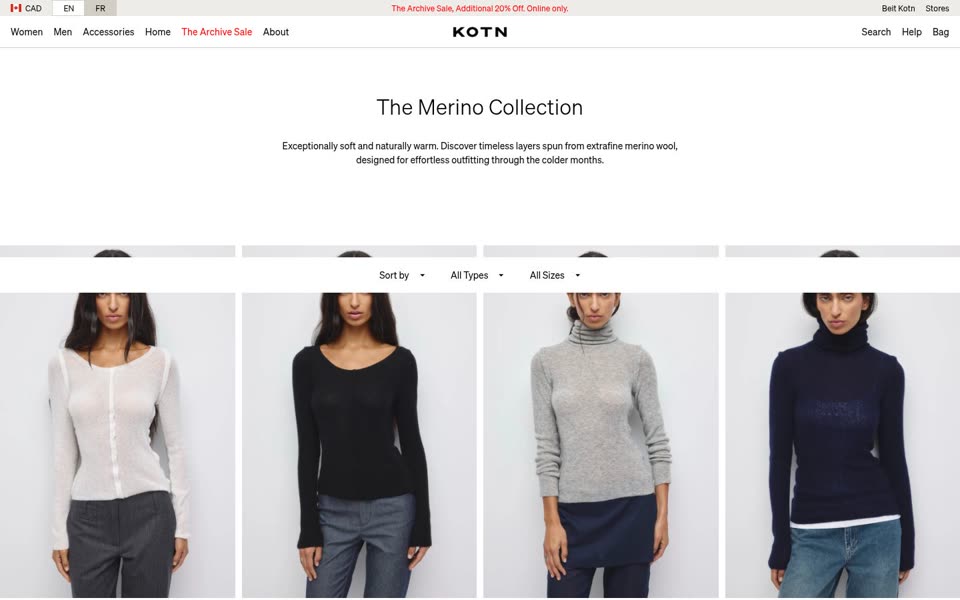 Kotn sends ads to curated collection pages.
Run your first ads to one page
Start with one ad angle and one page. The clothing brands we track run a lot of video, and most of them repeat the same few angles: comfort, fit and gifting. Pick the one your product wins on and say it in the first line of the ad.
Match the page to the ad. If the ad is about one pair of shorts, the click should land on those shorts, not on the homepage.
Launch, then add colors before categories
When the first run sells through, add a new color or a second length of the same piece before you add a new product type. Your ads, photos and size guide still work, and your customers already know the fit.
What it costs to start a clothing brand
What a print-on-demand clothing brand costs in its first month, read from each vendor's own pricing page. Private label and cut and sew add samples and a minimum order.
| What you pay for | Cost | Notes |
|---|---|---|
| Print-on-demand account | $0 | Printful has no monthly fee; you pay for each shirt when a customer orders it. |
| Sample tee (Bella+Canvas 3001) | $11.92 a shirt | Order one in two sizes and wash them before you show customers. |
| EIN from the IRS | $0 | Free, and it keeps your Social Security number off supplier forms. |
| .com domain | $11.08 a year | Buy it the day you settle on the name, with the social handles. |
| Store with sizes and colors | $39 a month | Shopify Basic, or $29 a month billed yearly; cards cost from 2.9% + 30¢. |
| Trademark application (optional) | $350 per class | File once the name is clear and you plan to grow; searching first is free. |
| Your site with Replo | $0 to start | Try Replo with 1,000 free credits. Your own domain comes with Starter, $99 a month billed yearly. |
Your first 30 days
Week 1
Product and name
- Write your product in one line: who it's for and why it's better.
- Search the name in the USPTO database and buy the .com.
- Pick a production model and order samples in two sizes.
Week 2
Samples and price
- Wear, wash and photograph the samples on real people.
- Get three quotes for a first run and set your price per piece.
- Write the size guide from your own measurements.
Week 3
Store and preorders
- Build the product page, a collection page and the homepage.
- Open preorders with a clear ship date and every size listed.
- Send the preorder page to friends, family and your first followers.
Week 4
First ads, first run
- Run one ad angle to the product page with a small daily budget.
- Order the first run in the sizes and colors preorders asked for.
- Ask every buyer for a fit review and a photo.
What brands in this category run ads to
In Replo's ad library, over 180 clothing brands ran Meta ads over the last four weeks, with about 40,000 ads live between them. About 44% of those ads are video. Here is where the ads send people:
- Collection page
- 56%
- Product page
- 30%
- Homepage
- 7%
- Offer page
- 3%
- Quiz
- 1%
Build the collection page and your hero product page before you polish the homepage. That's where clothing brands that pay for ads send nearly all of their clicks.
Build your clothing brand's store
Replo builds the product page, collection page and homepage on your brand, connected to your Shopify catalog and checkout, live on your domain.
The prompt Replo starts from
Build a store for my new clothing brand, [brand name]. Our first product is [hero product] for [who it's for]. Make a homepage, a product page with every size, a size guide, fabric details and reviews, a collection page for the launch, and a preorder message with the ship date.
Edit the words in brackets once Replo opens.
Frequently asked questions
- How much money do I need to start a clothing brand?
- With print on demand, about $60 for the first month: a sample shirt, a domain and a store plan, with each shirt paid for when it sells. Private label and cut and sew need samples and a minimum order first, so get three quotes before you set a budget.
- Can you start a clothing brand for free?
- Almost. Print-on-demand partners charge nothing until a customer orders, and preorders let customers pay for a production run before you make it. You'll still pay for a domain, a store plan and payment fees, but most costs come out of sales rather than savings.
- Can I sell clothes without an LLC?
- Yes. In the US you can start selling as a sole proprietor and form an LLC once you have revenue worth protecting. An EIN from the IRS is free whichever structure you choose, and your state may still ask for a seller's permit to collect sales tax.
- How many products should a new clothing brand launch with?
- One to three. Many clothing brands that advertise heavily send most of their ads to one product or one collection, not to a big catalog. Launch with the piece you can explain in one line, then add colors before you add categories.
- What's the best website builder for a clothing brand?
- One that handles sizes and colors, which every clothing line needs. Shopify does, and Replo builds the pages on top of your Shopify catalog and checkout. Replo checkout on its own only suits items without sizes, like a tote or a gift card.
- How do I protect my clothing brand name?
- Search the name in the USPTO trademark database, which is free, and check that the domain and social handles are open. If the name is clear and you plan to grow, file a trademark for clothing before you print it on anything.
More business guides
All business guidesStart a t-shirt business
Design shirts for one crowd, print on demand, and launch them as drops.
Start a print on demand business
Sell your designs on products a partner prints and ships after each order.
Online business ideas, ranked
Product categories ranked by how many brands advertise in them right now.
Start a jewelry business
Make a small collection, describe the metals honestly, and sell it online.
Start an ecommerce business
Hold your own stock, ship it well, and run a store built around it.
Start a dropshipping business
Sell products a supplier ships for you, with honest shipping times and real margins.