ROAS calculator and formula
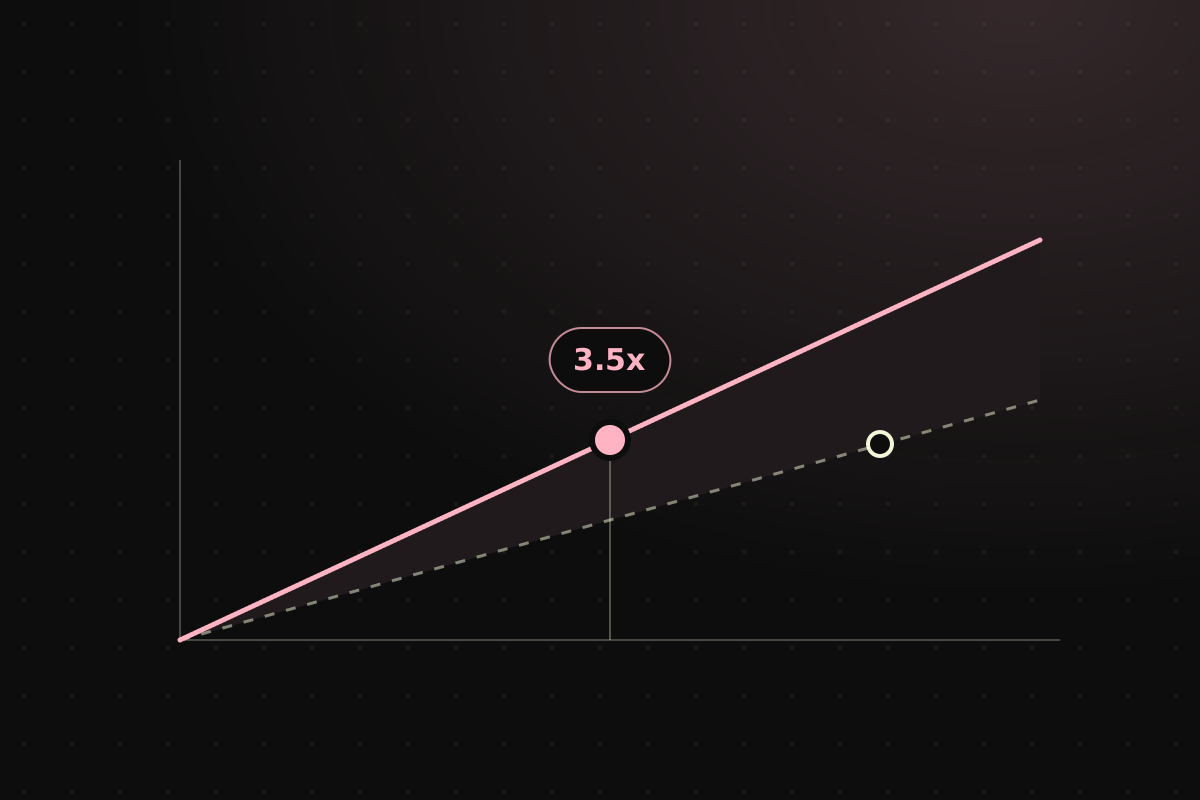
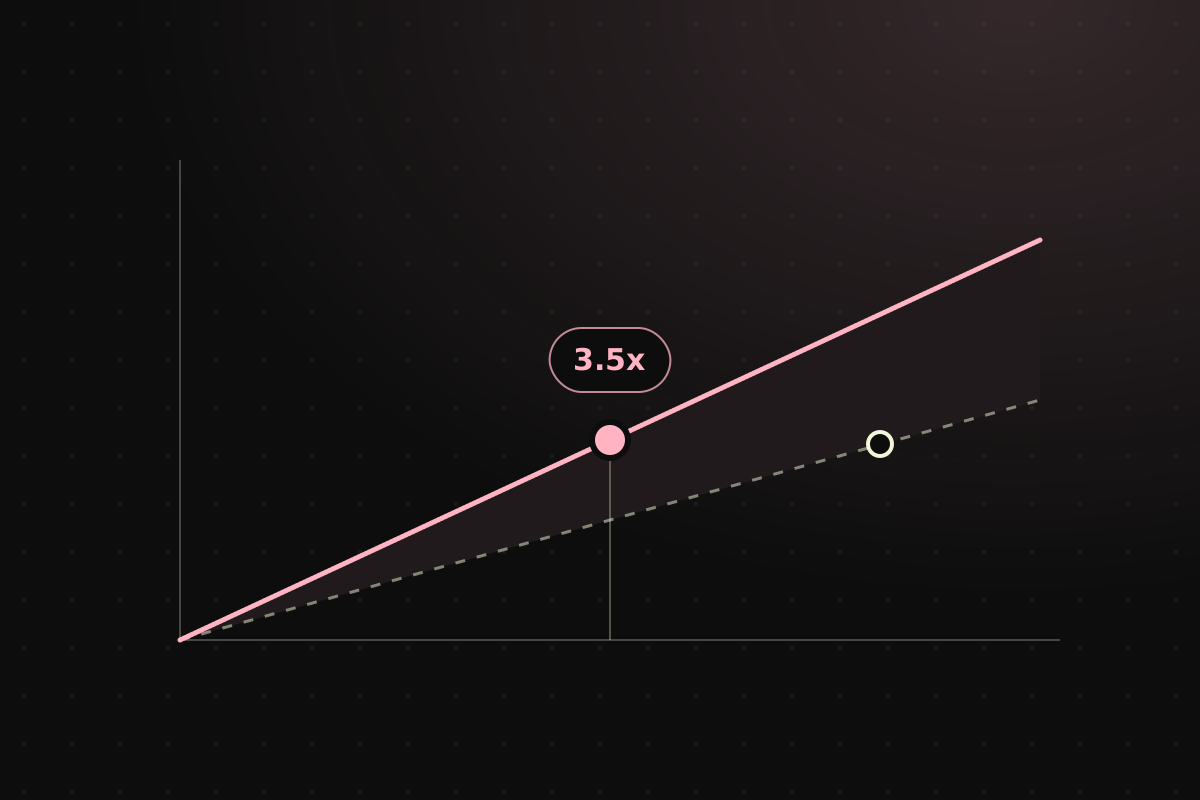
ROAS (return on ad spend) is how many dollars of sales each ad dollar brings back: $7,000 from $2,000 of ads is 3.5x. Drag your spend and revenue on the chart and tilt the break-even line to your margin to see if your ads make money.
ROAS
3.50x
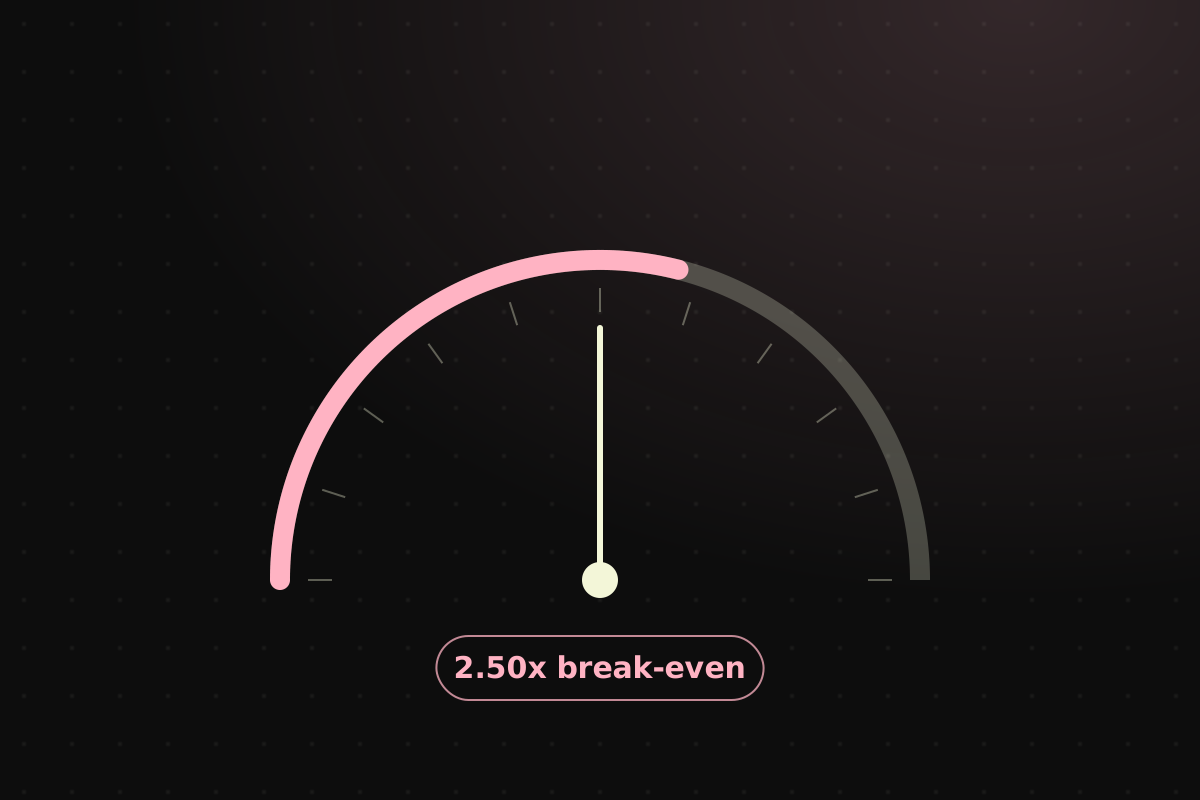
Spend $What the ad platform billed you for the period, such as the last 30 days. on ads, get $The order value the ad platform credits to these ads over the same dates. It's in the ads report as purchase value or conversion value. back, at a %The share of each sale left after the product's cost (and, if you like, shipping and fees). A $100 sale of a $60 product is a 40% margin. Most online stores: 40–70%. gross margin. You break even at 2.50x, so these ads kept $800.00.
ROAS (return on ad spend) is how many dollars of sales each ad dollar brought back. The steeper your green line, the higher it is.
- Your ROAS, 3.50x
- Break-even at a 40% margin: drag it to change the margin
- Above the line: ads make money
- Below: ads lose money
- ROAS as a percentage
- 350%
- Break-even ROAS
- 2.50x
- Kept after product cost and ads
- $800.00
- Most you could spend for this revenue
- $2,800
- Product cost $4,200 · 60%
- Ad spend $2,000 · 29%
- Profit $800.00 · 11%
Drag the green dot to set spend and revenue. Drag the dashed break-even line to change your margin. Or tap any green box to type a number.



Find trends in your business for free. Ask a question about your store and Replo answers it from every tool you connect.
How to read your number
ROAS is the revenue your ads brought in divided by what they cost: $7,000 from $2,000 of ads is 3.5x. Whether that's good depends on your margin, because you break even at 1 ÷ gross margin. At a 40% margin that's 2.5x, so 3.5x makes money and 2x loses it.
Why it matters
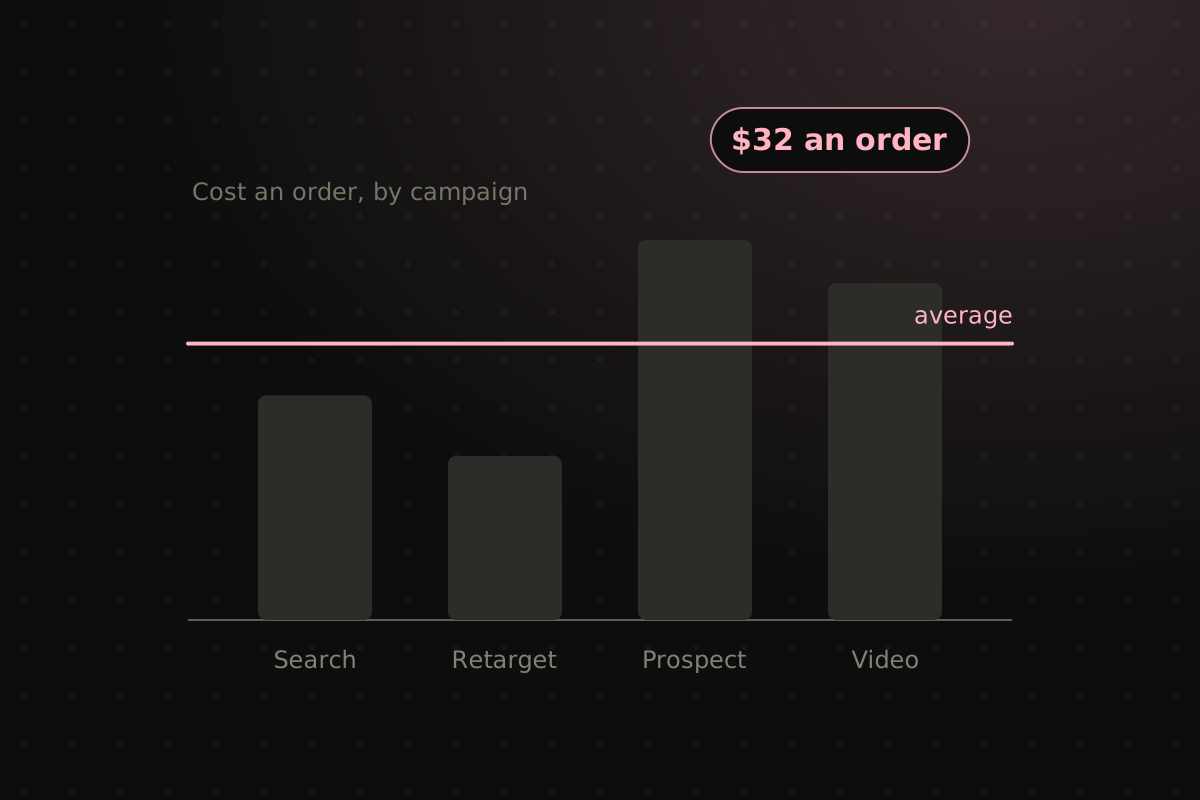
ROAS tells you which ad dollars are paying for themselves. Move $2,000 of spend from a 2x campaign to a 3.5x one at a 40% margin and the same budget goes from losing $400 to keeping $800. Checking it by campaign shows where to put the next dollar.
Every morning
Get your ROAS in a daily report
Replo reads Meta, Google Ads, TikTok, Shopify, Google Analytics 4 and Triple Whale and has your ROAS ready every morning, with what changed since yesterday and why.




Formula
ROAS = revenue from ads ÷ ad spend
A 3.5x ROAS means every $1 of ads brought in $3.50 in sales. Some ad platforms show it as a percentage, so 3.5x and 350% are the same number.
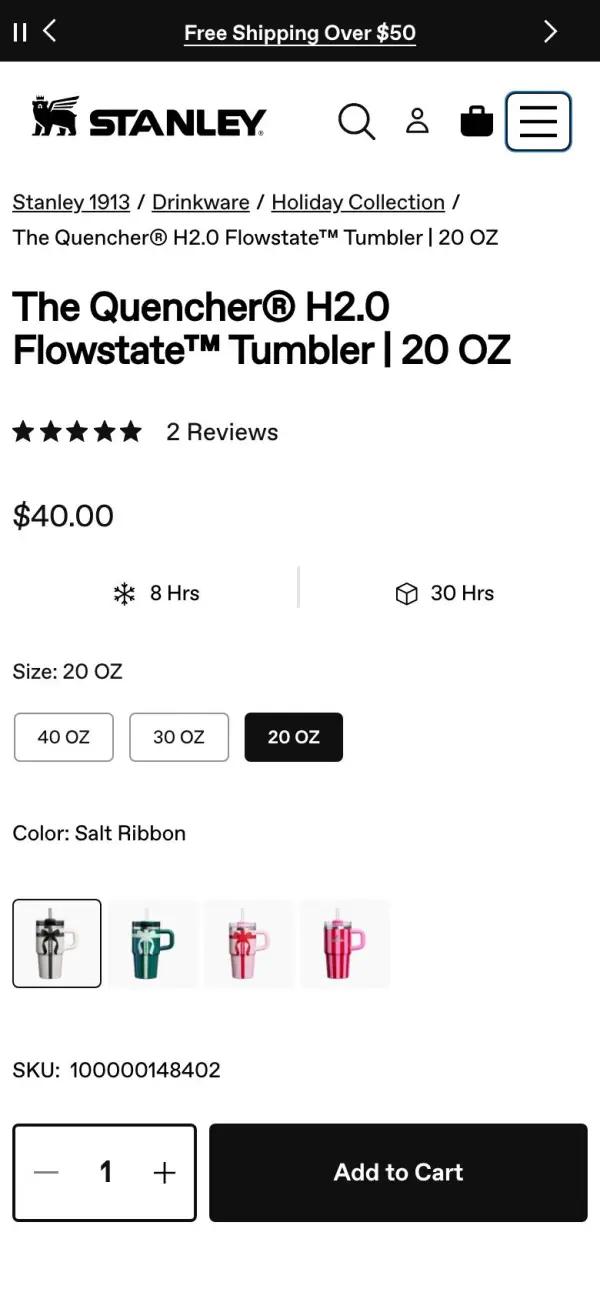
 Stanley 1913
Quencher H2.0 tumbler, 20 oz, $40
Stanley's Quencher sells for $40.00. At an assumed 60% gross margin, each sale leaves $24.00 before ads, so its ads break even at a ROAS of 1.67.
See the live pageOther ways to calculate ROAS
- ROAS as a percentage
- ROAS % = revenue from ads ÷ ad spend × 100
- When an ad platform or report shows ROAS as a percentage: 3.5x and 350% are the same.
- Break-even ROAS
- Break-even ROAS = 1 ÷ gross margin
- To find the line a campaign has to clear before it makes money.
- ROAS from funnel numbers
- ROAS = conversion rate × average order value ÷ cost per click
- To see how much a better landing page or a bigger order moves ROAS without touching the ads.
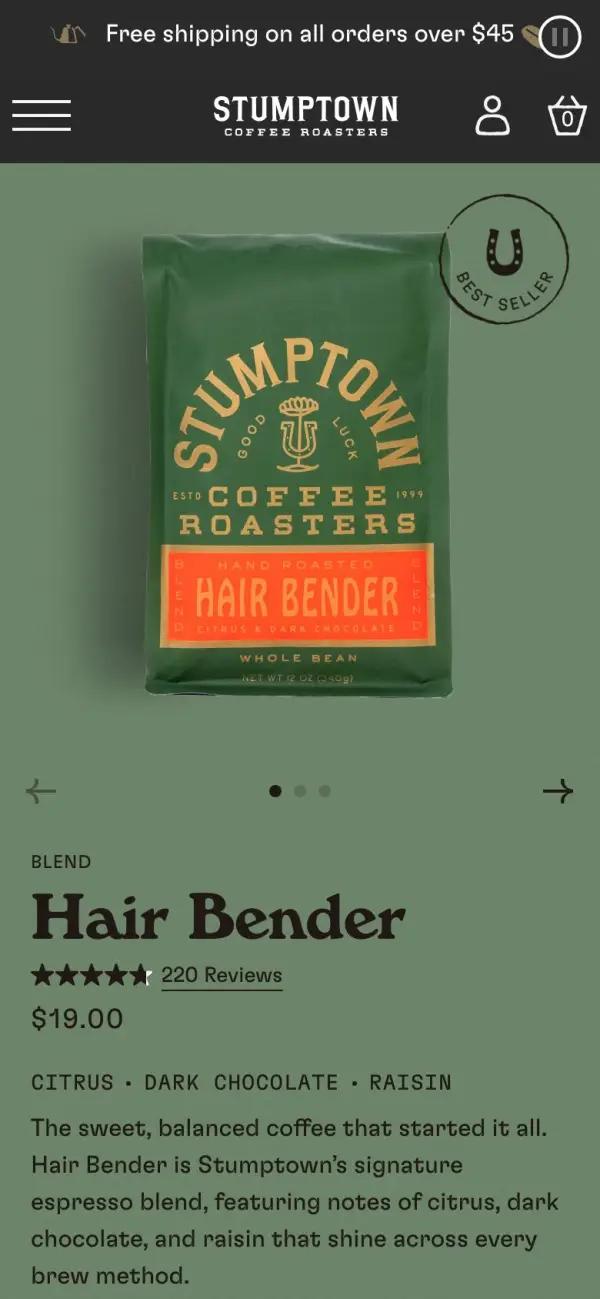
 Stumptown Coffee Roasters
Hair Bender coffee, 12 oz, $19
Stumptown's Hair Bender sells for $19.00. At an assumed 60% gross margin, each sale leaves $11.40 before ads, so its ads break even at a ROAS of 1.67.
See the live pageWhat is ROAS?
ROAS, short for return on ad spend, is how many dollars of sales each dollar of advertising brings back. If you spend $2,000 on ads and those ads lead to $7,000 in orders, your ROAS is 3.5x.
It's the number most stores use to decide which campaigns to keep, which to cut and where to put more budget. It measures sales, not profit, so it only tells you whether ads make money once you compare it with your margin.

 Lodge Cast Iron
11 inch enamel cast iron skillet, $49.90
Lodge's enamel skillet sells for $49.90. At an assumed 60% gross margin, each sale leaves $29.94 before ads, so its ads break even at a ROAS of 1.67.
See the live pageHow do you calculate ROAS?
- Pick a period. Use the same dates for both numbers, such as the last 30 days.
- Find your ad spend. The total billed by the ad platform for that period: $2,000.
- Find the revenue from those ads. The order value credited to the ads in the same period: $7,000.
- Divide revenue by spend. $7,000 ÷ $2,000 = 3.5x.
Three choices change the answer, so make them once and keep them.
Whose revenue. Ad platforms credit sales to their own ads within an attribution window, often a few days after a click or view. Your store's analytics credits sales by its own rules. The two rarely match, so always compare like with like.
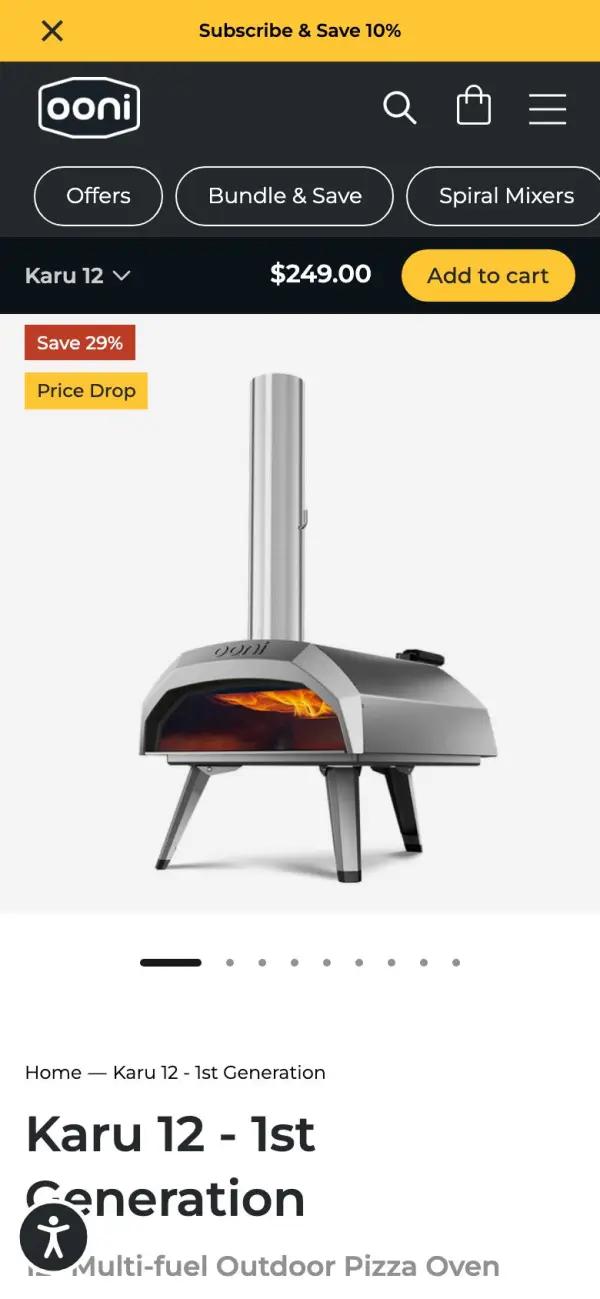
 Ooni
Karu 12 pizza oven, $249
Ooni's Karu 12 sells for $249.00. At an assumed 60% gross margin, each sale leaves $149.40 before ads, so its ads break even at a ROAS of 1.67.
See the live pageWhat counts as revenue. Use order value before tax. If you include shipping charged to the customer, include it every time.
Which spend. ROAS uses ad spend only. Agency fees, creator payments and discounts belong in your customer acquisition cost.
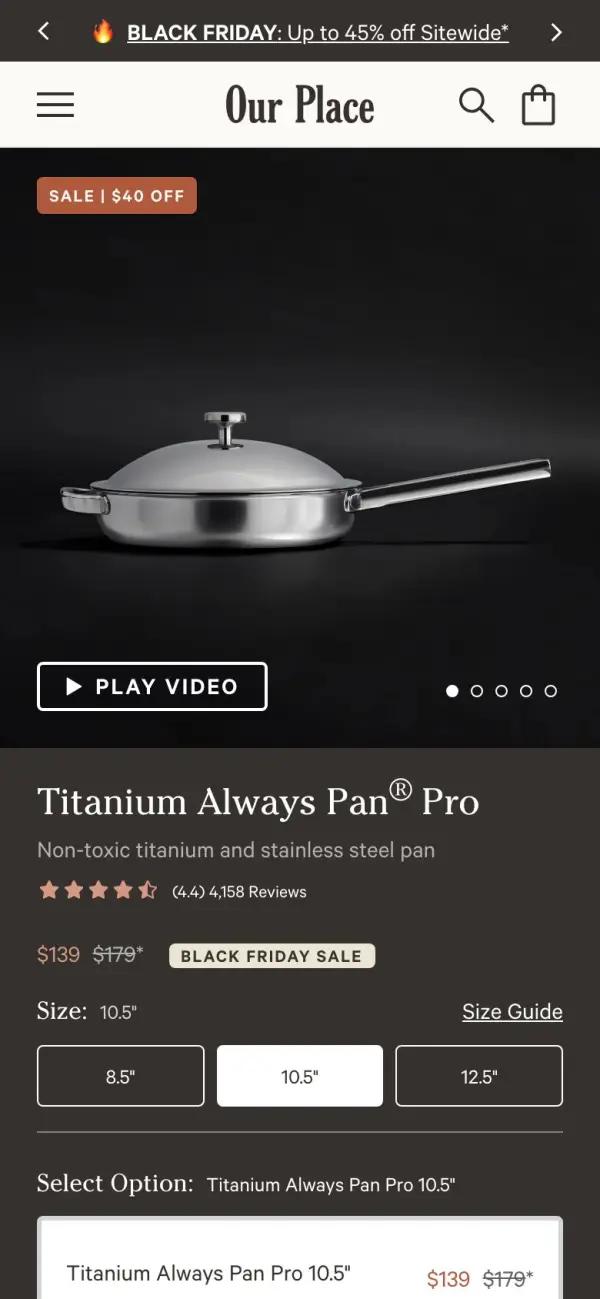
 Our Place
Titanium Always Pan Pro, 10.5 inch, $139
Our Place's Always Pan sells for $139.00. At an assumed 60% gross margin, each sale leaves $83.40 before ads, so its ads break even at a ROAS of 1.67.
See the live pageHow to calculate ROAS: a worked example
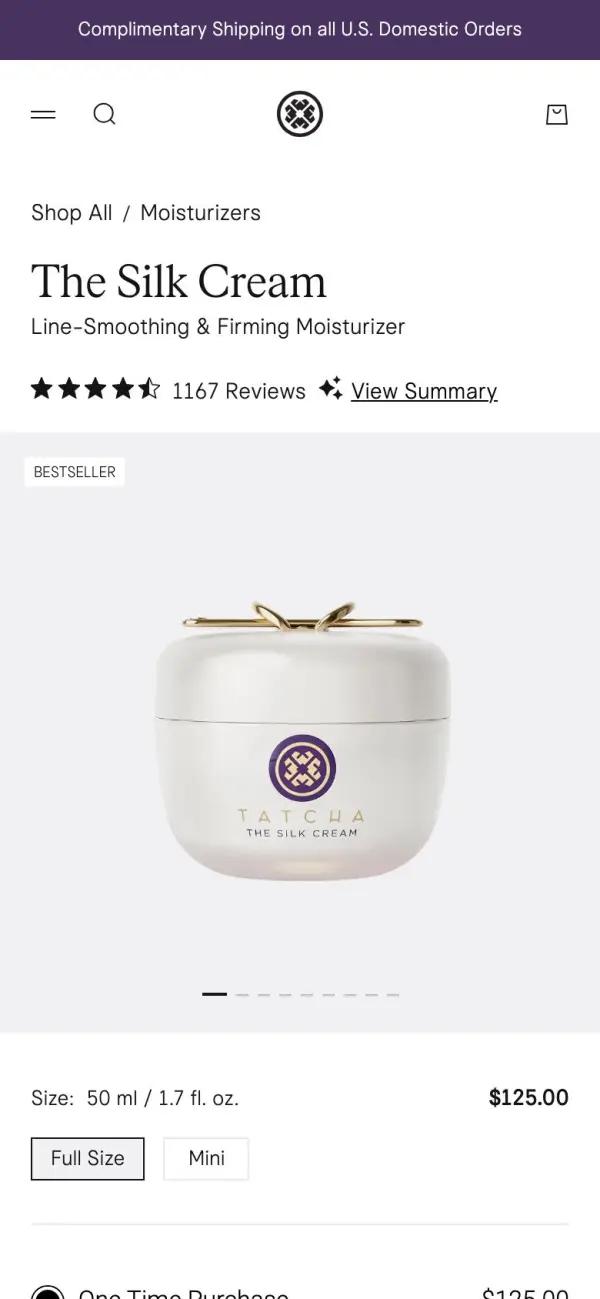
Tatcha sells The Silk Cream for $125 and advertises it on Meta with ads like the one below. Say you sell a cream at that price: you spend $2,000 on Meta ads in a month, Meta credits them with 56 orders ($7,000), and your gross margin is 40%.
- ROAS = $7,000 ÷ $2,000 = 3.5x
- Gross profit = $7,000 × 40% = $2,800
- After the $2,000 ad bill, the store keeps $800
At a 40% margin you break even at 1 ÷ 40% = 2.5x, so a 3.5x ROAS makes money.
The ad

Tatcha
Sponsored ·
Smooth the look of wrinkles for silky-soft skin. The Silk Cream nourishes & strengthens for an improved skin barrier.

tatcha.com
The Silk Cream
The page it opens
 Tatcha
A real ad and the page it opens. Tatcha's Silk Cream sells for $125.00. At an assumed 60% gross margin, each sale leaves $75.00 before ads, so its ads break even at a ROAS of 1.67.
See the ad in Meta’s Ad LibrarySee the live pageWhat is a good ROAS?
A good ROAS is any ROAS above your break-even ROAS, and break-even depends only on your gross margin: break-even ROAS = 1 ÷ gross margin. A store with 40% margins needs 2.5x to break even; one with 70% margins needs about 1.4x. So the same 3x is thin for one store and healthy for the other. Work out yours with the break-even ROAS calculator.
 Oats Overnight
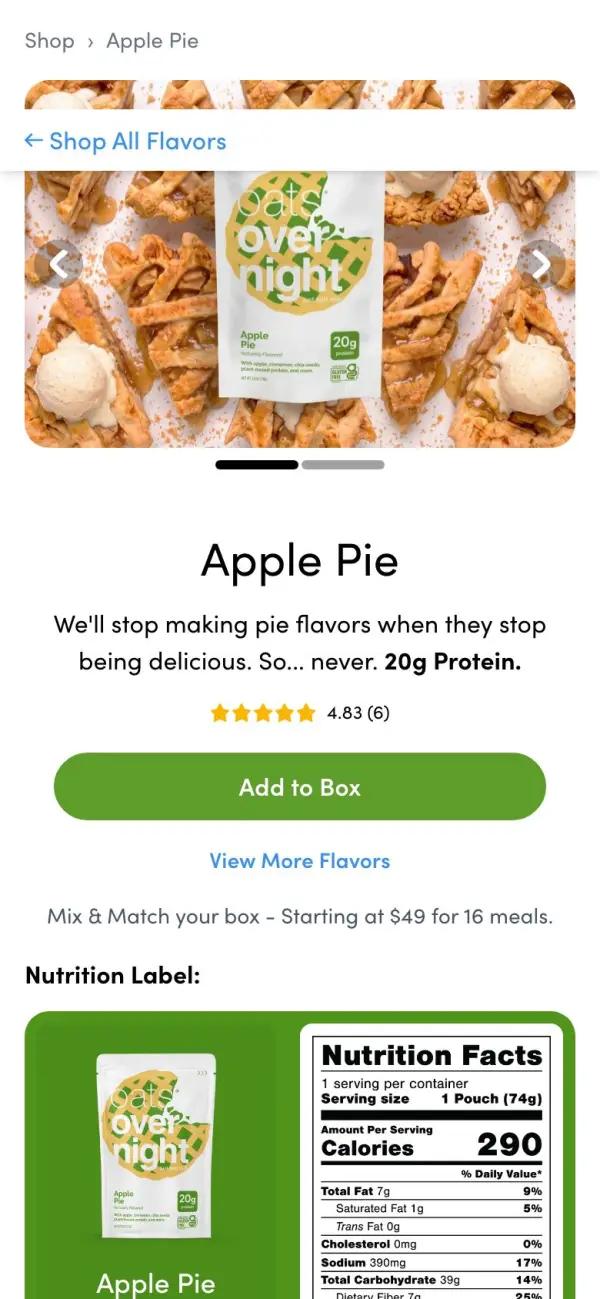
Mix-and-match oatmeal box, 16 meals, $49
Oats Overnight's 16-meal oatmeal box sells for $49.00. At an assumed 60% gross margin, each sale leaves $29.40 before ads, so its ads break even at a ROAS of 1.67.
See the live pagePublished benchmarks give a rough sense of what other advertisers see. Varos data, shown by WhatConverts, puts the median ROAS at 3.31x on Google Ads and 2.19x on Facebook ads across industries (source). The same table runs from below 1x to above 6x depending on the industry. The often-quoted "4:1 is good" rule has no study behind it, so use your own break-even as the line.
Break-even ROAS by gross margin
| Gross margin | Break-even ROAS | At a 3x ROAS, each $1 of ads |
|---|---|---|
| 20% | 5.00x | loses $0.40 |
| 30% | 3.33x | loses $0.10 |
| 40% | 2.50x | keeps $0.20 |
| 50% | 2.00x | keeps $0.50 |
| 60% | 1.67x | keeps $0.80 |
| 70% | 1.43x | keeps $1.10 |
| 80% | 1.25x | keeps $1.40 |
Do it with Replo
Get ROAS by campaign every morning
Replo reads your ad accounts and store, then sends ROAS by campaign on the schedule you set.
How much is a higher ROAS worth?
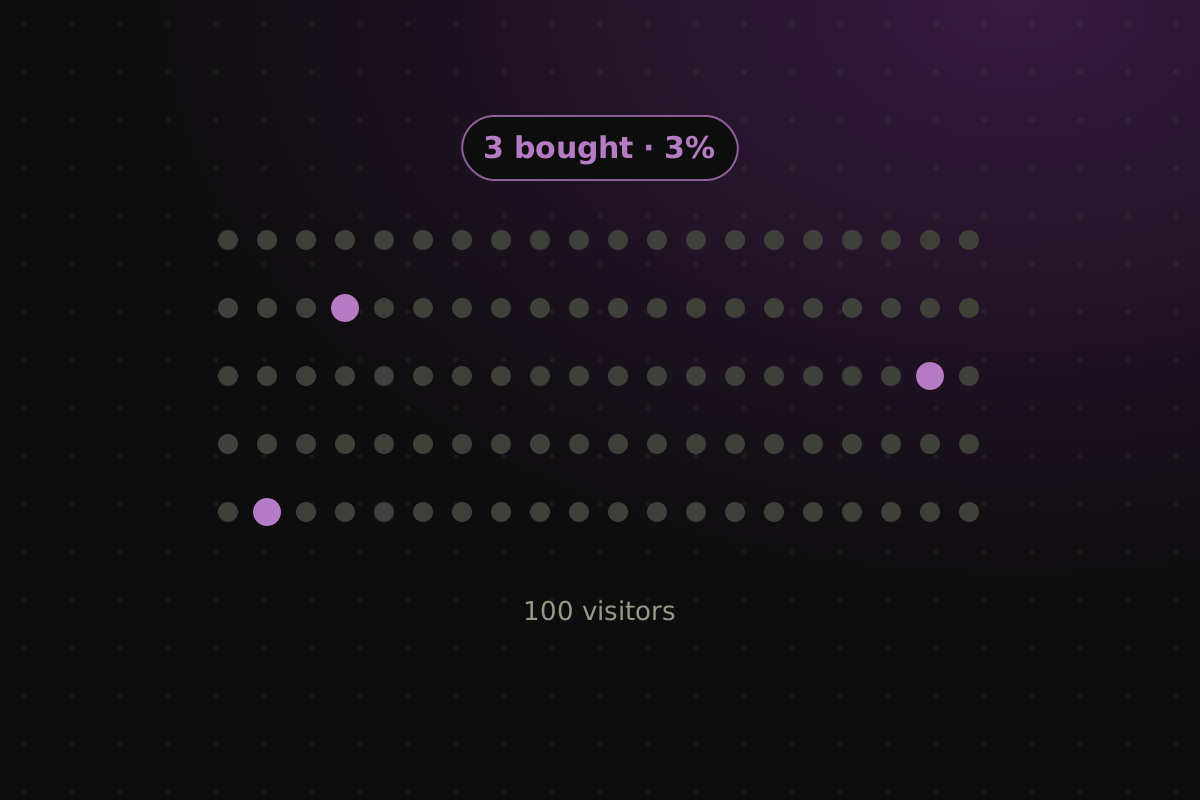
Take the store above. Its $2,000 buys 2,500 clicks at $0.80 each, 2.8% of those visitors order, and the average order is $100: 70 orders, $7,000, a 3.5x ROAS and $800 kept after ads.
Lift the landing page's conversion rate from 2.8% to 3.5% and the same clicks bring about 88 orders and $8,750. ROAS rises to 4.4x and the store keeps $1,500, almost double, without spending another dollar on ads. That's because ROAS = conversion rate × average order value ÷ cost per click: the page and the offer move it as much as the ad does.
The ad
Stumptown Coffee Roasters
Sponsored ·
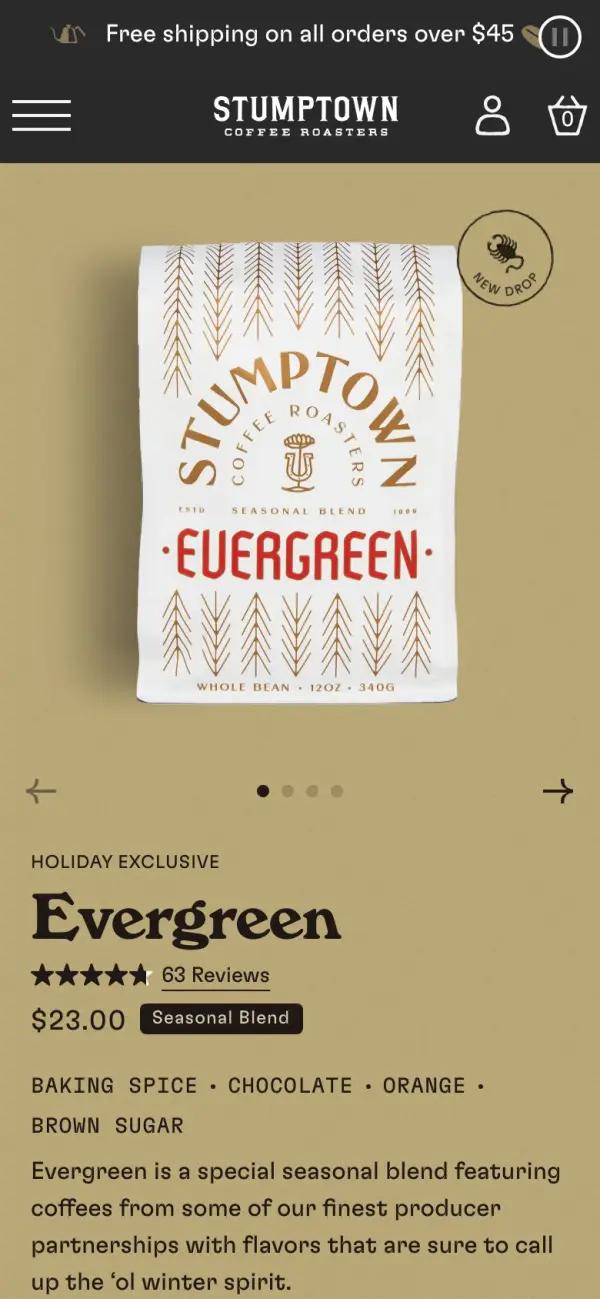
Sweet spice, silky chocolate-covered orange, and a lush brown sugar finish walk into a holiday blend. It's Evergreen Season.

stumptowncoffee.com
Evergreen Is for Everyone
The page it opens
 Stumptown Coffee Roasters
A real ad and the page it opens. Stumptown's Evergreen sells for $23.00. At an assumed 60% gross margin, each sale leaves $13.80 before ads, so its ads break even at a ROAS of 1.67.
See the ad in Meta’s Ad LibrarySee the live pageHow to improve your ROAS
- Cut what's below break-even. Sort campaigns by ROAS against your break-even line and move budget from the ones under it to the ones above it.
- Send each ad to a matching page. A shopper who clicked an ad for one product should land on that product, with the same offer and imagery, not on your homepage. Read how landing pages affect ad conversion rate.
- Raise conversion rate on the page. Find where visitors stop with heatmaps, then A/B test the headline, offer or layout. Check where you stand with the conversion rate calculator.
- Raise order value. Bundles, quantity breaks and a free-shipping threshold lift revenue per order, and ROAS with it. See the average order value calculator.
- Check it by campaign, often. A blended ROAS hides one bad campaign behind two good ones. Replo's automated reports send ROAS by campaign on the schedule you set.
The ad
Ooni
Sponsored ·
Experience wood-fired flavor for less! The Ooni Karu 12 multi-fuel oven just got more affordable at $100 off🍕🙌

ooni.com
$100 Off Karu 12 Multi-fuel Oven
The page it opens
OoniA real ad and the page it opens. Ooni's Karu 12 sells for $249.00. At an assumed 60% gross margin, each sale leaves $149.40 before ads, so its ads break even at a ROAS of 1.67.
See the ad in Meta’s Ad LibrarySee the live pageQuestions about ROAS
Divide the revenue your ads brought in by what they cost: ROAS = revenue from ads ÷ ad spend. $7,000 of sales from $2,000 of ads is a 3.5x ROAS, or 350%. Use the same dates for both numbers.
It depends on your margin. At a 40% gross margin, 2.5x is exactly break-even: the ads pay for themselves and nothing more. At 60% margins it's profitable, since break-even is about 1.7x. Divide 1 by your margin to find your line.
Every $1 of ads brought in $1.50 in sales. That only makes money if your gross margin is above 67%, because break-even ROAS is 1 ÷ margin. For most stores selling physical products, 1.5x loses money on the first order.
ROAS divides revenue by ad spend. ROI divides profit by everything you invested, so it counts product cost, shipping and fees. A campaign can show a 3x ROAS and still lose money if your gross margin is under 33%.
MER, the marketing efficiency ratio, divides all store revenue by all marketing spend. ROAS uses only the revenue an ad platform credits to its own ads. MER is harder to inflate; ROAS tells you which campaign to cut.
Each one credits sales by its own rules. Ad platforms count sales inside their attribution window, including some views without a click, while your store uses its own attribution. Pick one source, keep using it, and compare trends rather than single days.