Markup calculator
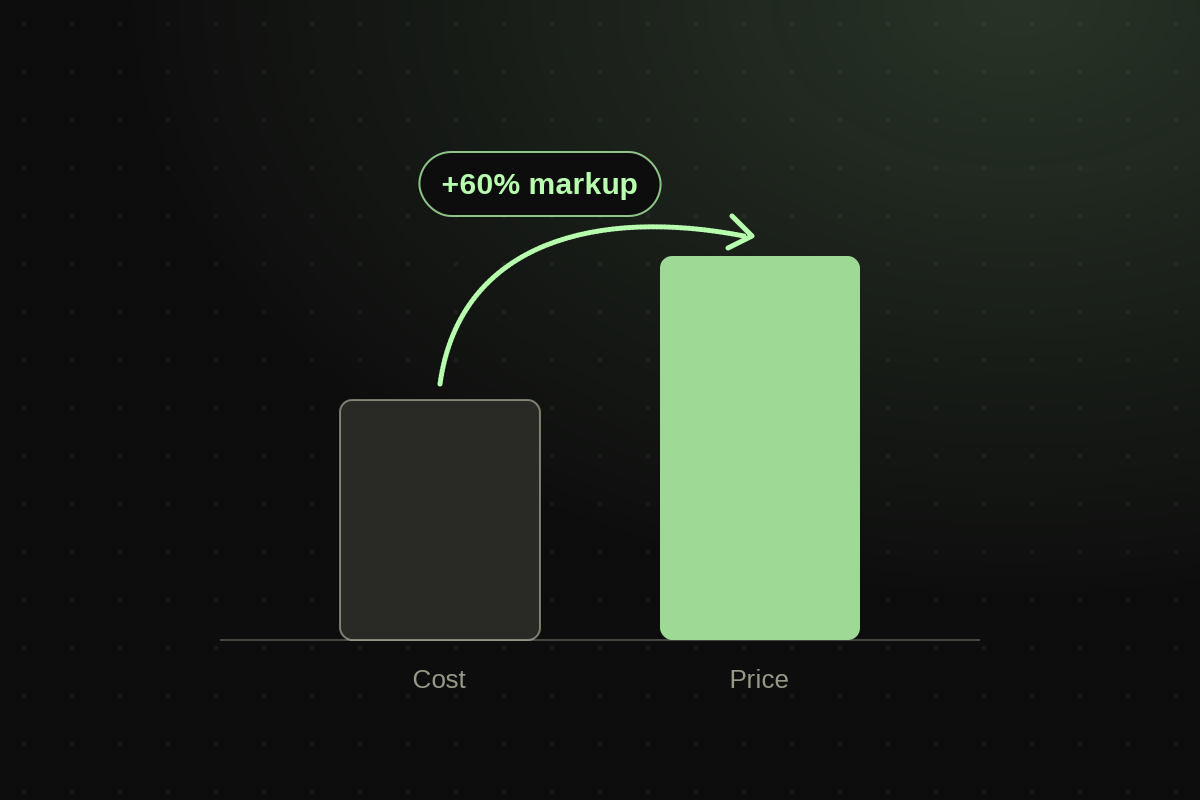
Markup is how much you add to a product's cost to set its price, as a share of that cost: buy at $15, sell at $40, and the markup is 166.7%.
Markup
166.7%
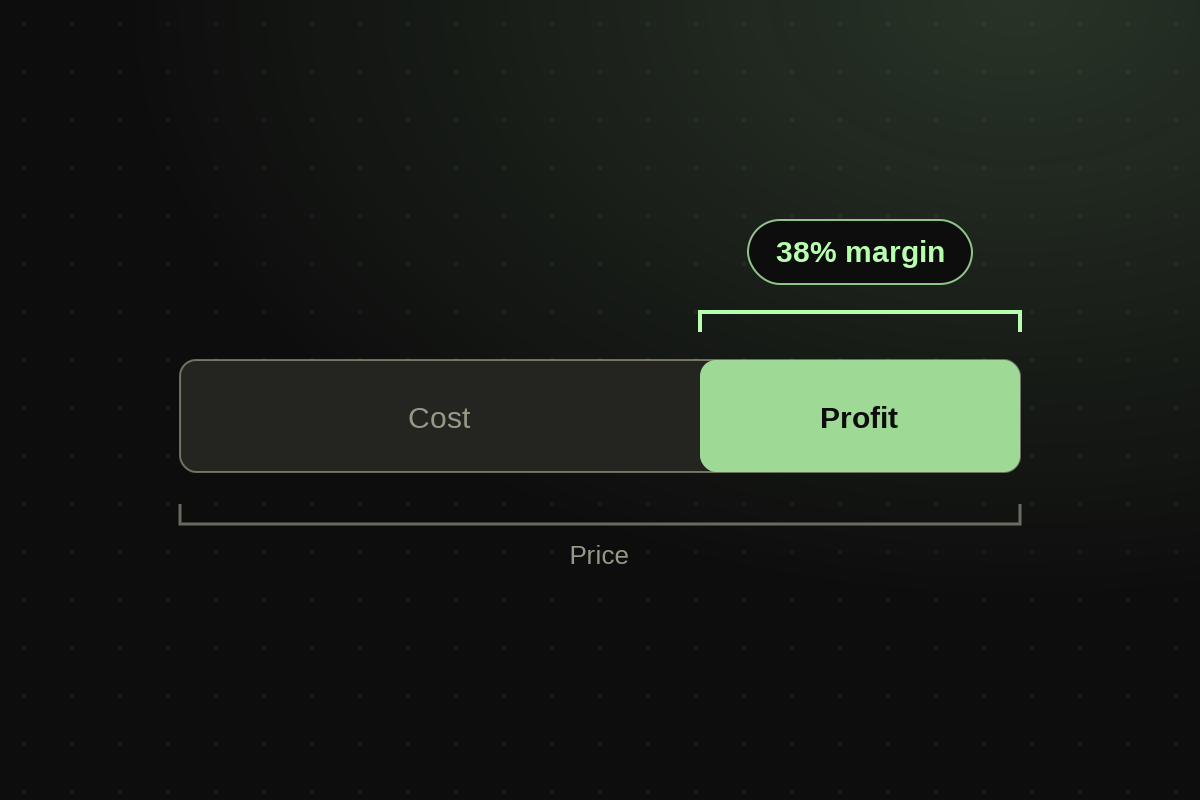
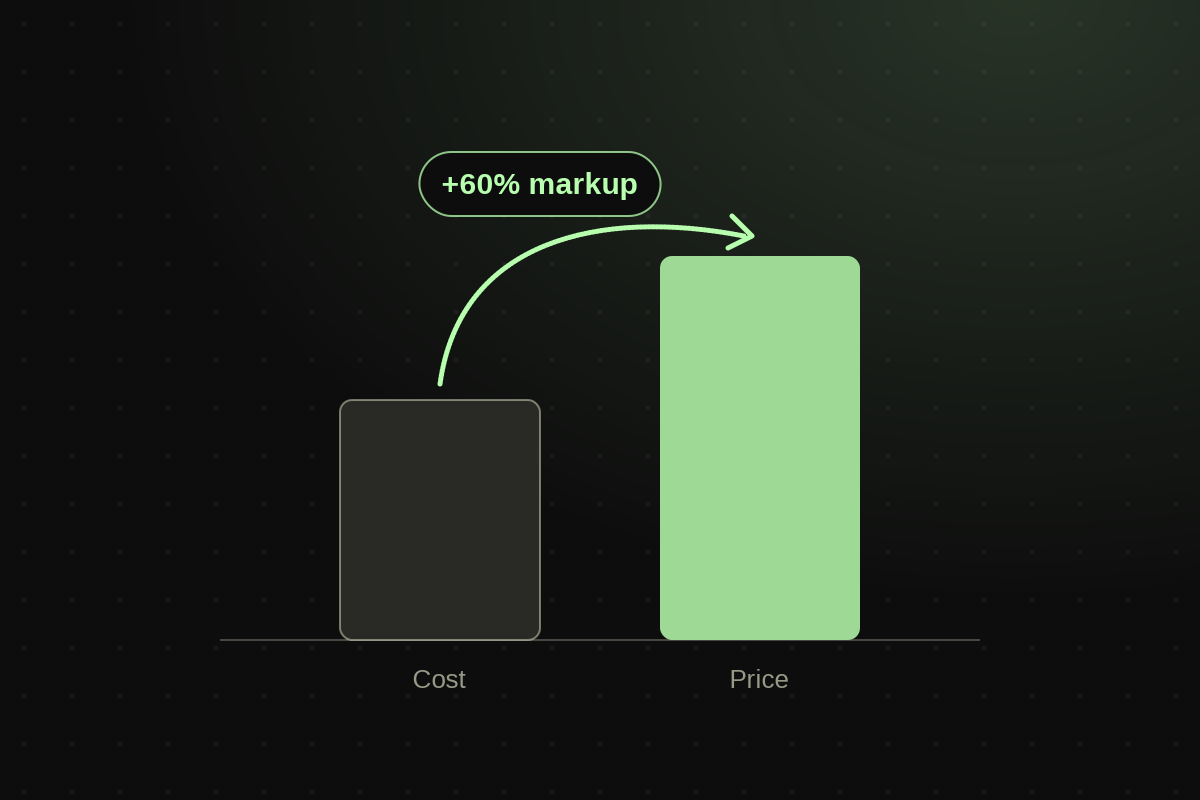
Buy at $What one unit costs you to make or buy, including inbound shipping. Often called COGS (cost of goods sold)., sell at $The price a customer pays, before tax and shipping.: a 166.7% markup but only a 62.5% margin. Same $25.00 profit, divided by the cost for markup and by the price for margin.
Markup is profit as a share of what the product cost you; margin is the same profit as a share of the price. Same dollars, two different percentages.
Pick a markup (the margin it gives)
- Profit per unit
- $25.00
- Margin
- 62.5%
- Price as a multiple of cost
- 2.67x
- Price for a 50% margin (keystone)
- $30.00
Drag the price (green) or the cost along the bar. The two brackets show why the same profit is a bigger markup than margin. Or tap any green box to type a number.

 Last week at Magic Spoon
Get a daily report card for free. Replo has a daily report card of your business ready every morning, with what changed and why.
How to read your number
Markup is the profit you add on top of a product's cost, divided by that cost. At the defaults, a $15 cost and a $40 price, you add $25, a 166.7% markup. The same $25 is 62.5% of the price, so your margin is 62.5%: of every $40 sale, $15 pays for the product and $25 is left for shipping, fees, ads and profit.
Why it matters
Markup sets the price; margin decides what you keep. Price a $12 product with a 50% markup and you sell it at $18 with a 33.3% margin, which card fees, shipping and ads can use up. A 150% markup on the same product sells at $30 and leaves a 60% margin to cover them.
Your own store
Put the product on a page and sell it
Tell Replo the product and the price you worked out. It builds a store on your brand, with Shopify or Replo checkout.

Formula
Markup = (price − cost) ÷ cost × 100
To go the other way: price = cost × (1 + markup ÷ 100). Markup is a share of the cost, so it's always higher than margin for the same item.
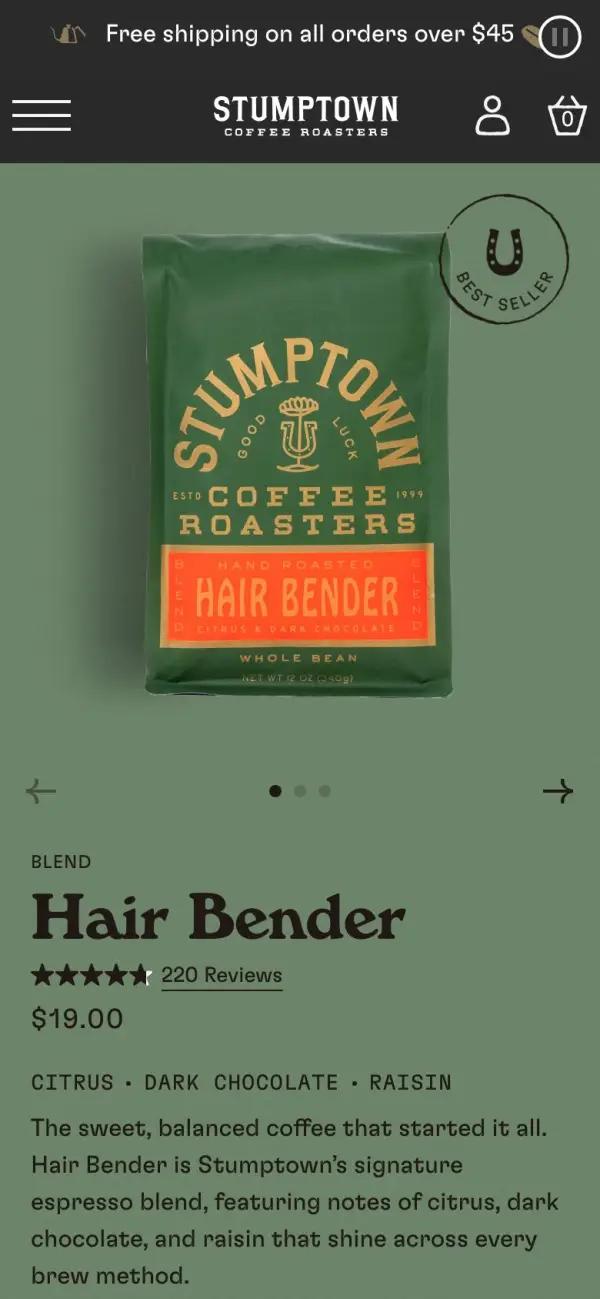
 Stumptown Coffee Roasters
Hair Bender coffee, 12 oz, $19
Stumptown's Hair Bender sells for $19.00. A 60% margin at that price means a cost of $7.60 or less; a 100% markup (keystone) means a $9.50 cost.
See the live pageOther ways to calculate markup
- Price from markup
- Price = cost × (1 + markup ÷ 100)
- When you know the markup you want and need the selling price: a $12 cost at a 150% markup sells at $30.
- Price from a target margin
- Price = cost ÷ (1 − margin ÷ 100)
- When you plan in margin: a $12 cost at a 60% margin also sells at $30.
- Margin from markup
- Margin = markup ÷ (100 + markup) × 100
- To turn a markup into the margin it gives: a 100% markup is a 50% margin.
- Markup from margin
- Markup = margin ÷ (100 − margin) × 100
- To turn a target margin into the markup to apply: a 60% margin needs a 150% markup.
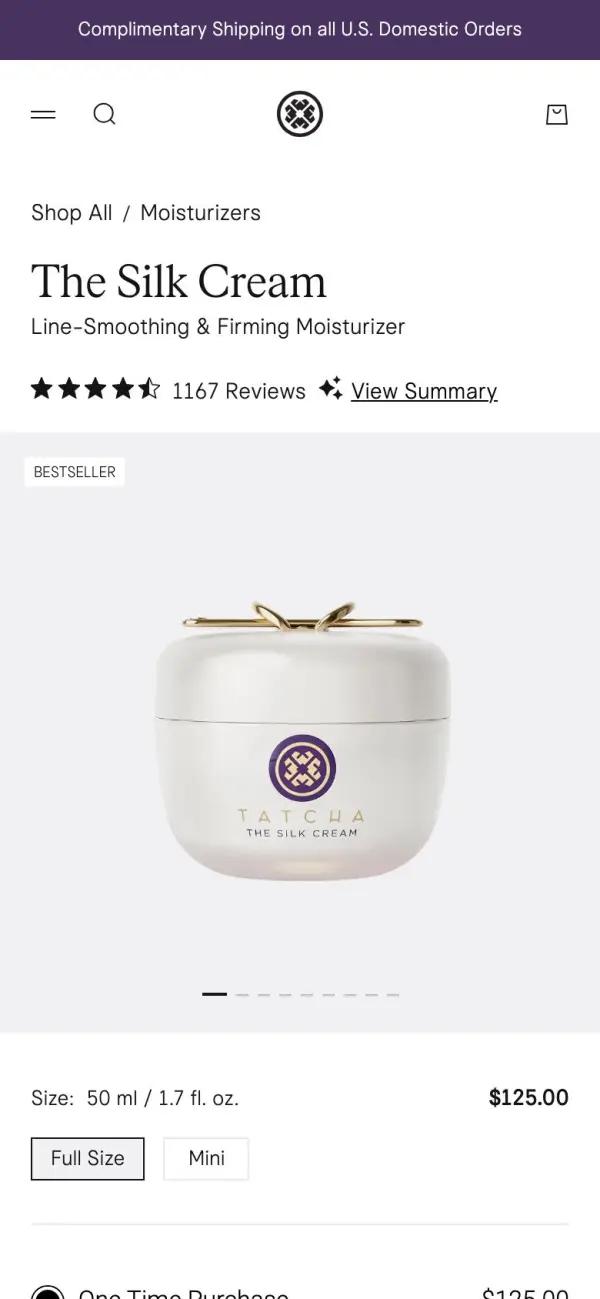
 Tatcha
The Silk Cream, 50 ml, $125
Tatcha's Silk Cream sells for $125.00. A 60% margin at that price means a cost of $50.00 or less; a 100% markup (keystone) means a $62.50 cost.
See the live pageMarkup vs margin: what's the difference?
- Margin from markup: margin = markup ÷ (100 + markup). A 25% markup is a 20% margin.
- Markup from margin: markup = margin ÷ (100 − margin). A 40% margin needs a 66.7% markup.
- Margin can't reach 100%; markup has no limit. A 100% margin would mean the product cost nothing.
Both start from the same profit, the price minus the cost. Markup divides that profit by the cost; margin divides it by the price. The tumbler in the calculator, a $40 Stanley Quencher at an assumed $15 cost, makes $25, so its markup is $25 ÷ $15 = 166.7% and its margin is $25 ÷ $40 = 62.5%.
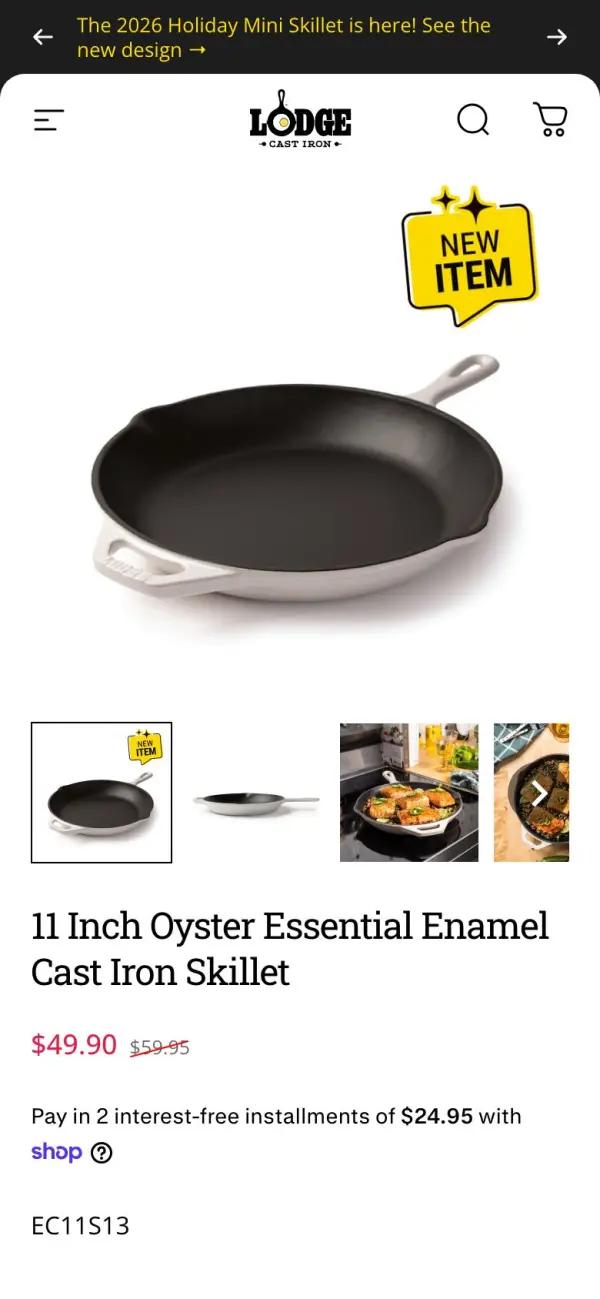
 Lodge Cast Iron
11 inch enamel cast iron skillet, $49.90
Lodge's enamel skillet sells for $49.90. A 60% margin at that price means a cost of $19.96 or less; a 100% markup (keystone) means a $24.95 cost.
See the live pageBecause the price is always bigger than the cost, markup is always the bigger number. That's where pricing mistakes come from: a store that wants a 50% margin and adds a 50% markup ends up with a 33.3% margin. To hit a 50% margin you need a 100% markup.
How do you price a product from its cost?
- Add up the landed cost. What one unit costs you to make or buy, plus inbound shipping and packaging: say $12.
- Pick a markup or a target margin. A 150% markup and a 60% margin give the same price.
- Work out the price. $12 × (1 + 1.5) = $30, or $12 ÷ (1 − 0.6) = $30.
- Check what each sale keeps. Take off card or marketplace fees, shipping you pay and ad cost per order, then see if the rest is worth it.
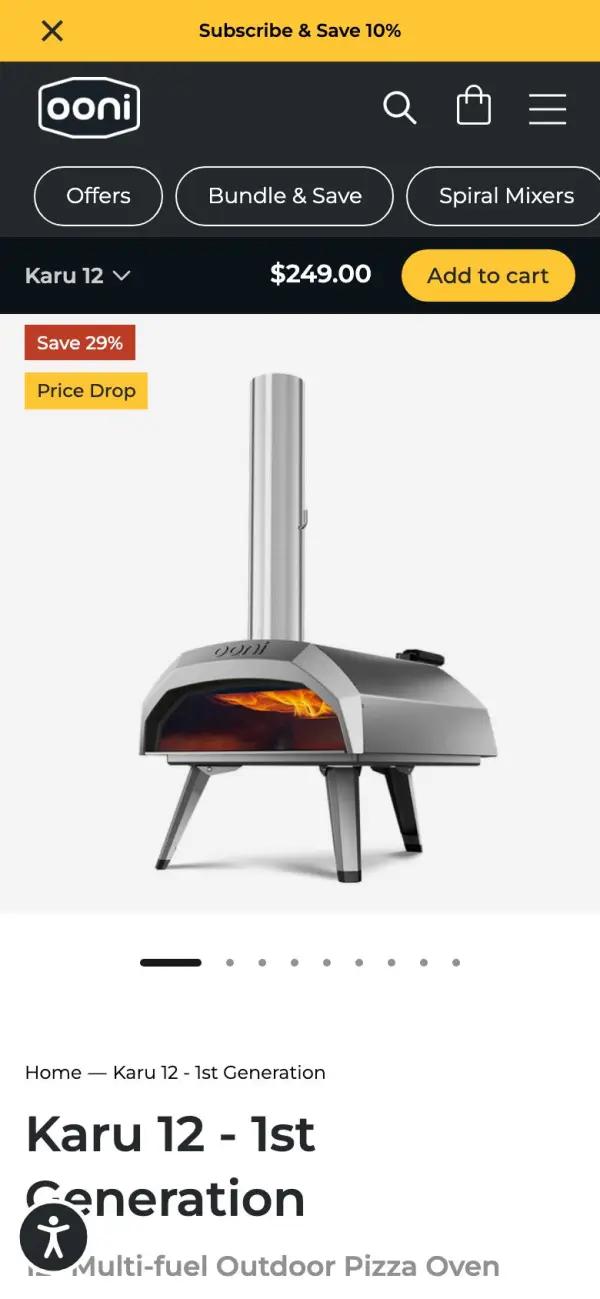
 Ooni
Karu 12 pizza oven, $249
Ooni's Karu 12 sells for $249.00. A 60% margin at that price means a cost of $99.60 or less; a 100% markup (keystone) means a $124.50 cost.
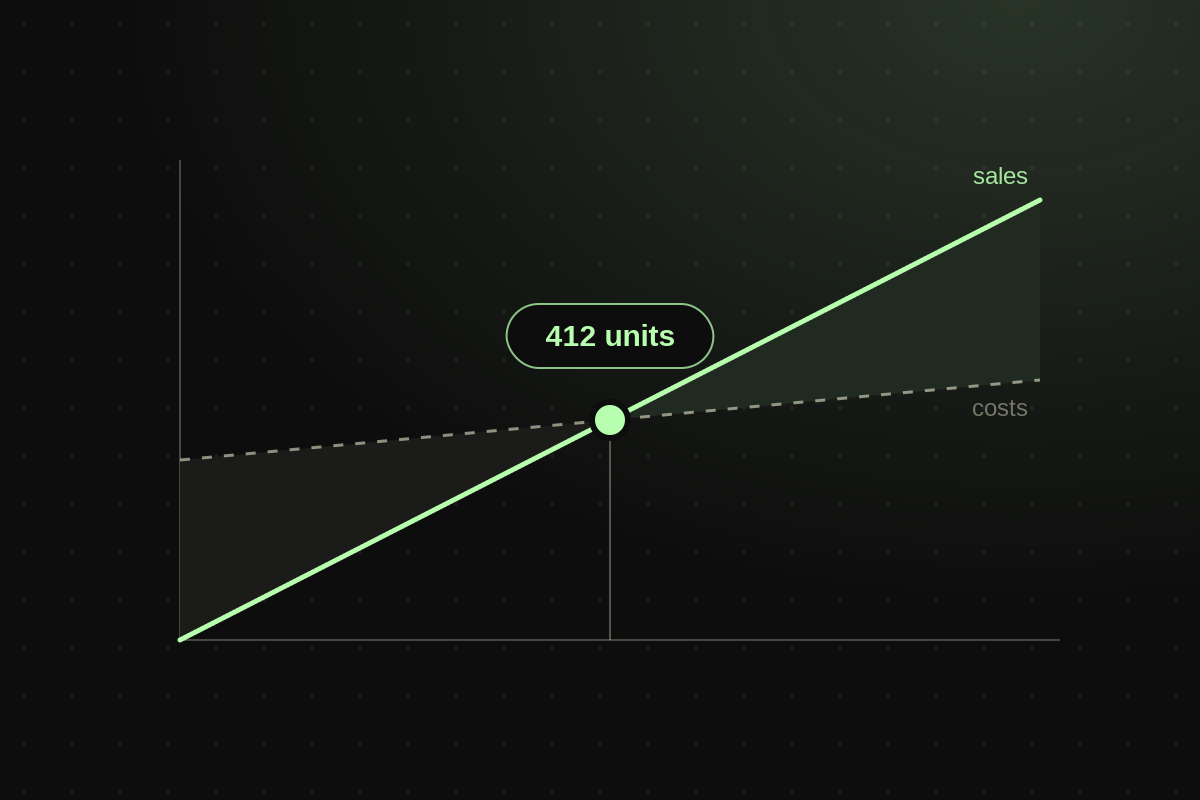
See the live pageThe last step is where a price that looked fine falls short. Check the cut a payment processor or marketplace takes with the Stripe, Square, eBay and Etsy fee calculators, see the margin left after shipping and ads with the profit margin calculator, and find how many units cover your monthly costs with the break-even calculator. To set retail and wholesale prices together, use the product pricing calculator.
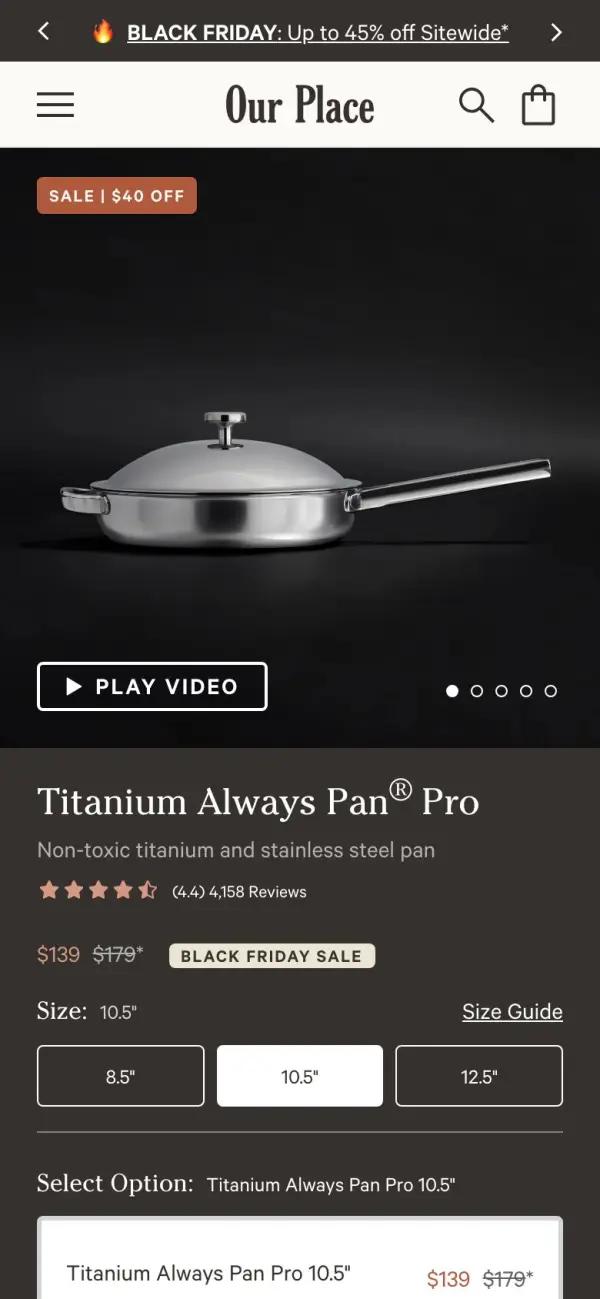
 Our Place
Titanium Always Pan Pro, 10.5 inch, $139
Our Place's Always Pan sells for $139.00. A 60% margin at that price means a cost of $55.60 or less; a 100% markup (keystone) means a $69.50 cost.
See the live pageHow to calculate markup: a worked example
Stanley sells its Quencher H2.0 tumbler, 20 oz, for $40 on its own site. Say a store like it pays $15 to make or buy each one.
- Profit per unit = $40 − $15 = $25
- Markup = $25 ÷ $15 = 166.7%
- Margin = $25 ÷ $40 = 62.5%
At $40, a $15 tumbler has a 166.7% markup, which is the same as a 62.5% margin.
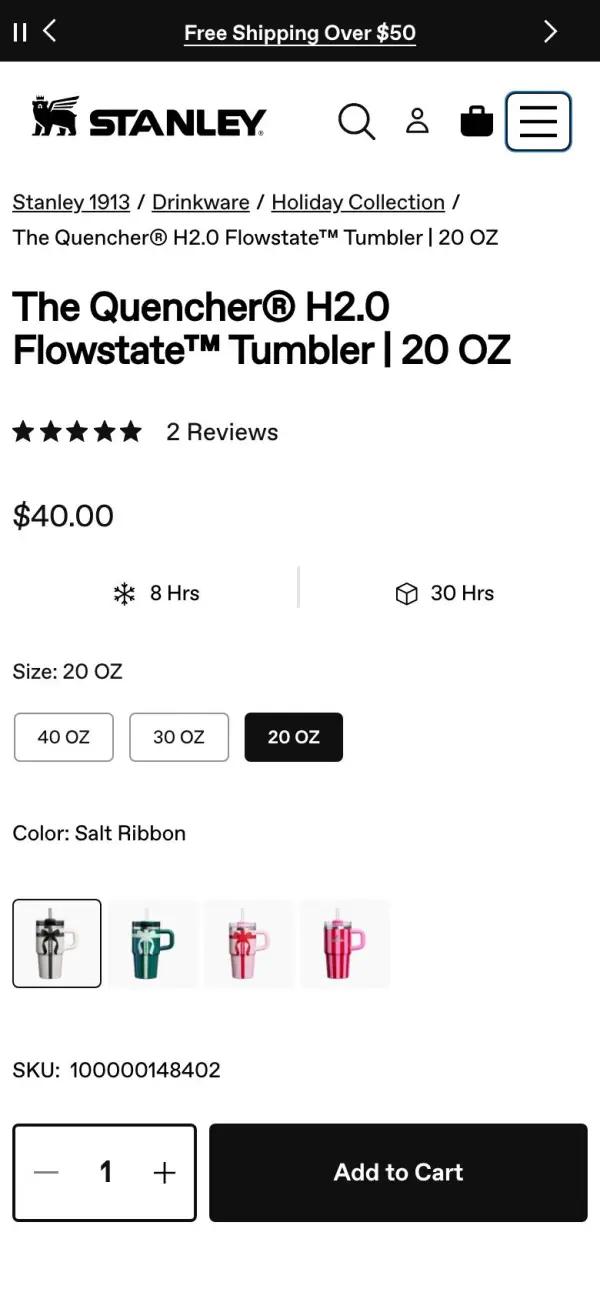
 Stanley 1913
Quencher H2.0 tumbler, 20 oz, $40
Stanley's Quencher sells for $40.00. A 60% margin at that price means a cost of $16.00 or less; a 100% markup (keystone) means a $20.00 cost.
See the live pageWhat markup should you use?
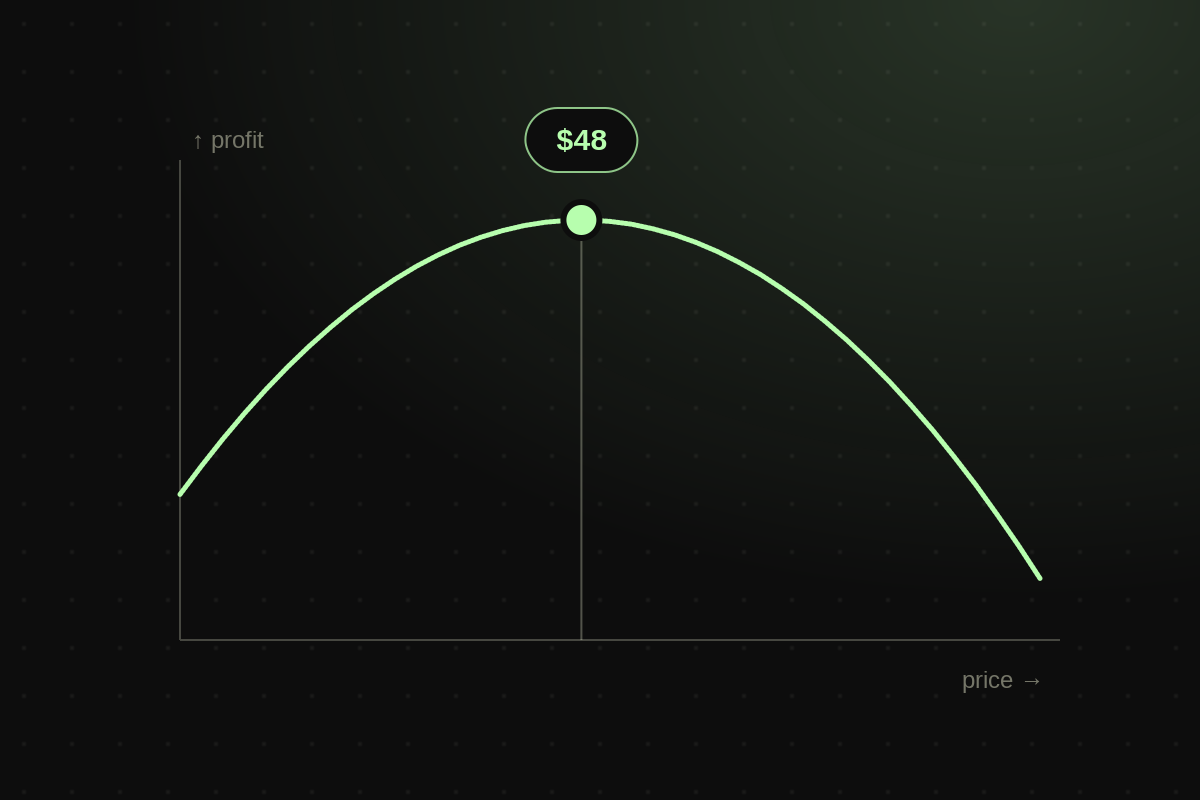
Pick the markup that gives the margin your business needs, then check it against what buyers will pay. Doubling the cost, a 100% markup, gives a 50% margin. That's the retail convention called keystone pricing, and it's often too thin for a store that pays for ads and shipping.
The chart converts both ways: find your markup in the first column to read its margin, or find the margin you want in the second column to read the markup that gets you there.
Markup to margin, and margin to markup
| Markup | Margin | Price for a $10 cost |
|---|---|---|
| 25% | 20.0% | $12.50 |
| 33.3% | 25.0% | $13.33 |
| 40% | 28.6% | $14.00 |
| 42.9% | 30.0% | $14.29 |
| 50% | 33.3% | $15.00 |
| 66.7% | 40.0% | $16.67 |
| 100% | 50.0% | $20.00 |
| 150% | 60.0% | $25.00 |
| 200% | 66.7% | $30.00 |
| 233.3% | 70.0% | $33.33 |
| 300% | 75.0% | $40.00 |
Do it with Replo
Sell it at the price you set
Describe the product and its price. Replo builds a store on your brand with checkout, ready to sell.
Typical markups by type of store
- Clothing stores: 50.8% margin, about a 103% markup.
- Shoe stores: 51.0% margin, about a 104% markup.
- Furniture and home furnishings stores: 51.0% margin, about a 104% markup.
- Sporting goods, hobby and music stores: 45.0% margin, about an 82% markup.
- Online and mail-order stores: 39.7% margin, about a 66% markup.
- Health and personal care stores: 33.1% margin, about a 50% markup.
- Electronics and appliance stores: 29.5% margin, about a 42% markup.
- Grocery stores: 28.0% margin, about a 39% markup.
These are the US Census Bureau's 2022 gross margins for US retailers by kind of business, turned into markup with markup = margin ÷ (100 − margin).
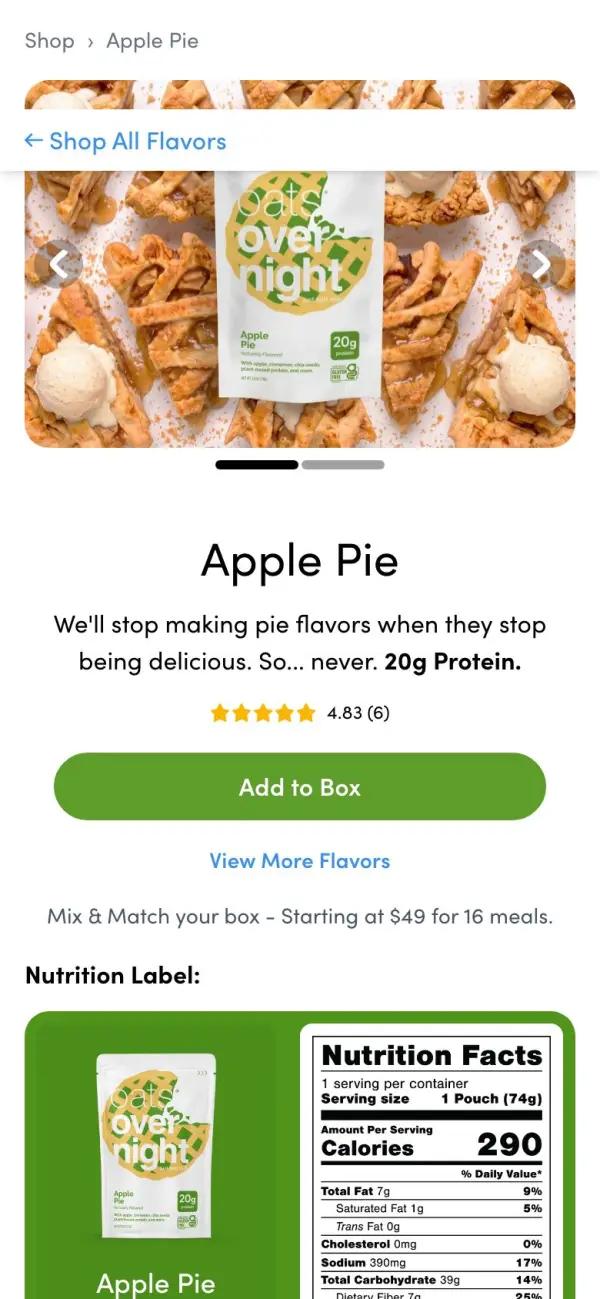
 Oats Overnight
Mix-and-match oatmeal box, 16 meals, $49
Oats Overnight's 16-meal oatmeal box sells for $49.00. A 60% margin at that price means a cost of $19.60 or less; a 100% markup (keystone) means a $24.50 cost.
See the live pageThey're averages over everything a store sold in a year, after sales and markdowns, so the markup on the tag starts higher. Use them to sanity-check a price, then set yours from your own costs: a brand that sells its own product online usually needs more room than a reseller, because ads and shipping come out of the same margin.
The ad
Stumptown Coffee Roasters
Sponsored ·
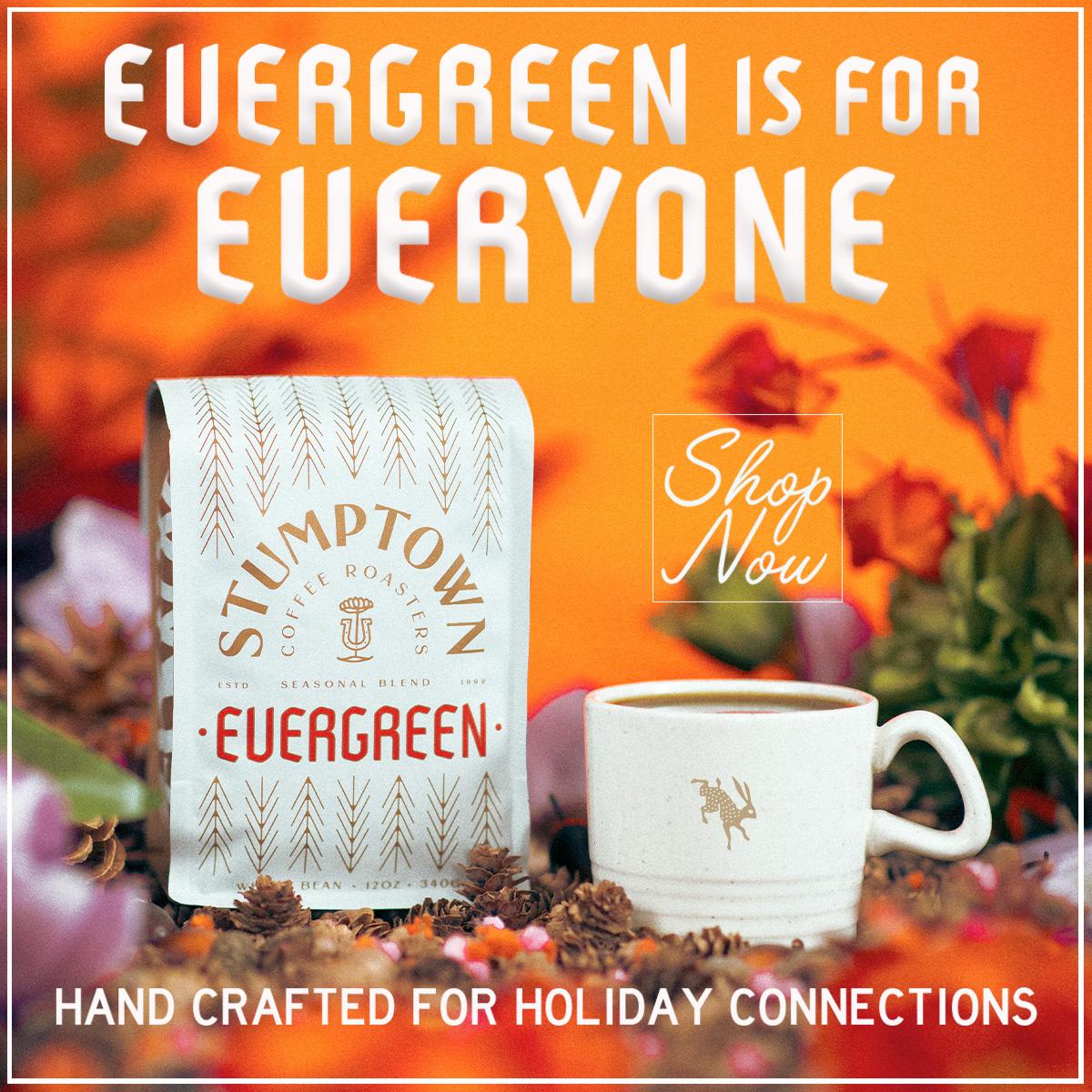
Sweet spice, silky chocolate-covered orange, and a lush brown sugar finish walk into a holiday blend. It's Evergreen Season.
stumptowncoffee.com
Evergreen Is for Everyone
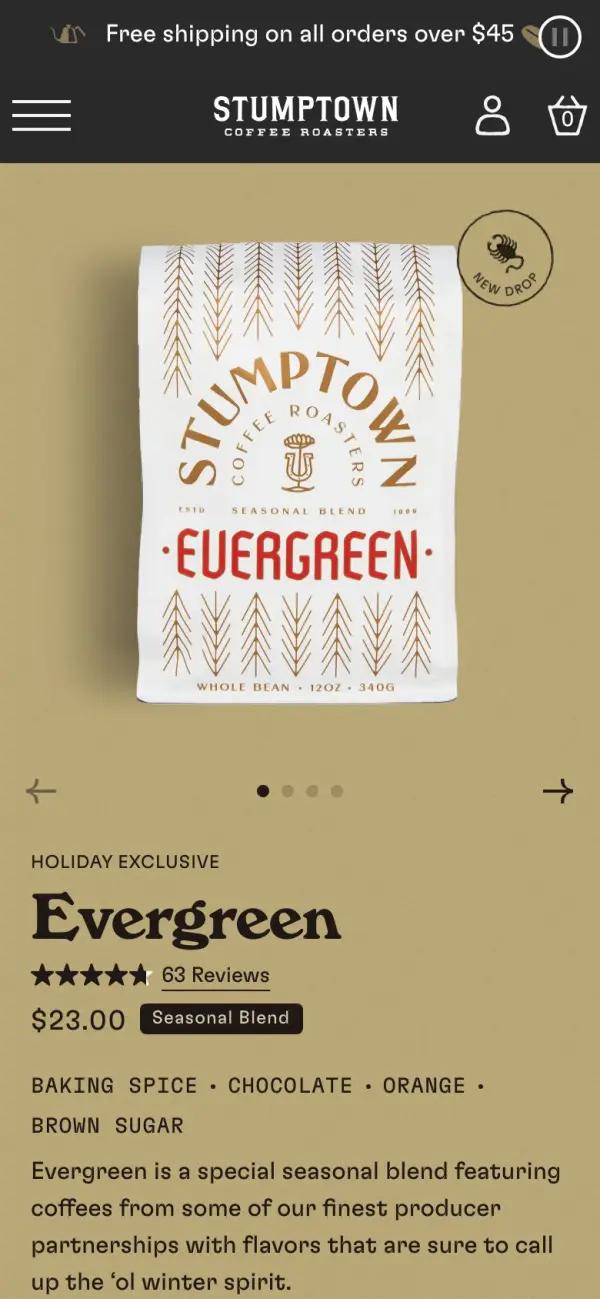
The page it opens
 Stumptown Coffee Roasters
A real ad and the page it opens. Stumptown's Evergreen sells for $23.00. A 60% margin at that price means a cost of $9.20 or less; a 100% markup (keystone) means a $11.50 cost.
See the ad in Meta’s Ad LibrarySee the live pageQuestions about markup
Subtract cost from price, then divide by cost: markup = (price − cost) ÷ cost × 100. A product you buy for $15 and sell for $40 has a $25 profit and a 166.7% markup. To set a price from a markup, multiply cost by 1 + markup.
Multiply the cost by 1.4. A $25 cost with a 40% markup sells at $35, a $10 profit. That's a 28.6% margin, because the same $10 is divided by the $35 price instead of the $25 cost.
Yes. A 100% markup doubles the cost, so a $10 product sells at $20 and the $10 profit is half the price, a 50% margin. Margin can never reach 100%, while markup has no upper limit.
Yes. A $10 product with a 25% markup sells at $12.50. The $2.50 profit is 25% of the cost and 20% of the price. Convert any margin with markup = margin ÷ (100 − margin): 20 ÷ 80 = 25%.
A 30% markup on a $100 cost sells at $130, a 23.1% margin. A 30% margin on the same cost needs a $142.86 price, a 42.9% markup. Pricing with markup when you meant margin leaves you about $13 short on each sale.
Divide the margin by 100 minus the margin. A 60% margin is 60 ÷ 40 = 150% markup, so a $10 cost sells at $25. To go from markup to margin, divide the markup by 100 plus the markup: a 33% markup is a 24.8% margin.
Set prices with margin, because your costs and profit targets are shares of revenue. Markup is handy when a supplier quotes a cost and you want a quick price. The calculator shows both at once.
US online and mail-order retailers kept a 39.7% gross margin in 2022, the Census Bureau reports, which is about a 66% markup. Brands that make their own product often price higher, since ads and shipping come out of the same margin.
The ad
Tatcha
Sponsored ·
Smooth the look of wrinkles for silky-soft skin. The Silk Cream nourishes & strengthens for an improved skin barrier.

tatcha.com
The Silk Cream
The page it opens
TatchaA real ad and the page it opens. Tatcha's Silk Cream sells for $125.00. A 60% margin at that price means a cost of $50.00 or less; a 100% markup (keystone) means a $62.50 cost.
See the ad in Meta’s Ad LibrarySee the live page