Product pricing calculator
Pricing a product means picking a price that covers its cost and leaves the margin you need, both selling direct and through shops. Drag cost, wholesale and retail along one price ladder to see the margin you and the shop each keep.
Retail price
$33.33
A unit costs $What one unit costs you to make or buy, including inbound shipping. Often called COGS (cost of goods sold).. Sell it to shops at $What a shop pays you per unit to resell it. Often about half the retail price (keystone pricing). and to shoppers at $What a shopper pays, on your site or in a shop. Keep it the same in both places so shops can compete.. Direct, you keep 70%; wholesale you keep 50% and the shop keeps 40%.
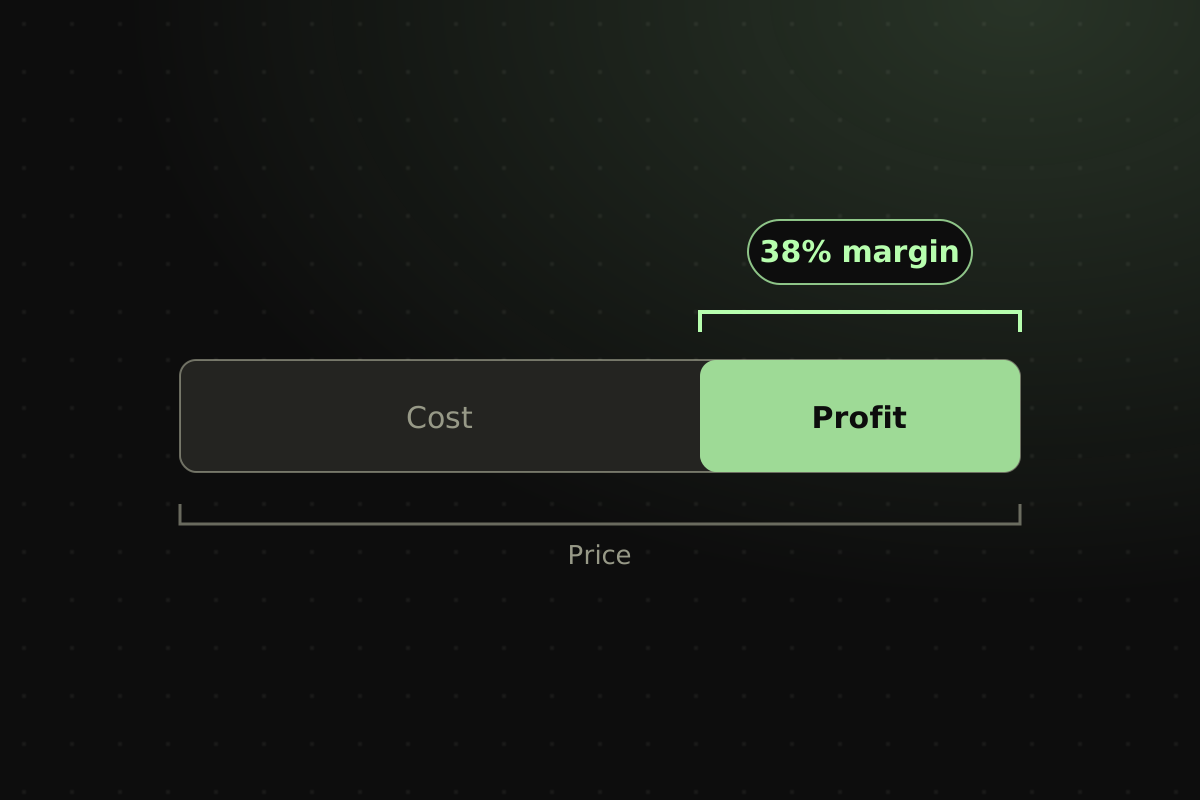
Selling direct, you keep everything between cost and retail. Selling through shops, you keep cost to wholesale and the shop keeps wholesale to retail.
Retail price for a direct margin
- Profit per unit, direct
- $23.33
- Profit per unit, wholesale
- $10.00
- Retail at keystone (2x wholesale)
- $40.00
- Charm price
- $33.99 (70.6% margin)
Drag cost, wholesale and retail along the ladder. Or pick a target margin, or tap any green box to type a number.

 Last week at Magic Spoon
Get a daily report card for free. Replo has a daily report card of your business ready every morning, with what changed and why.
Every morning
Get your product pricing in a daily report
Replo reads Shopify, Meta, Google Ads and Triple Whale and has your product pricing ready every morning, with what changed since yesterday and why.




Formula
Cost-based pricing sets a product's price from what it costs you and the margin you want to keep.
Retail price = unit cost ÷ (1 − target margin)
Wholesale works the same way with the margin you keep on wholesale orders: wholesale price = unit cost ÷ (1 − wholesale margin). The retailer's margin is what's left between your wholesale price and the retail price.
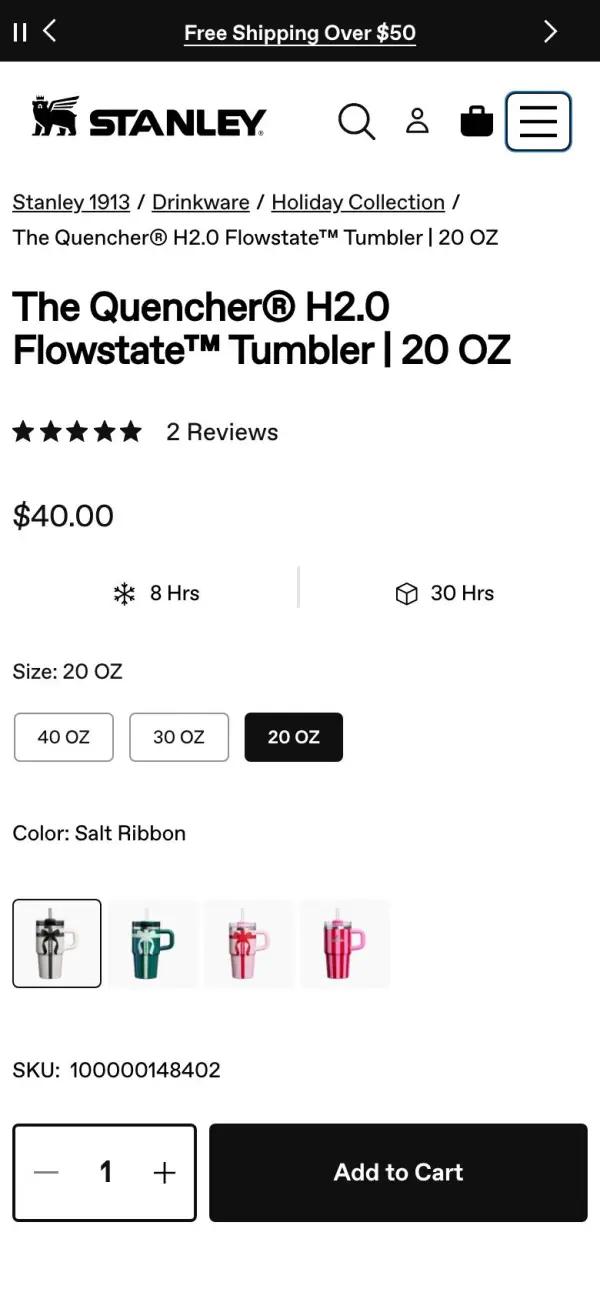
 Stanley 1913
Quencher H2.0 tumbler, 20 oz, $40
Stanley's Quencher sells for $40.00. A 60% margin at that price means a cost of $16.00 or less; a 100% markup (keystone) means a $20.00 cost.
See the live pageOther ways to calculate product pricing
- Price from markup
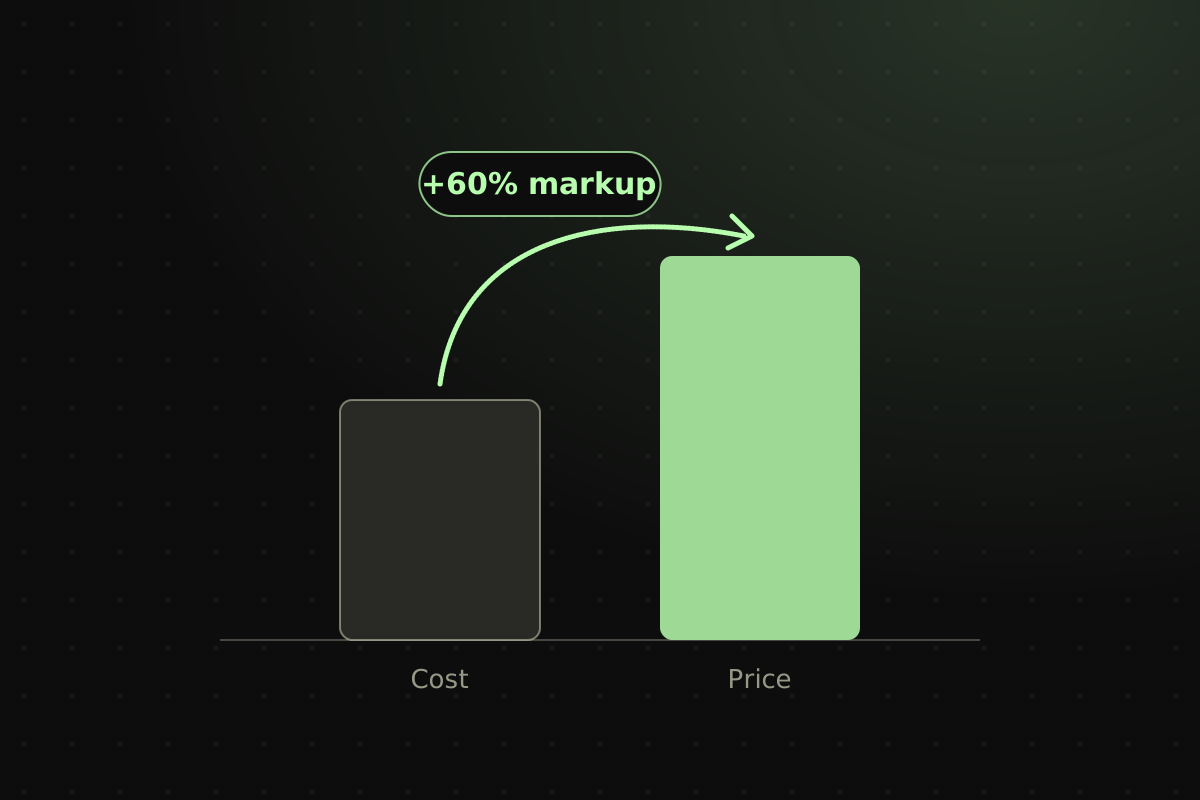
- Price = cost × (1 + markup ÷ 100)
- When you price by marking up cost instead of by margin.
- Keystone retail price
- Retail price = wholesale price × 2
- The common retail convention: a shop doubles your wholesale price for a 50% margin.
- Wholesale price for your margin
- Wholesale price = unit cost ÷ (1 − your wholesale margin)
- When you sell to shops and need the price that keeps your own margin.
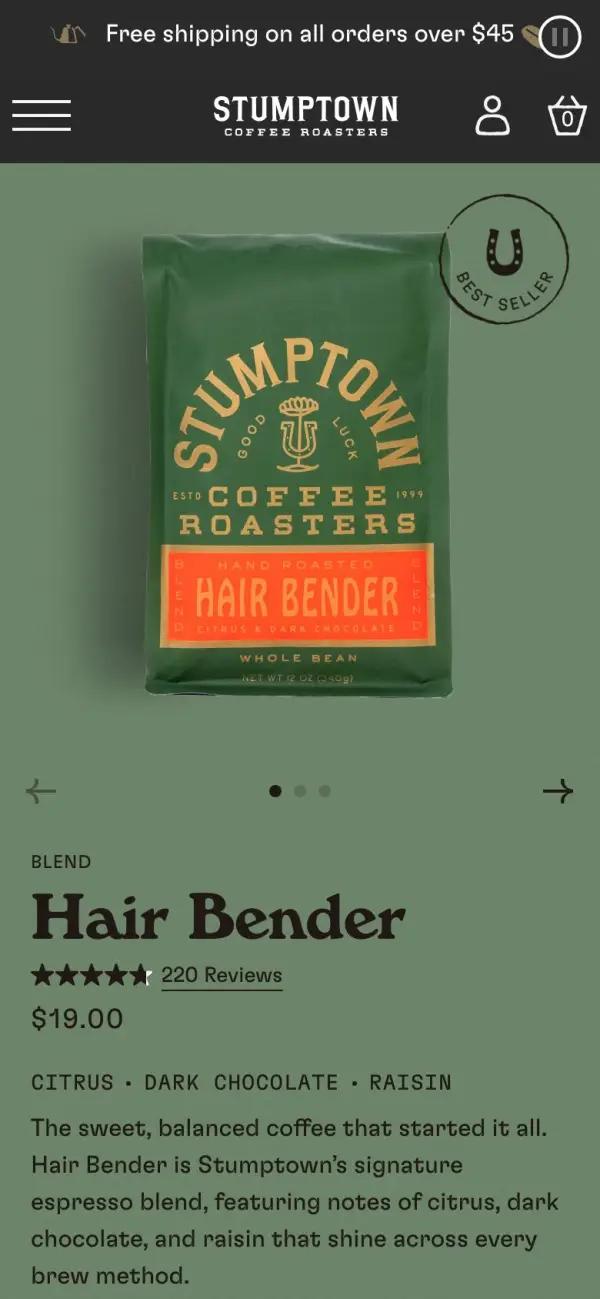
 Stumptown Coffee Roasters
Hair Bender coffee, 12 oz, $19
Stumptown's Hair Bender sells for $19.00. A 60% margin at that price means a cost of $7.60 or less; a 100% markup (keystone) means a $9.50 cost.
See the live pageHow to calculate product pricing: a worked example
Tatcha sells The Dewy Serum for $89. Say your serum costs $10 a bottle to make, and you want a 70% margin selling direct and a 50% margin selling to shops.
- Retail price = $10 ÷ (1 − 70%) = $33.33
- Wholesale price = $10 ÷ (1 − 50%) = $20.00
- A shop buying at $20 and selling at $33.33 keeps 40%
You'd round to a $34 retail price and a $20 wholesale price. Tatcha's $89 shows how much higher a brand can price when buyers trust it.
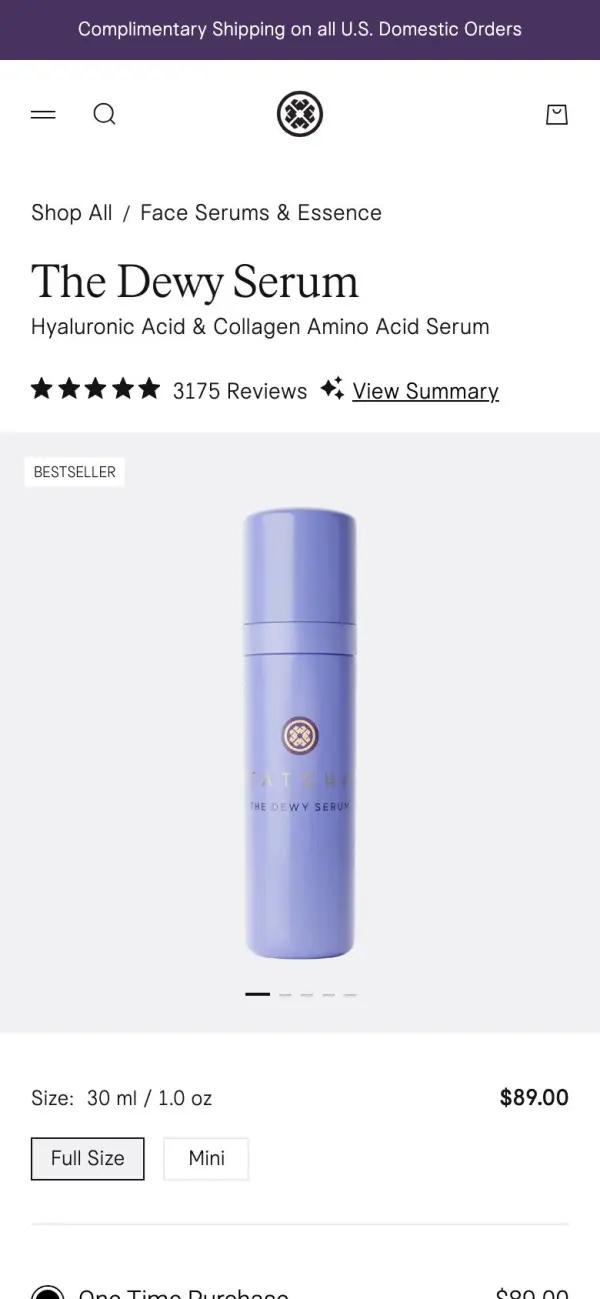
 Tatcha
The Dewy Serum, 30 ml, $89
Tatcha's Dewy Serum sells for $89.00. A 60% margin at that price means a cost of $35.60 or less; a 100% markup (keystone) means a $44.50 cost.
See the live pageWhat is a good price?
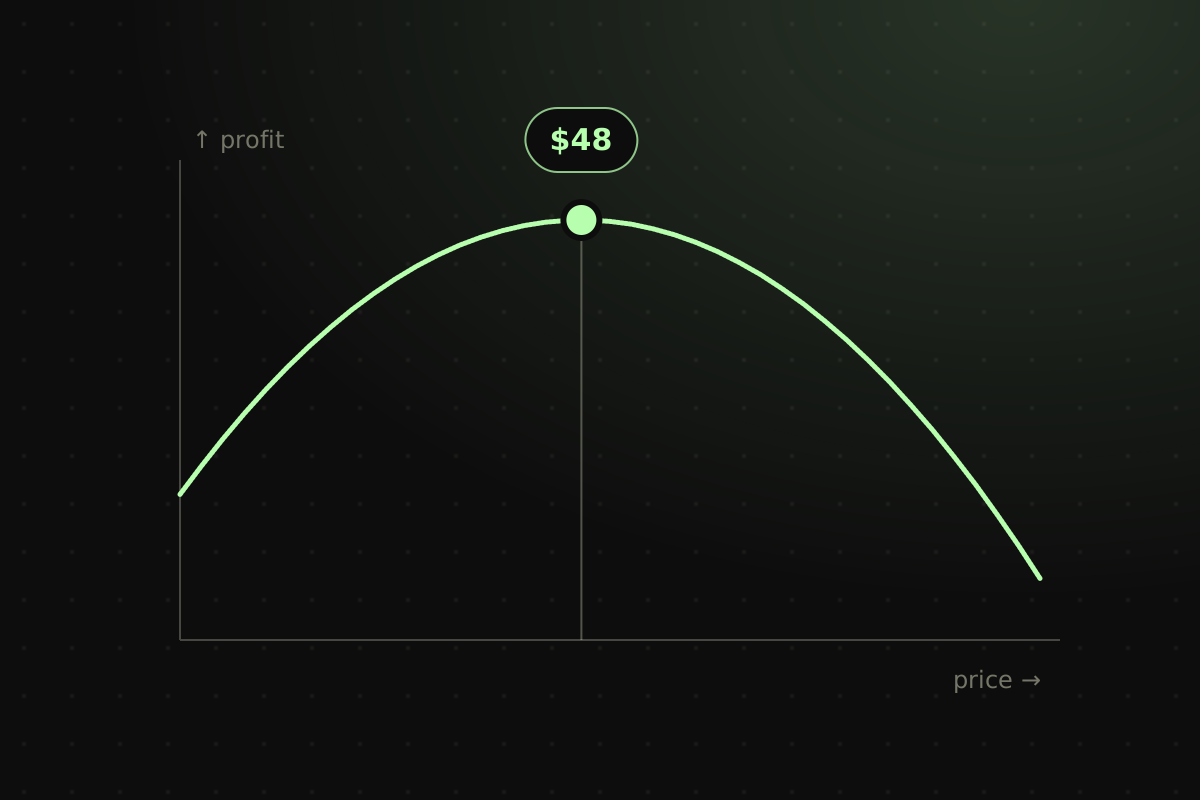
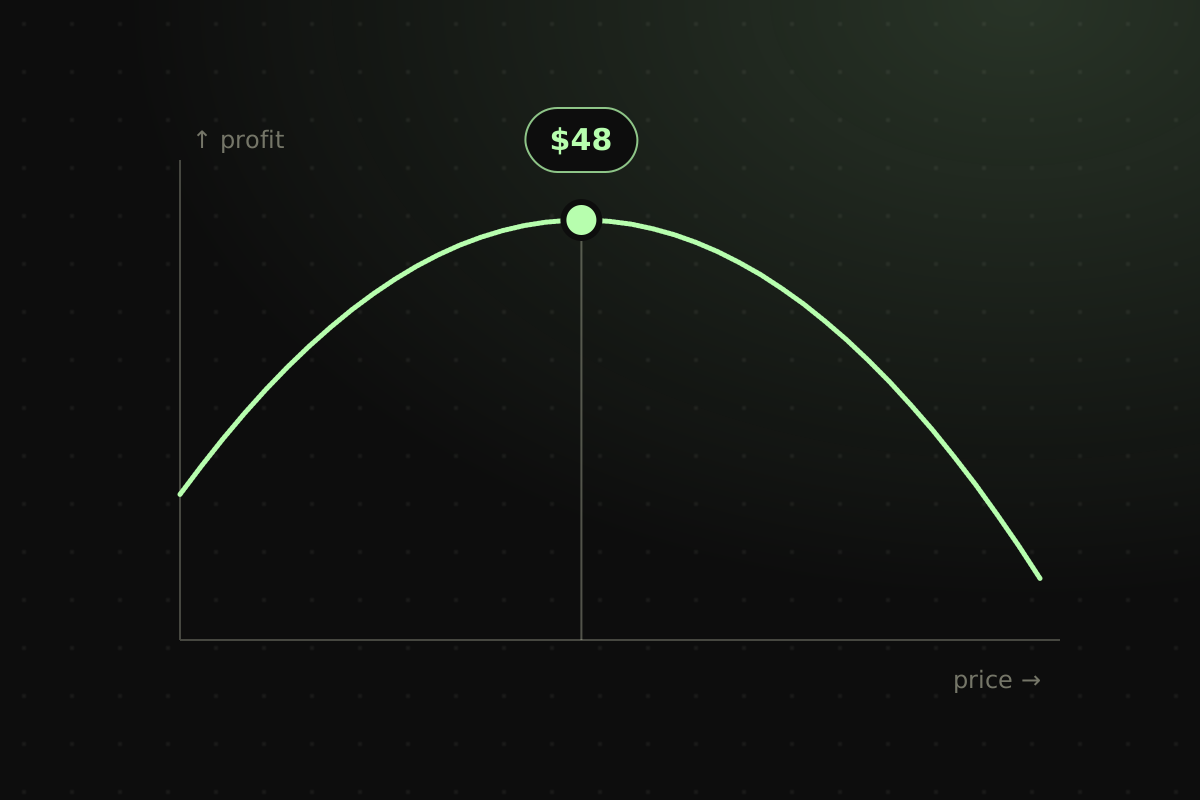
Start from the floor: the price must cover unit cost, shipping, fees and the ad cost of winning the order, plus the profit you want. Price floor = (unit cost + shipping + fees + ad cost per order) ÷ (1 − target net margin).
Then check the ceiling, what similar products sell for. If you sell to shops too, keystone pricing is the usual split: wholesale at twice your cost, retail at twice wholesale, as in the table.
Keystone pricing from unit cost
| Unit cost | Wholesale (2x cost) | Retail (2x wholesale) | Your margin selling direct |
|---|---|---|---|
| $5 | $10 | $20 | 75% |
| $10 | $20 | $40 | 75% |
| $20 | $40 | $80 | 75% |
Do it with Replo
Put your new price live
Replo builds a product page or a whole store at the price you picked, with checkout working.
Questions about product pricing
Start from what one unit costs you, then divide by 1 minus the margin you want: price = cost ÷ (1 − margin). A $10 product at a 70% margin sells for $33.33. Check that price against competitors and what shoppers will pay.
Keystone pricing means a shop sells a product at double what it paid you, a 50% margin: buy at $20 wholesale, sell at $40 retail. Many brands also set wholesale at about double their own cost, so a $10 product wholesales at $20.
Divide your unit cost by one minus the margin you want on wholesale orders. At a $10 cost and a 50% margin, wholesale is $20. Make sure the retail price leaves the shop its own margin, usually close to half.
Yes, in most cases. Undercutting your own retailers on your site damages those relationships. Compete on what only your site offers instead: bundles, sizes, subscriptions or early access to new products.
It sets a floor, not a price. Cost-plus makes sure you don't lose money, but buyers judge price against alternatives. Check competitors and test the price before locking it in.