Inventory turnover ratio calculator
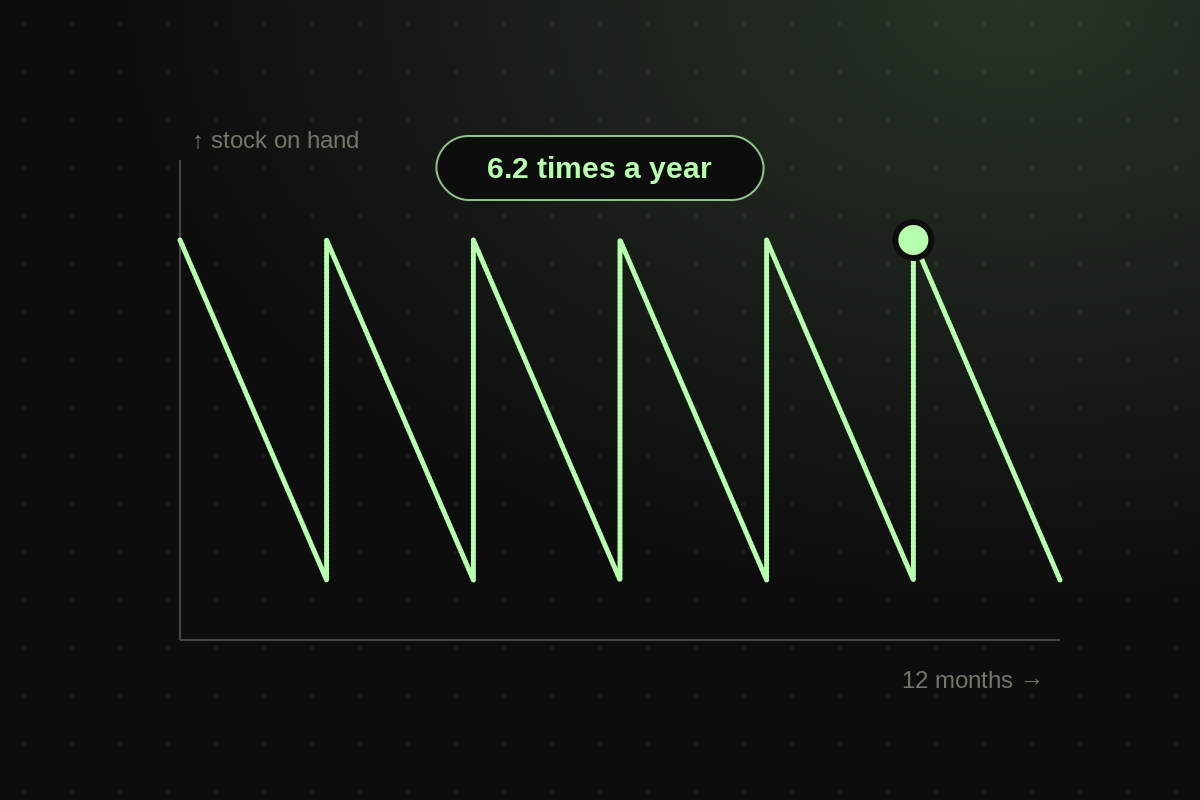
Inventory turnover is how many times a year you sell through all the stock you hold and buy it again. A higher number means less cash sitting on shelves. Drag the saw teeth, where each tooth is one full stock bought and sold, or paste a product list for turnover by SKU.
Inventory turnover
4.0x a year
You sold $Cost of goods sold (COGS): what the products you sold this year cost you, not what you sold them for. It's on your profit and loss statement. of stock at cost in a year, holding $What the stock on hand on day one of the year cost you (not its retail value). Your inventory report or balance sheet has it. at the start and $What the stock on hand on the last day of the year cost you. The average of start and end is the stock you typically hold. at the end. That's 4.0 turns: a unit sits about 91 days before it sells.
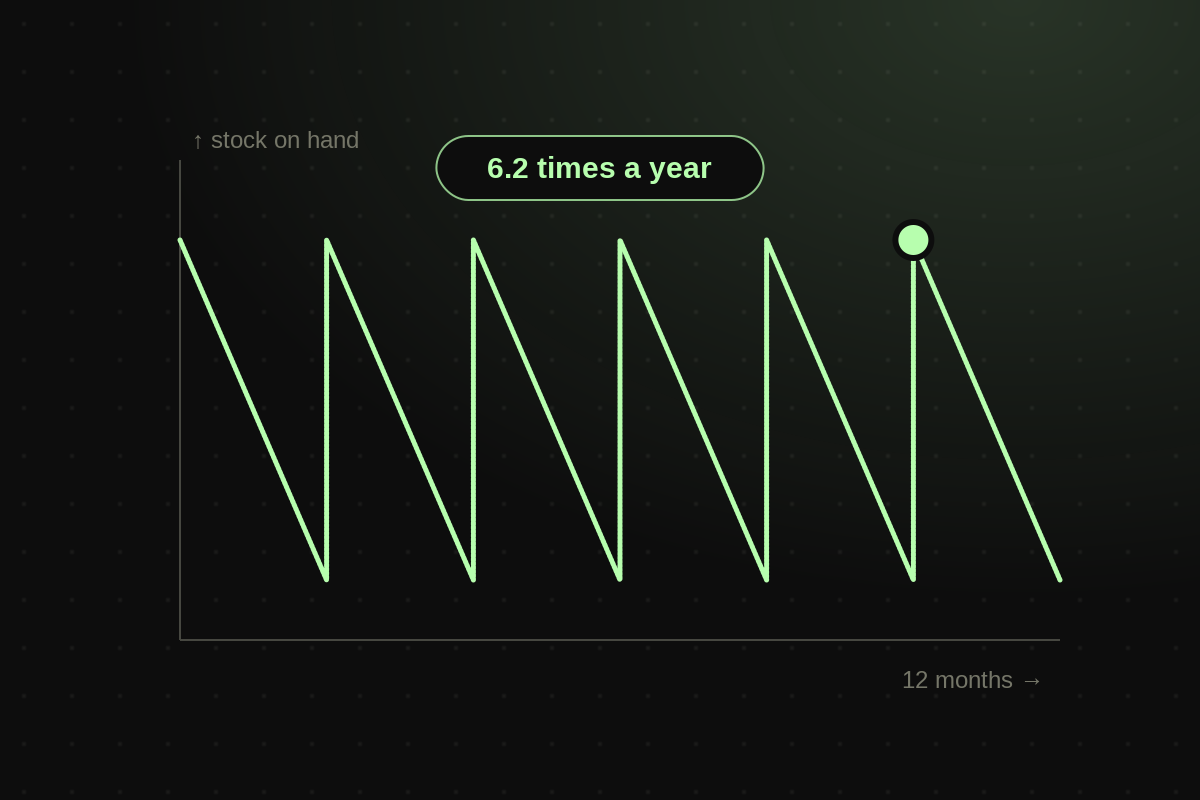
Inventory turnover is how many times a year you sell through all the stock you hold and buy it again. Each tooth below is one full stock bought and sold.
- Stock on hand: 4.0 restocks a year
- Average stock $60,000: drag either end
- Days of inventory
- 91
- Average inventory at cost
- $60,000
- Stock freed at 1 more turn
- $12,000
- Cost of goods sold a month
- $20,000
Drag the first tooth's edge: narrower teeth mean stock sells faster. Drag either end of the dashed line to set your stock at the start and end of the year. Or type over any green number.
Automate your busywork for free. Describe a job once and Replo runs it every week on your real store data.
Automations
Check your inventory turnover on a schedule
Describe the job once. Replo runs it on your data from Shopify, Google Drive and Slack and posts what needs your attention.






Formula
Inventory turnover is how many times you sell through your average stock in a period, usually a year.
Inventory turnover = cost of goods sold ÷ average inventory
Average inventory = (starting inventory + ending inventory) ÷ 2, both at cost. Days of inventory = 365 ÷ turnover.
Other ways to calculate inventory turnover ratio
- Days of inventory
- Days of inventory = 365 ÷ inventory turnover
- To say how long stock sits, which is easier to act on than a ratio.
- Turnover from sales
- Inventory turnover = revenue ÷ average inventory at retail value
- When your inventory is valued at selling price, so both numbers stay on the same basis.
How to calculate inventory turnover ratio: a worked example
A store's cost of goods sold last year was $240,000. It held $70,000 of stock at cost at the start of the year and $50,000 at the end.
- Average inventory = ($70,000 + $50,000) ÷ 2 = $60,000
- Turnover = $240,000 ÷ $60,000 = 4.0 times a year
- Days of inventory = 365 ÷ 4.0 = 91 days
A unit sits on the shelf about three months before it sells.
What is a good inventory turnover?
Compare days of inventory with how long it takes to restock. If your supplier delivers in 45 days, holding 91 days of stock ties up cash in about 46 days of stock you don't need yet.
Faster isn't always better: turnover that's too high means stockouts and lost sales. Aim for days of inventory a little above your restock lead time, then check the products that sit longest. The table converts turnover to days.
| Turnover per year | Days of inventory |
|---|---|
| 2x | 183 |
| 3x | 122 |
| 4x | 91 |
| 6x | 61 |
| 8x | 46 |
| 12x | 30 |
Do it with Replo
Spot slow stock before it piles up
Replo reads your Shopify sales and inventory and lists the products that sell slowest.
Prompt: “which products sold slowest in the last 90 days?”
Questions about inventory turnover ratio
- How do you calculate inventory turnover?
- Divide cost of goods sold for the year by your average inventory at cost: turnover = COGS ÷ ((starting inventory + ending inventory) ÷ 2). $240,000 of COGS on $60,000 of average stock is 4 turns, or about 91 days per turn.
- What is a good inventory turnover ratio?
- A good inventory turnover ratio keeps days of inventory (365 ÷ turnover) a little above how long your supplier takes to restock. With a 45-day lead time, about 7 turns (52 days) is lean; 4 turns (91 days) ties up 46 days of stock you don't need yet.
- Should I use cost of goods sold or revenue?
- Cost of goods sold. Inventory is valued at cost, so dividing revenue by it mixes prices with costs and overstates turnover. If you only have revenue, use it consistently and compare your store with itself over time.
- Can I calculate turnover for one product?
- Yes. Use the product's cost of goods sold and its average stock at cost. Product-level turnover is often more useful than the store total, because one slow product can hide behind a fast bestseller. The calculator's CSV tab does every product at once, slowest first.
- How do I improve inventory turnover?
- Order smaller amounts more often, discount or bundle slow stock before it ages, and put your marketing behind the products you hold the most of. Each one turns stock into cash sooner.