How to calculate your average order value
Average order value (AOV) is what a typical order is worth: revenue divided by orders. Enter both to get yours, see how it compares with other stores, and drag to see what a bigger order would add.
in revenueTotal sales for the period, from your store's sales report. from ordersCompleted purchases in the same dates as the other number. is an average order value of $50.00.
Average order value (AOV) is what a typical order is worth: revenue divided by orders. $50,000 from 1,000 orders is $50.
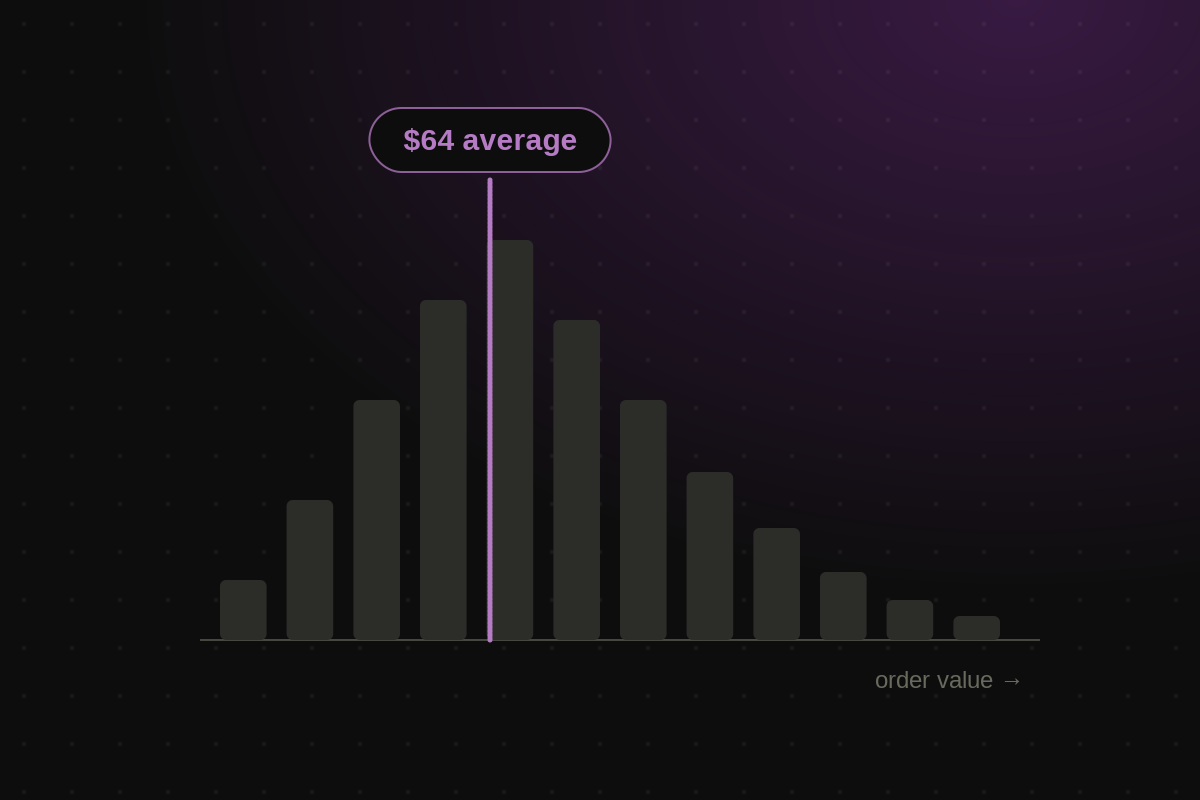
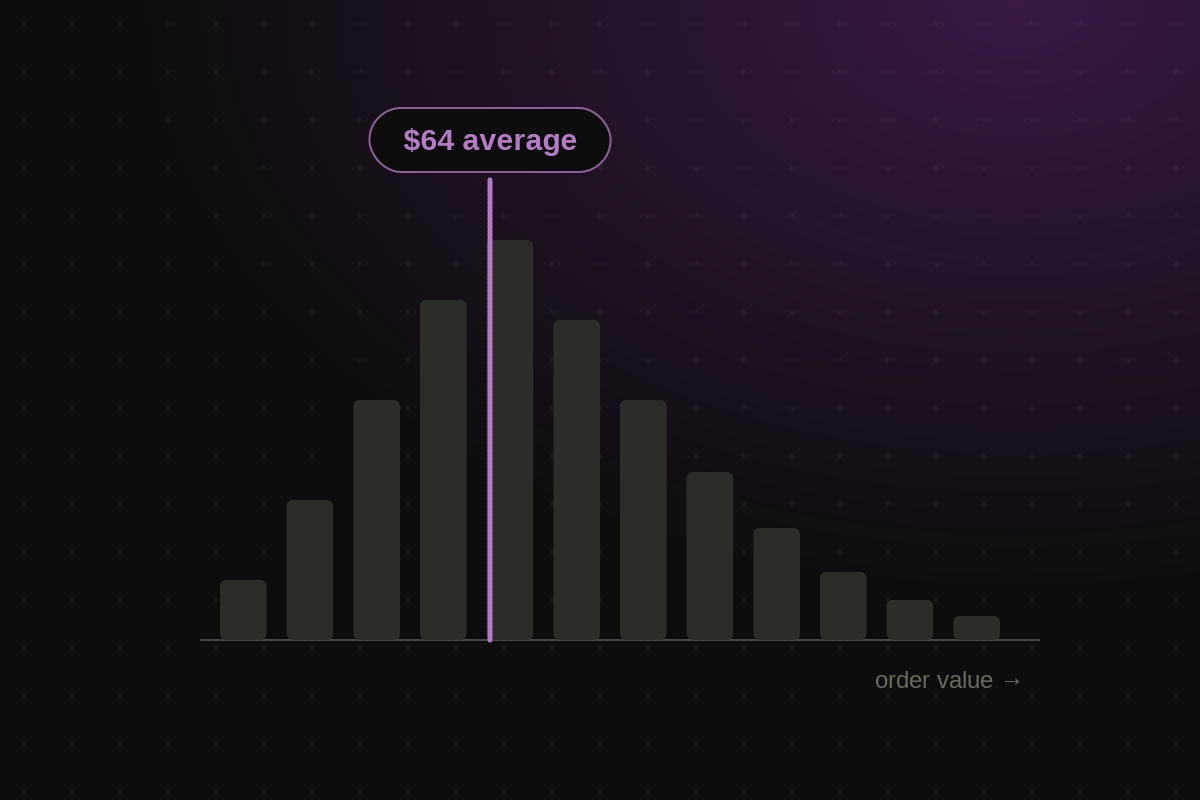
Each bar is a group of stores built on Replo at that number; taller means more stores. The solid green line is you. Drag the dashed handle to try another number.
- You $50.00
- What if $79.00: beats 50% of stores
- Median $79.00, middle half $56.66 to $128.50
Drag the handle along stores built on Replo
At $79.00, the same numbers bring +$29,000 in revenue.
$145.00average online order
Benchmarked against Dynamic Yield's global data.
How to read your number
Your average order value is your revenue divided by your orders: $50,000 from 1,000 orders is a $50 AOV. Dynamic Yield puts the global average near $145, and it swings widely by category. To raise yours, try a bundle or a free-shipping threshold just above your current AOV, and test each change before you keep it.
Why it matters
Order value decides what each customer you pay for brings in. If an order costs $30 in ads, a $50 order leaves little after product and shipping, while a $75 order pays for the ad and then some. Raising it makes every channel you run more profitable at once.
Insights
Find trends in your business for free
Ask a question about your store and Replo answers it from every tool you connect. Worked out from Shopify, Google Analytics 4, PostHog and Amplitude.




Formula
Average order value (AOV) is what a customer spends in one order, on average.
Average order value = total revenue ÷ number of orders
What is average order value (AOV)?
Average order value, or AOV, is the average amount a customer spends per order. If your store made $50,000 from 1,000 orders last month, your AOV is $50. It tells you what each sale is worth, which sets how much you can afford to pay to win one.
What is the AOV formula?
Divide total revenue by the number of orders in the same period.
Average order value = total revenue ÷ number of orders
Here's the formula worked through:
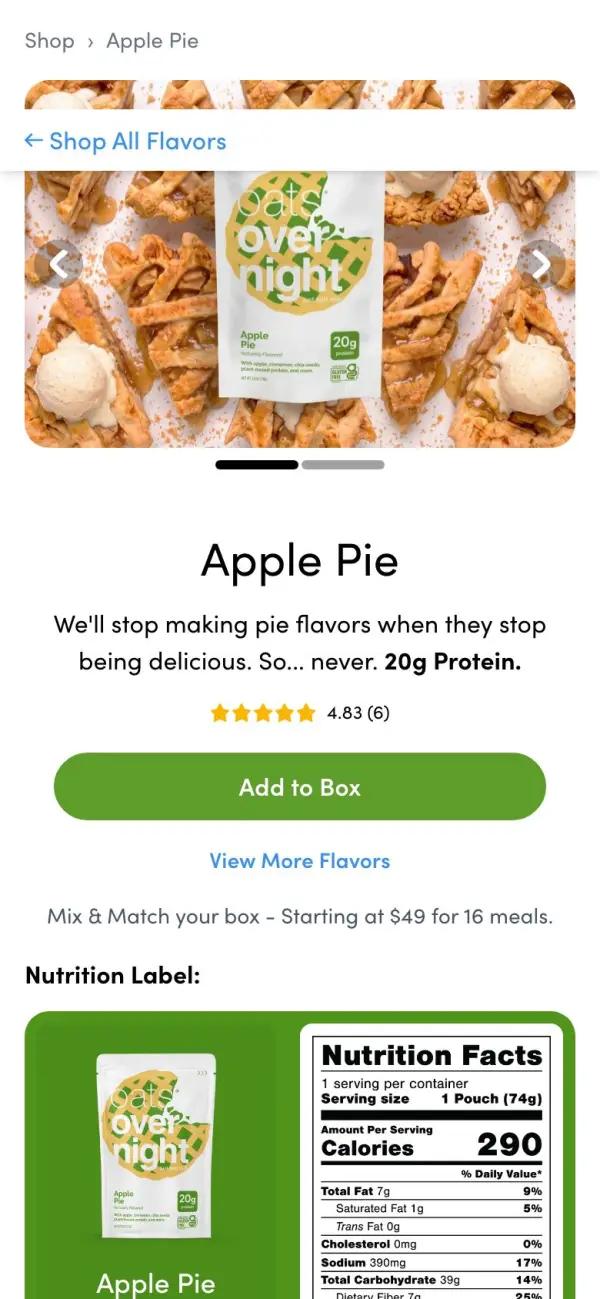
 Oats Overnight
Mix-and-match oatmeal box, 16 meals, $49
Oats Overnight's 16-meal oatmeal box sells for $49.00. A thousand visits that convert at 2% bring 20 orders, $980.00; at 3% they bring $1,470.
See the live page- Pick a period, such as last month.
- Find your total revenue for that month: $50,000.
- Find your number of orders for the same month: 1,000.
- Divide revenue by orders: $50,000 ÷ 1,000 = $50.
How to calculate average order value correctly
Two stores with the same sales can report different AOVs depending on what they count. Decide these once and keep them fixed:
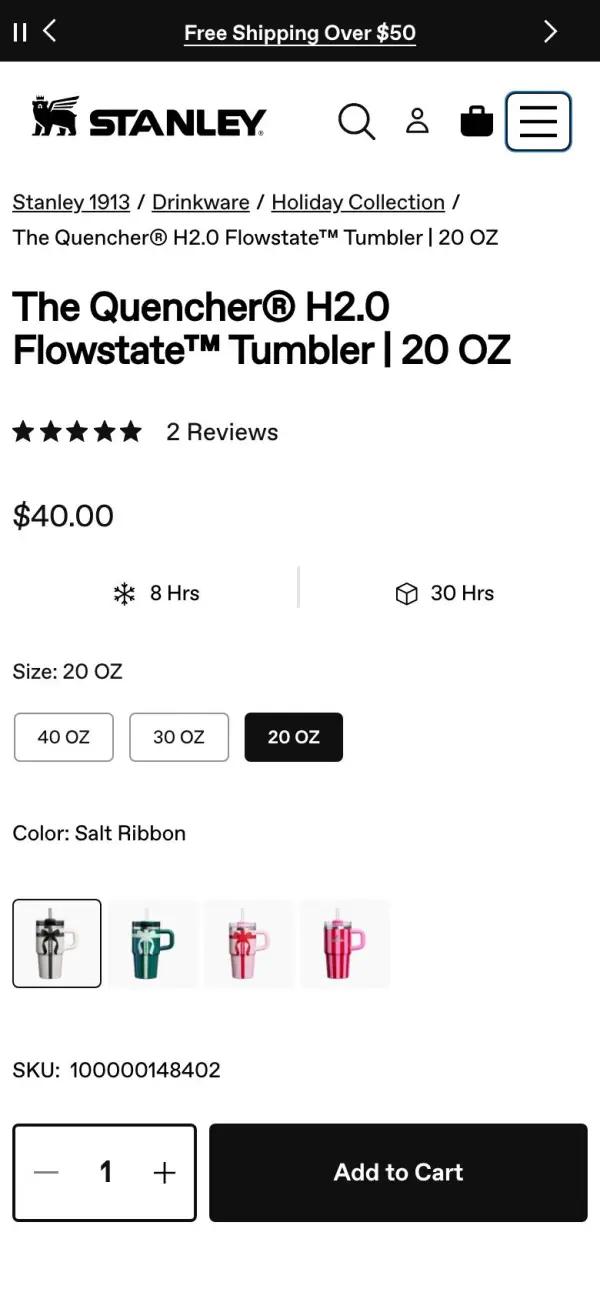
 Stanley 1913
Quencher H2.0 tumbler, 20 oz, $40
Stanley's Quencher sells for $40.00. A thousand visits that convert at 2% bring 20 orders, $800.00; at 3% they bring $1,200.
See the live page- Use revenue after discounts and refunds. Count what customers paid for products. Leave out sales tax, and most stores leave out shipping too.
- Count completed orders only. Leave out cancelled and test orders.
- Use the same period for both numbers. Revenue from one month divided by orders from another gives a number that means nothing.
- Watch for outliers. One $8,000 wholesale order can lift a small store's monthly AOV. When that happens, look at the median order too.
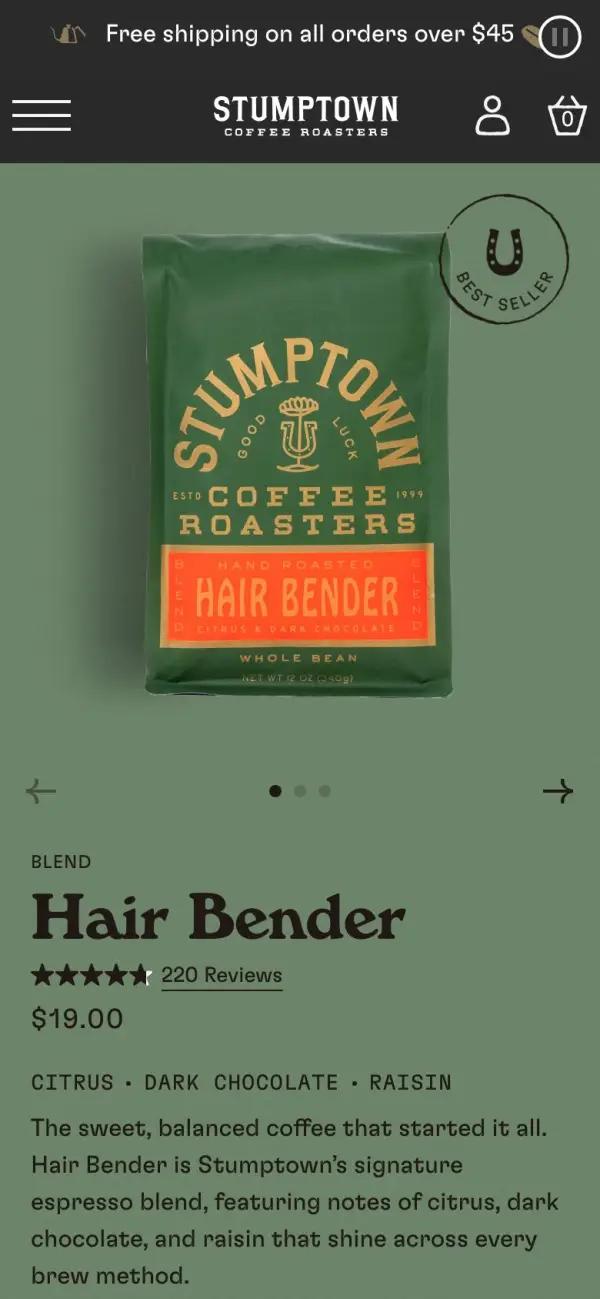
 Stumptown Coffee Roasters
Hair Bender coffee, 12 oz, $19
Stumptown's Hair Bender sells for $19.00. A thousand visits that convert at 2% bring 20 orders, $380.00; at 3% they bring $570.00.
See the live pageThen split it. AOV by traffic source, by new versus returning customers and by device shows where bigger orders come from. If shoppers from your email campaigns spend $70 and shoppers from paid social spend $40, you know which channel each offer belongs in. Splitting by collection shows which product lines bring the biggest orders.
What is a good average order value?
The average online order is about $145, according to Dynamic Yield's global data (source). That average mixes very different stores, so your category matters more. In the same source:
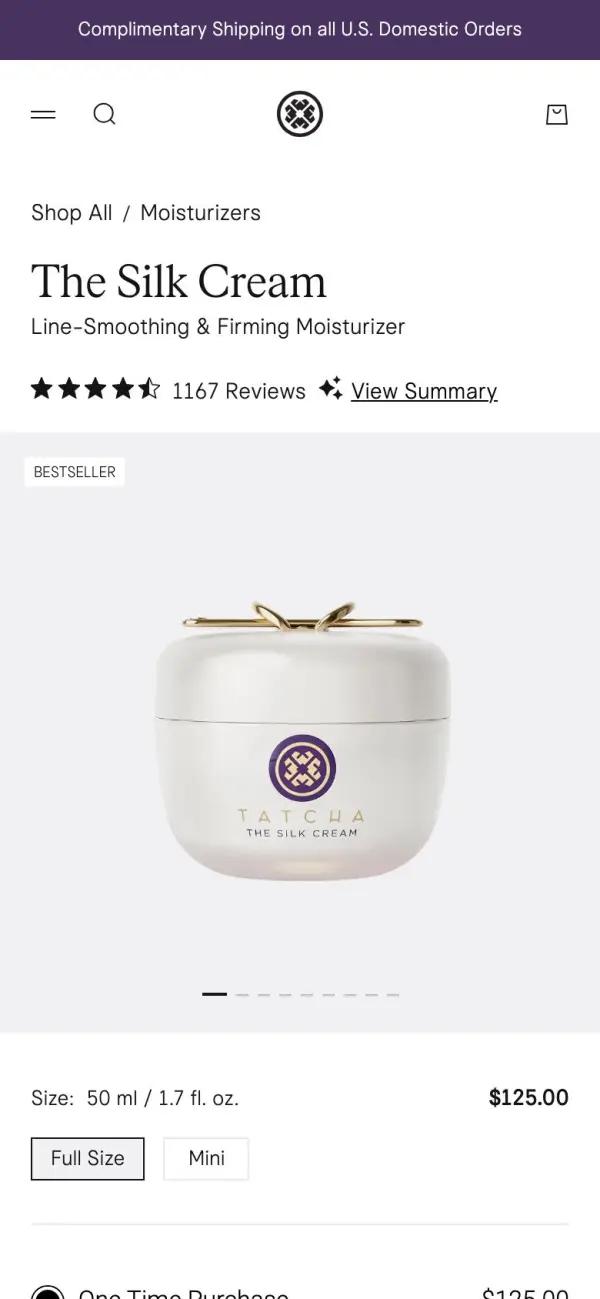
 Tatcha
The Silk Cream, 50 ml, $125
Tatcha's Silk Cream sells for $125.00. A thousand visits that convert at 2% bring 20 orders, $2,500; at 3% they bring $3,750.
See the live page- Luxury and jewelry orders are often above $300.
- Apparel and accessories orders run about $40 to $170.
- Beauty and personal care orders run about $15 to $90.
A good AOV is one that pays for the customer. Say it costs $30 in ads to win an order, and you keep $20 after product and shipping on a $50 order: you lose $10 on the first purchase. Before you compare with any benchmark, check that your AOV times your margin covers what you pay to get each order. For customers who come back, measure lifetime value against acquisition cost too.

 Lodge Cast Iron
11 inch enamel cast iron skillet, $49.90
Lodge's enamel skillet sells for $49.90. A thousand visits that convert at 2% bring 20 orders, $998.00; at 3% they bring $1,497.
See the live pageIs a high AOV always good?
No. AOV and conversion rate often pull against each other. Raise your free-shipping threshold and the orders that clear it get bigger, but some shoppers below it leave. Watch revenue per visitor, which combines the two:
Revenue per visitor = conversion rate × AOV
A store at 2% conversion and a $50 AOV earns $1.00 per visitor. Lift AOV to $60 while conversion slips to 1.8% and it earns $1.08, a win. If conversion drops to 1.5% instead, it earns $0.90, a loss, even though each order got bigger.
AOV is one of three numbers that set revenue:
Revenue = sessions × conversion rate × AOV
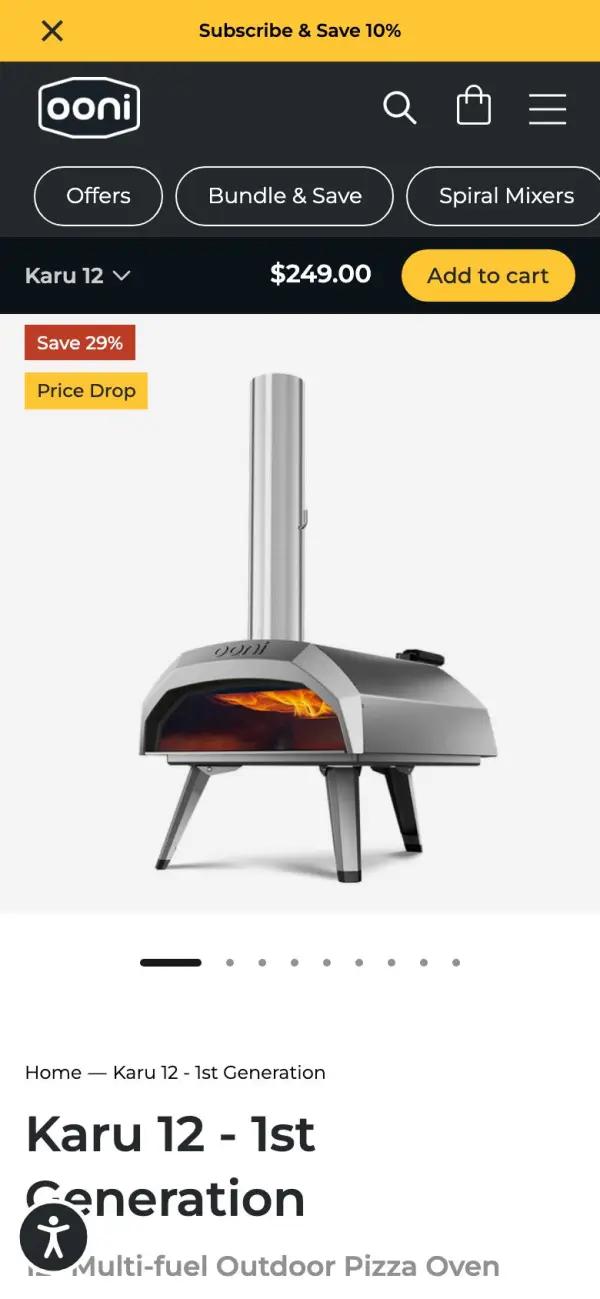
 Ooni
Karu 12 pizza oven, $249
Ooni's Karu 12 sells for $249.00. A thousand visits that convert at 2% bring 20 orders, $4,980; at 3% they bring $7,470.
See the live pageHow to increase average order value
- Set a free-shipping threshold just above your AOV. At a $50 AOV, try $60. Shoppers add a small item to clear it.
- Bundle products that sell together. Price the set below the items bought one by one.
- Recommend a matching product on the product page and in the cart. Pick something that goes with what's already in the cart and costs less than it.
- Offer volume pricing. "Buy 2, save 10%" works for products people use up and reorder.
- Test each change. Run an A/B test on the page and judge it by revenue per visitor, not AOV alone, before you keep it. These A/B test examples are a good place to start.
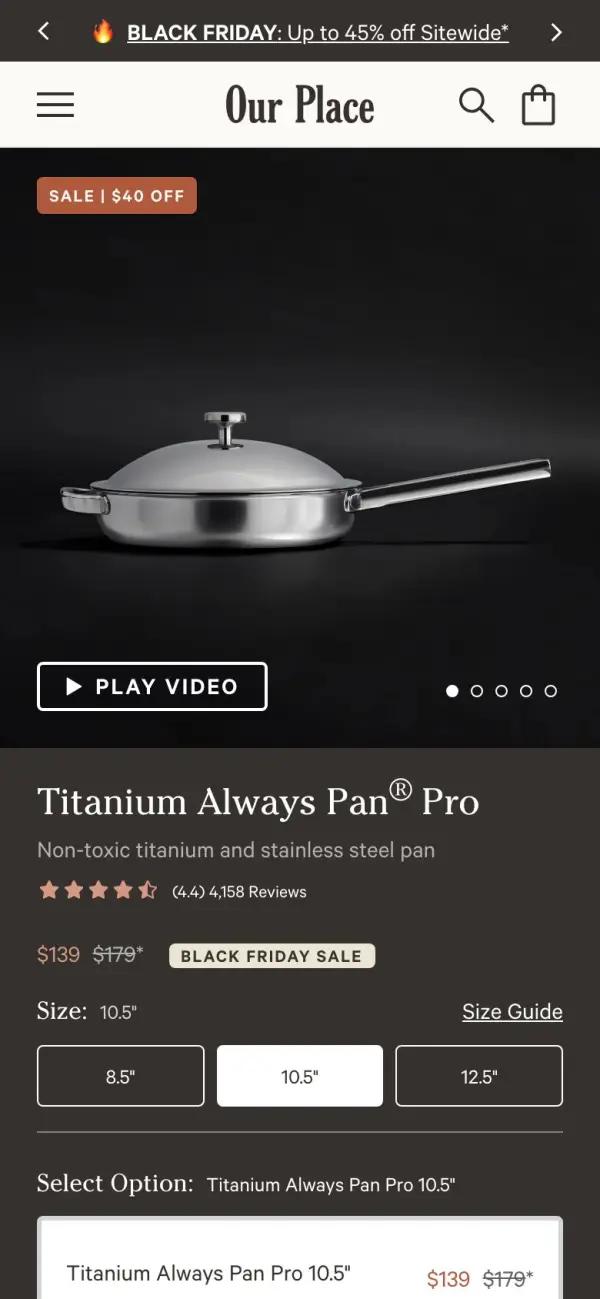
 Our Place
Titanium Always Pan Pro, 10.5 inch, $139
Our Place's Always Pan sells for $139.00. A thousand visits that convert at 2% bring 20 orders, $2,780; at 3% they bring $4,170.
See the live pageFor more tactics with examples, read our guide on how to increase average order value.
Average order value questions
What does AOV stand for? AOV stands for average order value: your total revenue divided by your number of orders over a period. It's one of the core ecommerce metrics, along with conversion rate and customer lifetime value.
What's the difference between AOV and average selling price? Average selling price (ASP) is revenue per unit sold; AOV is revenue per order. An order of three $20 items has an ASP of $20 and an AOV of $60. Units per transaction links the two; check yours with the units per transaction calculator.
The ad
Stumptown Coffee Roasters
Sponsored ·
Sweet spice, silky chocolate-covered orange, and a lush brown sugar finish walk into a holiday blend. It's Evergreen Season.

stumptowncoffee.com
Evergreen Is for Everyone
The page it opens
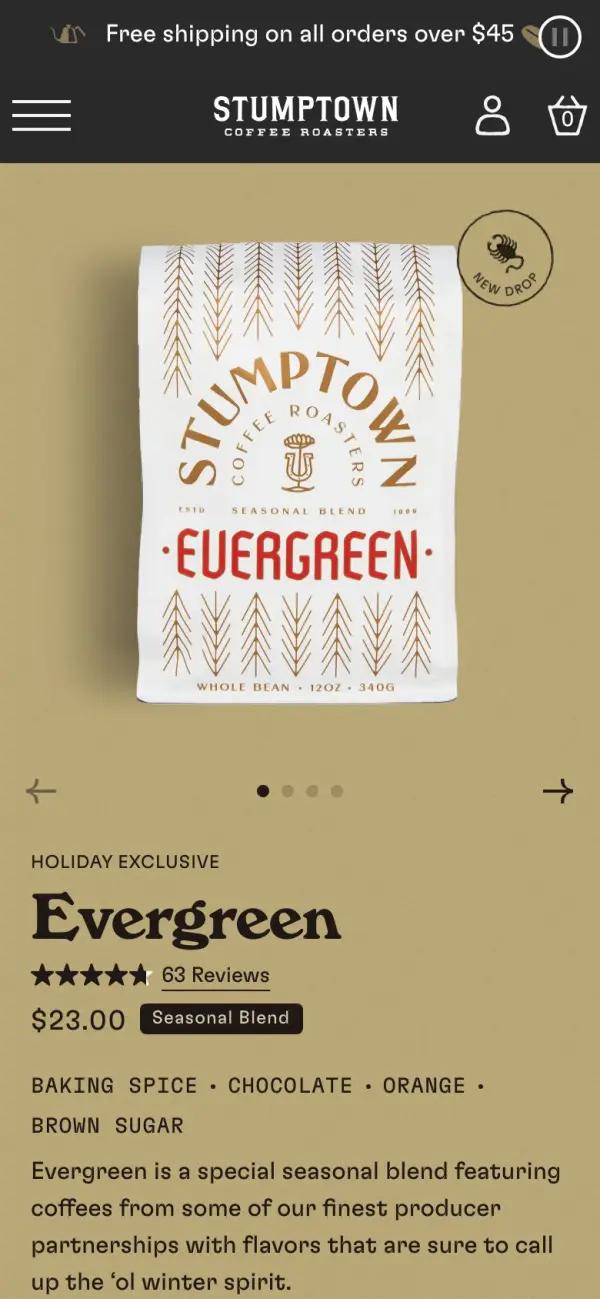 Stumptown Coffee Roasters
A real ad and the page it opens. Stumptown's Evergreen sells for $23.00. A thousand visits that convert at 2% bring 20 orders, $460.00; at 3% they bring $690.00.
See the ad in Meta’s Ad LibrarySee the live pageShould AOV include shipping and tax? Leave out tax, since it isn't your revenue. Most stores also leave out shipping, so AOV shows what customers spend on products. Whichever rule you pick, keep it, so this month compares fairly with last month.
Is AOV a KPI? Yes. It's one of the three numbers that set revenue, with traffic and conversion rate. Track it monthly, and split it by channel and by new versus returning customers to see where bigger orders come from.
The ad
Tatcha
Sponsored ·
Smooth the look of wrinkles for silky-soft skin. The Silk Cream nourishes & strengthens for an improved skin barrier.

tatcha.com
The Silk Cream
The page it opens
TatchaA real ad and the page it opens. Tatcha's Silk Cream sells for $125.00. A thousand visits that convert at 2% bring 20 orders, $2,500; at 3% they bring $3,750.
See the ad in Meta’s Ad LibrarySee the live pageIs a high AOV good? Usually, as long as conversion rate holds. A higher AOV means each order covers more of what you paid to get it. If AOV rises but fewer shoppers buy, check revenue per visitor to see whether you came out ahead.
More free calculators for the numbers that drive revenue are in the ecommerce toolbox.
Sources
The typical-store figure in the calculator comes from Dynamic Yield's global data. Industry figures are the median of thousands of stores built on Replo with 1,000 or more sessions over the last 30 days, in industries with 20 or more stores.