How to calculate your cart abandonment rate
Cart abandonment rate is the share of shoppers who fill a cart and leave without buying. Enter your carts and completed orders to get yours, compare it with the average store, and see what winning some back is worth.
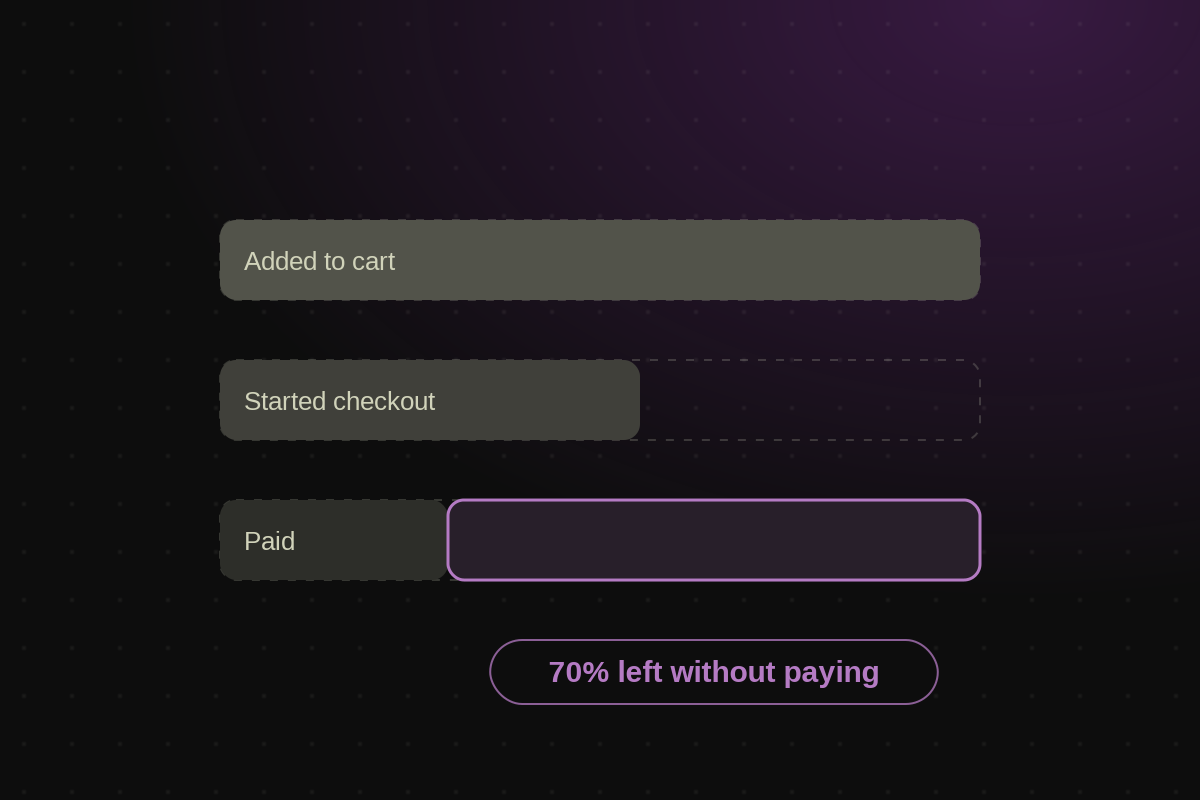
cartsVisits where a shopper added at least one item to the cart. Shopify Analytics lists it as Sessions with cart additions. and completed ordersCarts that went on to a finished purchase, in the same dates. is a cart abandonment rate of 80.00%.
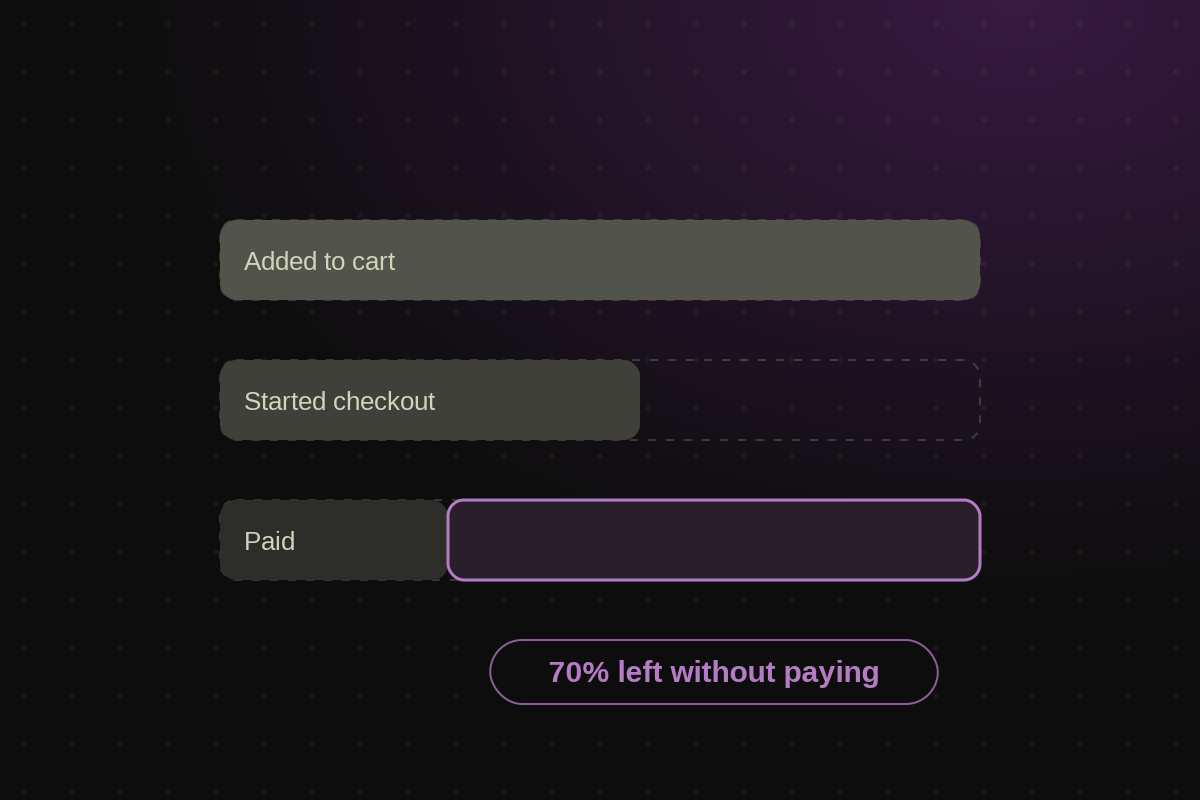
Cart abandonment rate is the share of shoppers who fill a cart and leave without buying: 750 carts and 150 orders means 80% walked away.
The green bar is your number. Drag the dashed handle to see what another number would take.
- You 80.00%
- What if 70.00%
- Average online store 70.22%
Drag the handle
At 70.00%, the same numbers bring +75 orders.
At an average order of What a typical order is worth: revenue divided by orders. It turns the extra orders into dollars., in revenue.
70.22%average online store
Benchmarked against Baymard's average of 50 studies.
How to read your number
Your cart abandonment rate is the share of carts that never became orders: 150 orders from 750 carts means 80% were left behind. Baymard's average across 50 studies is 70.22%, so most carts are abandoned on every store. Start with surprise costs: 40% of shoppers who quit checkout say shipping, tax or fees were too high.
Why it matters
Every abandoned cart is a shopper who already picked a product and stopped at the last step. They're the cheapest sales to win back: you've paid for the visit and they've shown intent, so fixing what stops them lifts revenue without one extra visit.
Heatmaps
See where shoppers click for free
Replo records where visitors click and how far they scroll, so you know what to fix first. Worked out from Shopify, Google Analytics 4, PostHog and Amplitude.




Formula
Cart abandonment rate is the share of carts shoppers create that never become orders.
Cart abandonment rate = (1 − completed orders ÷ carts created) × 100
What is cart abandonment rate?
Cart abandonment rate is the percentage of shopping carts that never become orders. If shoppers create 750 carts and 150 of them check out, your cart abandonment rate is 80%. It counts the shoppers who chose a product and then stopped before paying.
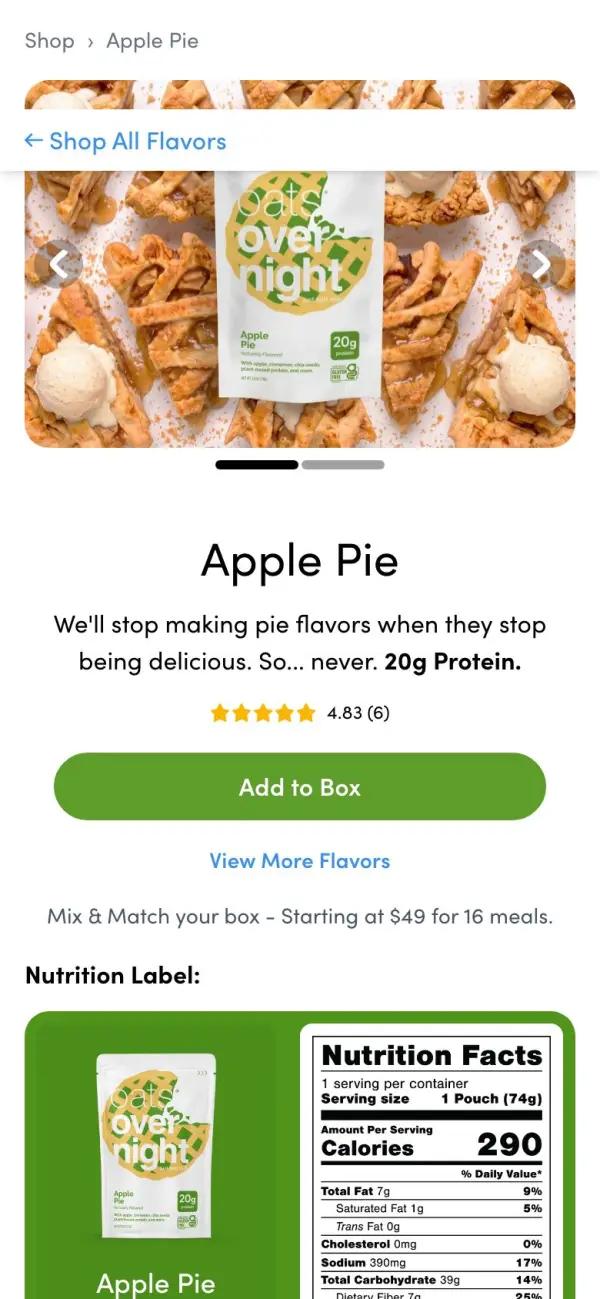
 Oats Overnight
Mix-and-match oatmeal box, 16 meals, $49
Oats Overnight's 16-meal oatmeal box sells for $49.00. A thousand visits that convert at 2% bring 20 orders, $980.00; at 3% they bring $1,470.
See the live pageHow do you calculate cart abandonment rate?
Divide completed orders by carts created, subtract the result from 1, then multiply by 100.
Cart abandonment rate = (1 − completed orders ÷ carts created) × 100
Here's the formula worked through:
- Pick a period, such as the last 30 days.
- Count the carts created in that period: 750. A cart is a session where a shopper added at least one item.
- Count completed orders in the same period: 150.
- Divide orders by carts: 150 ÷ 750 = 0.20.
- Subtract from 1 and multiply by 100: (1 − 0.20) × 100 = 80%.
Count carts, not add-to-cart clicks. A shopper who adds three items fires three add-to-cart events but creates one cart, so counting events makes your rate look worse than it is.
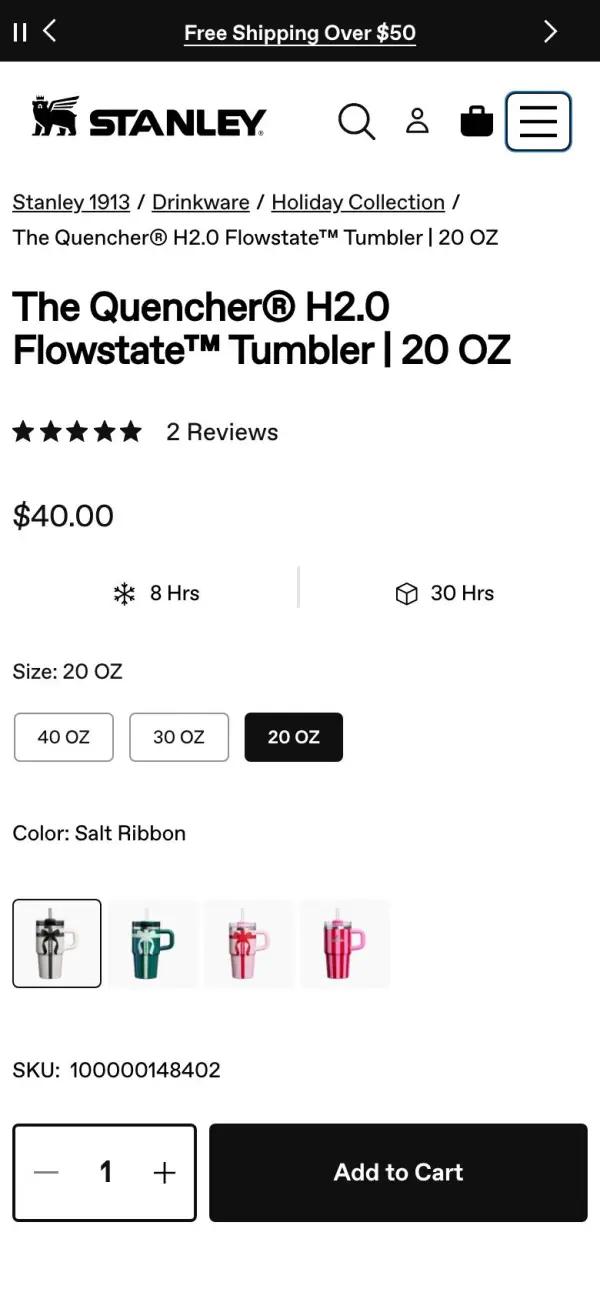
 Stanley 1913
Quencher H2.0 tumbler, 20 oz, $40
Stanley's Quencher sells for $40.00. A thousand visits that convert at 2% bring 20 orders, $800.00; at 3% they bring $1,200.
See the live pageCart abandonment vs checkout abandonment
Checkout abandonment measures a later step: shoppers who started checkout but didn't finish.
Checkout abandonment rate = (1 − completed orders ÷ checkouts started) × 100
It's lower than cart abandonment, because many shoppers leave before they reach checkout. Track both. If your cart rate is high and your checkout rate is low, shoppers are leaving at the cart, often when they first see shipping costs. If your checkout rate is high, the checkout form itself is the problem.
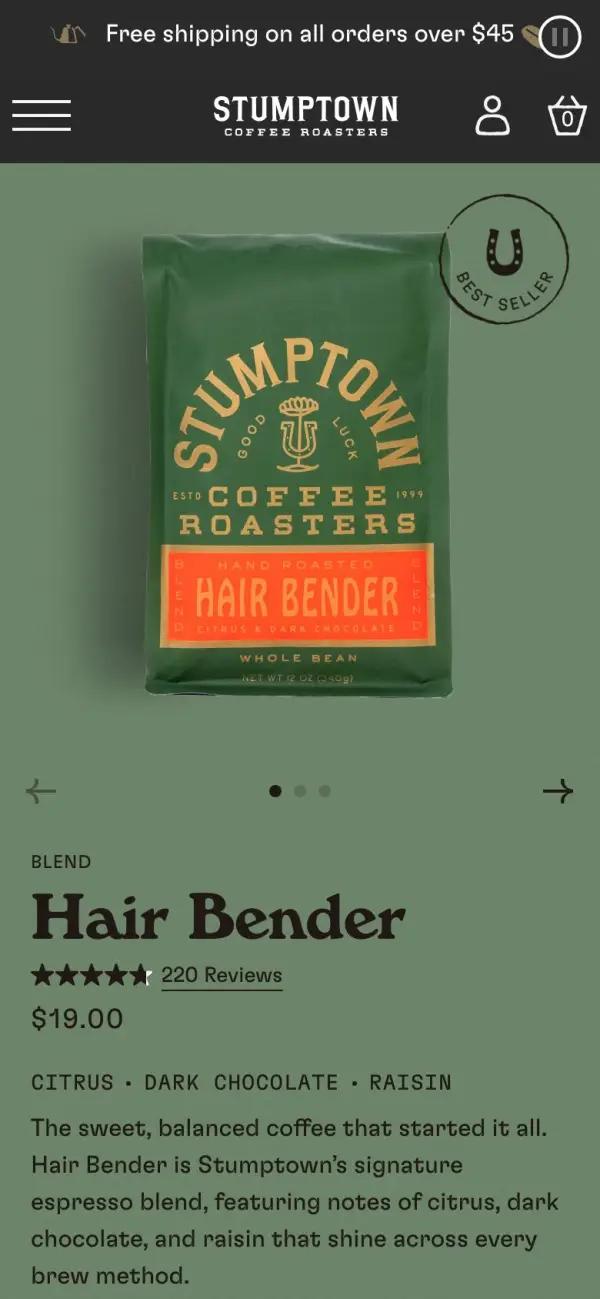
 Stumptown Coffee Roasters
Hair Bender coffee, 12 oz, $19
Stumptown's Hair Bender sells for $19.00. A thousand visits that convert at 2% bring 20 orders, $380.00; at 3% they bring $570.00.
See the live pageWhat is the average cart abandonment rate?
The average cart abandonment rate is 70.22%, from Baymard Institute's average of 50 studies (source). About 7 in 10 carts are left behind on a typical online store.
What is a good cart abandonment rate?
A good cart abandonment rate is anything below the 70% average. Don't aim for zero: many shoppers use the cart to save items, check the total or compare prices, and they were never going to buy in that visit.
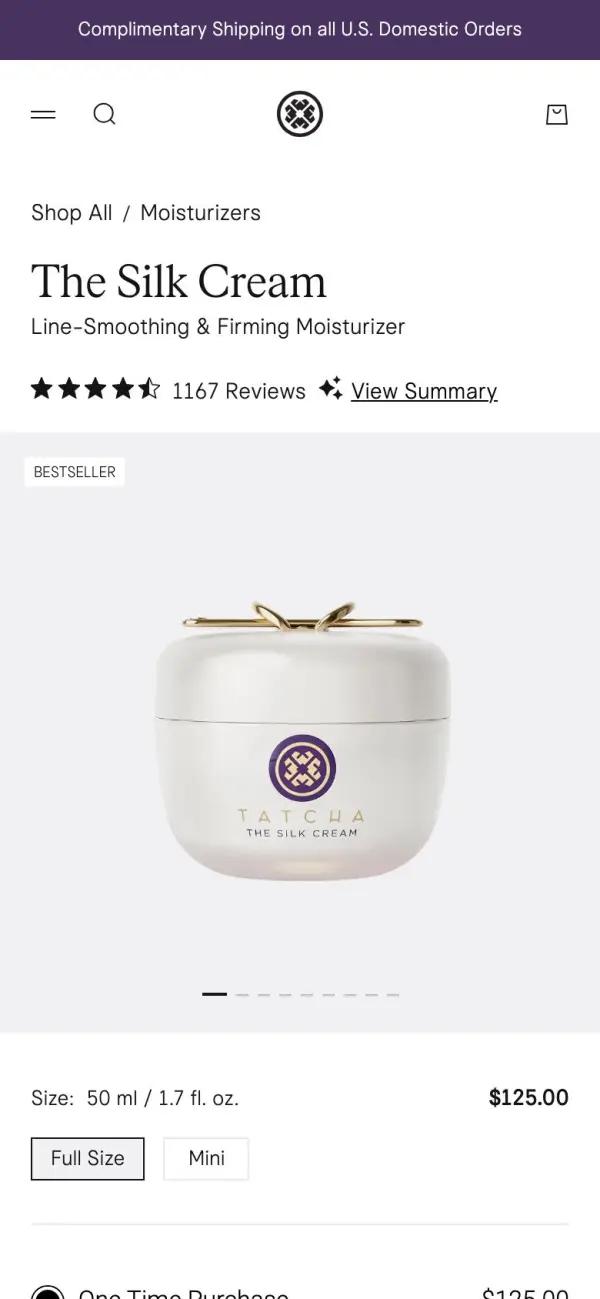
 Tatcha
The Silk Cream, 50 ml, $125
Tatcha's Silk Cream sells for $125.00. A thousand visits that convert at 2% bring 20 orders, $2,500; at 3% they bring $3,750.
See the live pageThe more useful benchmark is your own trend. Check your rate every month and after every change to shipping, checkout or traffic. A jump after you launch a new ad campaign often means the ad is bringing shoppers who don't match the landing page they arrive on. Read how landing pages affect ad conversion rate for how to line the two up.
Why do shoppers abandon their carts?
Baymard asked shoppers who left during checkout why they did. Leaving out shoppers who were just browsing, these are the top reasons:

 Lodge Cast Iron
11 inch enamel cast iron skillet, $49.90
Lodge's enamel skillet sells for $49.90. A thousand visits that convert at 2% bring 20 orders, $998.00; at 3% they bring $1,497.
See the live page| Reason | Share of shoppers |
|---|---|
| Extra costs too high (shipping, tax, fees) | 40% |
| Delivery was too slow | 20% |
| Didn't trust the site with their credit card information | 19% |
| The site wanted them to create an account | 18% |
| Checkout was too long or complicated | 17% |
Source: Baymard Institute. Shoppers could pick more than one reason.
Most of these are fixable. Baymard estimates the average large online store could raise its conversion rate by 35.26% through better checkout design alone.
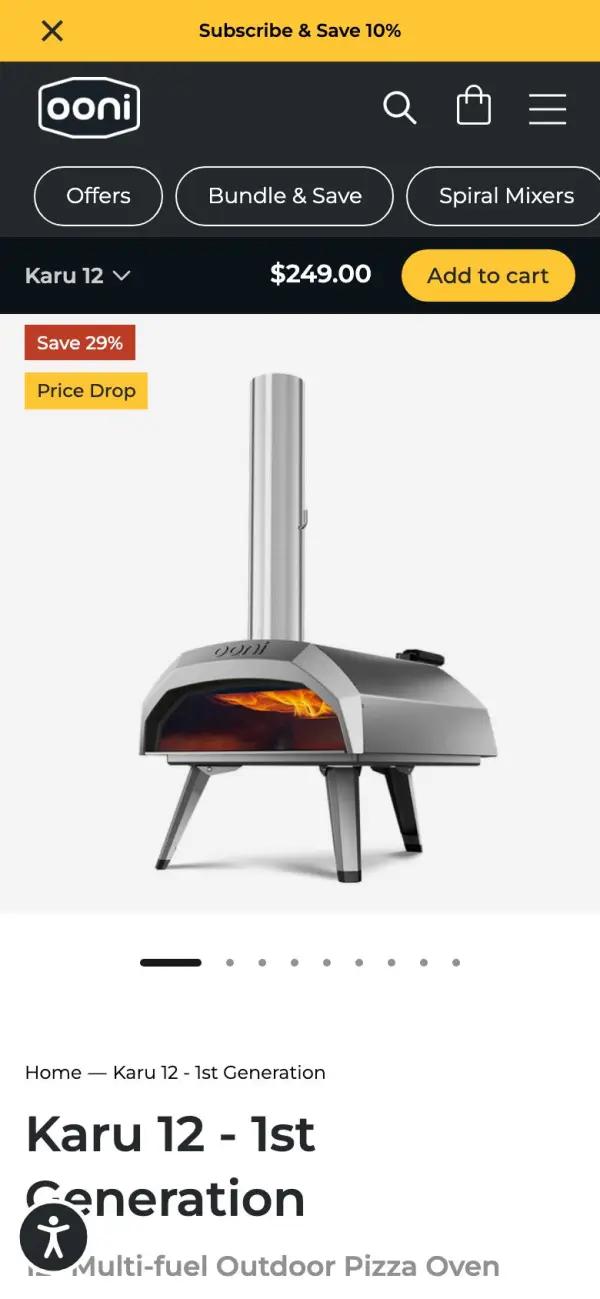
 Ooni
Karu 12 pizza oven, $249
Ooni's Karu 12 sells for $249.00. A thousand visits that convert at 2% bring 20 orders, $4,980; at 3% they bring $7,470.
See the live pageHow to reduce cart abandonment
- Show the full price early. Put shipping costs, or your free-shipping threshold, on the product page and in the cart, not on the last step of checkout.
- Offer guest checkout. Let shoppers buy without creating an account, and offer one after the order.
- Shorten checkout. Cut optional fields, add express payment buttons and autofill addresses.
- Show trust where shoppers pay. Put security badges, a clear return policy and familiar payment options next to the pay button.
- Say when it arrives. Show an estimated delivery date on the product page and in the cart.
- Speed up your pages. Slow cart and checkout pages lose mobile shoppers first. See how to improve page speed.
- Win back the carts you lose. Send abandoned cart emails within a few hours, with what's in the cart and a link straight back to it.
- Test each fix. A/B test the product or cart page and compare completed orders, one change at a time. Start from these A/B test examples.
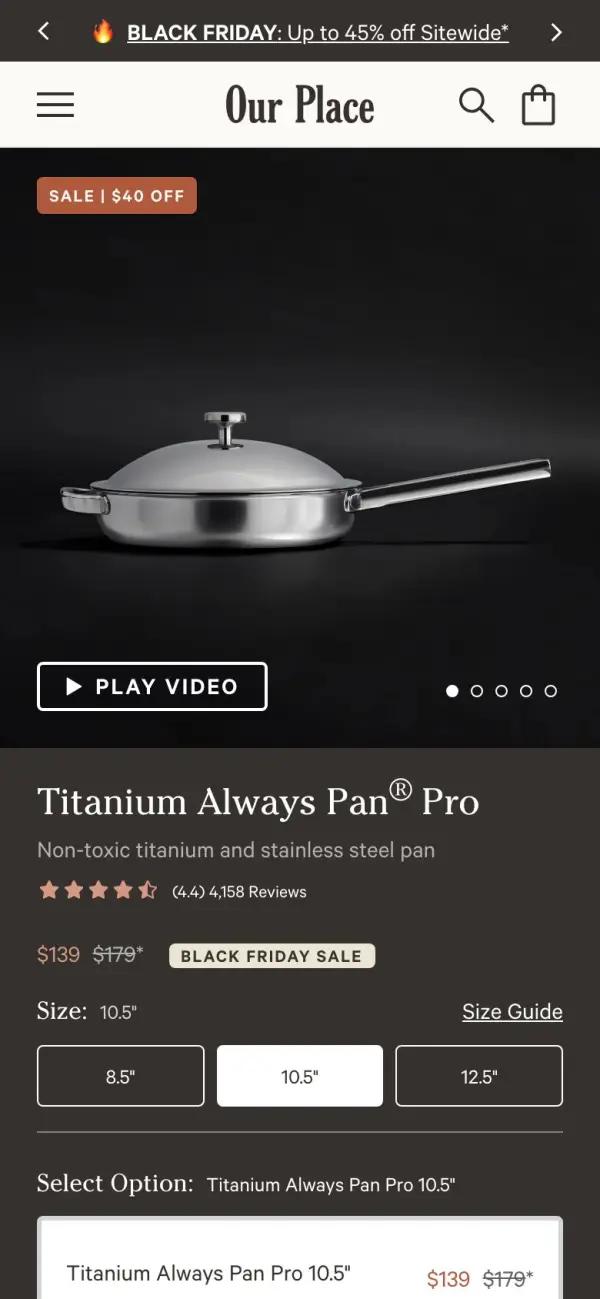
 Our Place
Titanium Always Pan Pro, 10.5 inch, $139
Our Place's Always Pan sells for $139.00. A thousand visits that convert at 2% bring 20 orders, $2,780; at 3% they bring $4,170.
See the live pageLower abandonment shows up directly in your conversion rate: every cart you save is an extra order from the same traffic.
Cart abandonment questions
How do I find my abandoned cart rate? Take the number of carts created and the number of completed orders for the same period from your store analytics. Enter both in the calculator above. It divides orders by carts, subtracts from one and shows the share of carts that didn't become orders.
Is a 70% cart abandonment rate bad? No. It's right at the 70.22% average from Baymard's 50 studies. Below it, you're doing better than most stores. If you're well above it, start with the top reason Baymard found: shipping, tax and fees that show up late.
The ad
Stumptown Coffee Roasters
Sponsored ·
Sweet spice, silky chocolate-covered orange, and a lush brown sugar finish walk into a holiday blend. It's Evergreen Season.
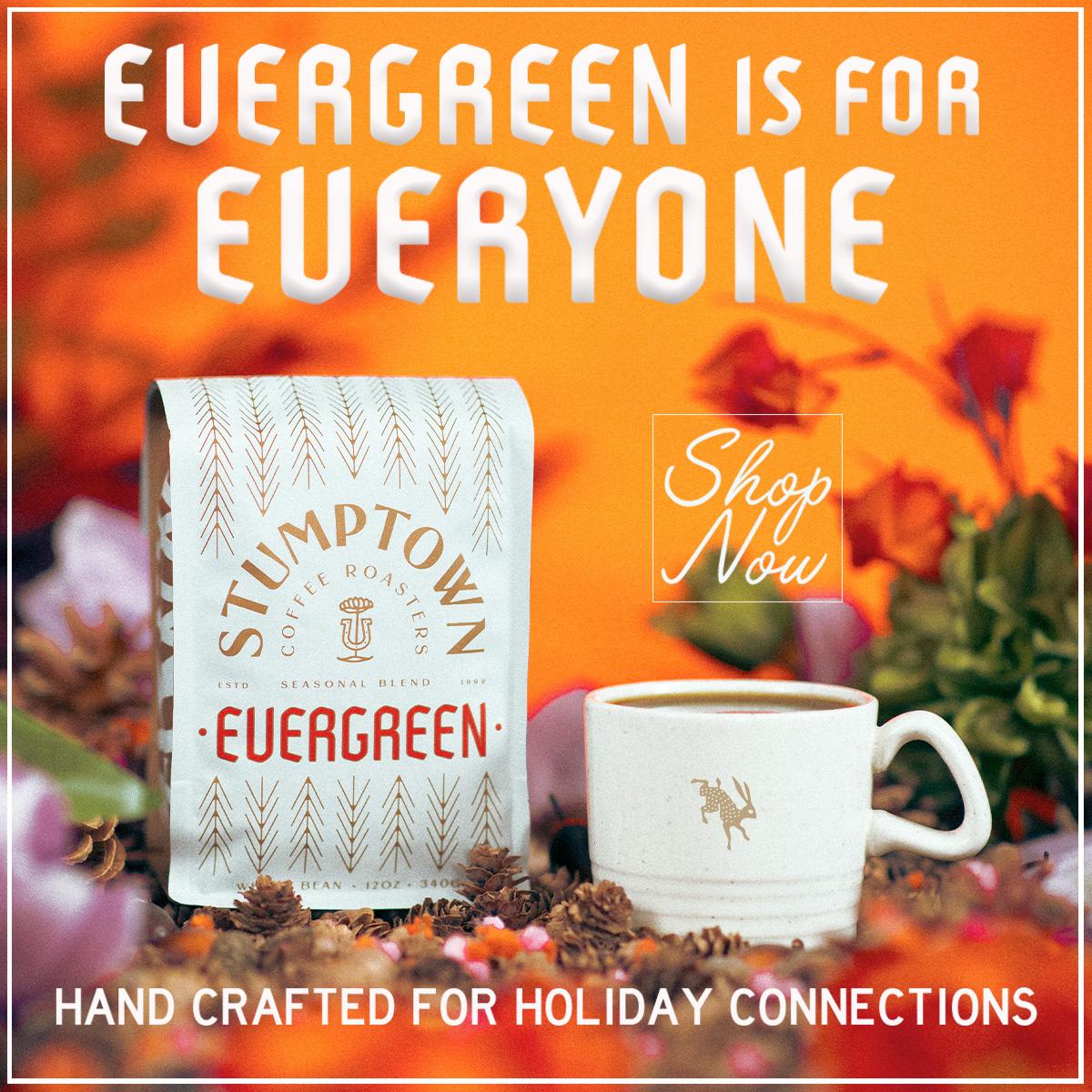
stumptowncoffee.com
Evergreen Is for Everyone
The page it opens
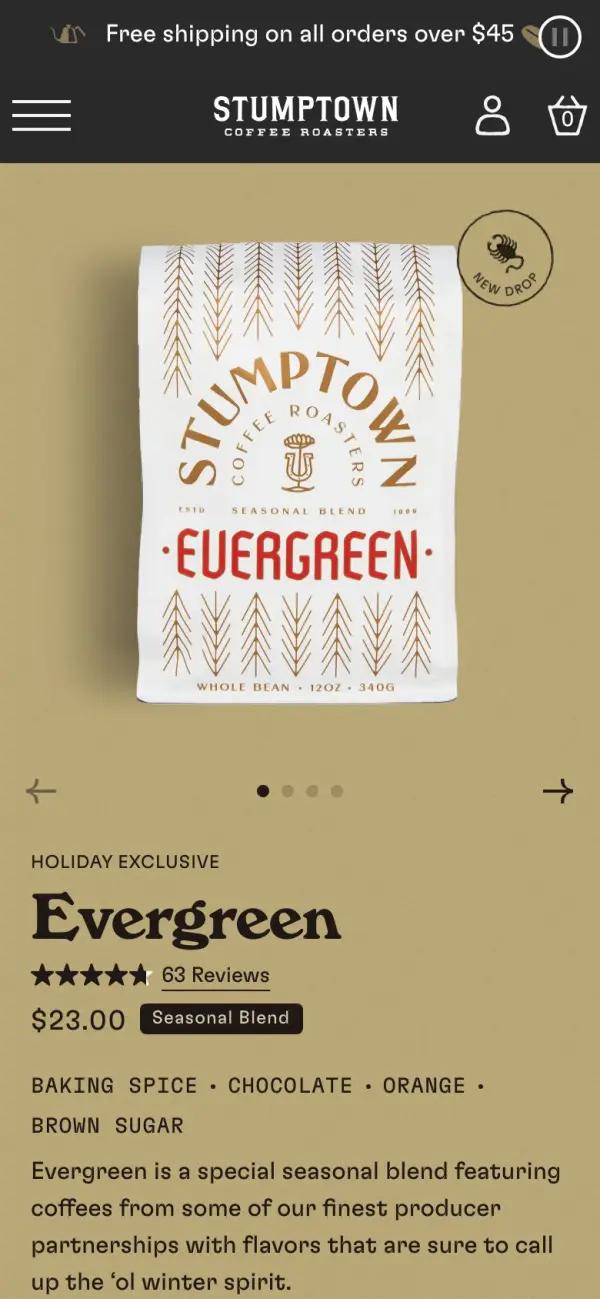 Stumptown Coffee Roasters
A real ad and the page it opens. Stumptown's Evergreen sells for $23.00. A thousand visits that convert at 2% bring 20 orders, $460.00; at 3% they bring $690.00.
See the ad in Meta’s Ad LibrarySee the live pageWhat is the most common reason for cart abandonment? Extra costs. In Baymard's survey, 40% of shoppers who left during checkout said shipping, tax or fees were too high. Showing the full price on the product page and in the cart is the first fix to try.
What's the difference between cart abandonment and checkout abandonment? Cart abandonment counts every cart that didn't become an order. Checkout abandonment counts only shoppers who started checkout and then left. Checkout abandonment is usually lower, and it singles out problems in the checkout form itself.
The ad
Tatcha
Sponsored ·
Smooth the look of wrinkles for silky-soft skin. The Silk Cream nourishes & strengthens for an improved skin barrier.

tatcha.com
The Silk Cream
The page it opens
TatchaA real ad and the page it opens. Tatcha's Silk Cream sells for $125.00. A thousand visits that convert at 2% bring 20 orders, $2,500; at 3% they bring $3,750.
See the ad in Meta’s Ad LibrarySee the live pageHow do I recover abandoned carts? Send a reminder email or text within a few hours, showing the items left in the cart and a link that reopens it. A second reminder a day later can help. Save discounts for shoppers who still haven't bought, so you don't teach everyone to wait for one.
More free calculators for the numbers that drive revenue are in the ecommerce toolbox.
Sources
The typical-store figure in the calculator comes from Baymard's average of 50 studies.