How much ChatGPT ads cost, and how you pay
ChatGPT ads cost what you bid in OpenAI's auction. You pay per 1,000 views (CPM) or per click (CPC), and OpenAI suggests starting click campaigns at a $3 to $5 maximum bid. A US campaign needs at least $25 a day, and OpenAI hasn't published cost benchmarks yet.
- Suggested first bid
- $3 to $5 a click
- Minimum budget
- $25 a day in the US
- Most one day can spend
- Twice the daily budget
Minimum daily budget in each currency
Every campaign needs at least this much a day, set by the currency your ad account bills in.
| Billing currency | Minimum a day |
|---|---|
| US dollar | $25 |
| Canadian dollar | 25 CAD |
| Australian dollar | 25 AUD |
| Euro | €15 |
| British pound | £15 |
| Swiss franc | 20 CHF |
| Japanese yen | ¥2,500 |
| Indian rupee | ₹725 |
| Mexican peso | 150 MXN |
| Brazilian real | 40 BRL |
How a ChatGPT ads bill adds up
Pick what you pay for
The campaign goal sets the price. Views bills each 1,000 impressions (CPM) and Clicks bills each valid click (CPC). Conversions bids toward a purchase or signup event, but you still pay per valid click (oCPC) or per 1,000 impressions (oCPM), never per conversion.
You can't switch a campaign's goal later. To try another one, OpenAI asks you to create a new campaign.
- Views: pay per 1,000 views
- Clicks: pay per valid click
- Conversions: never per sale
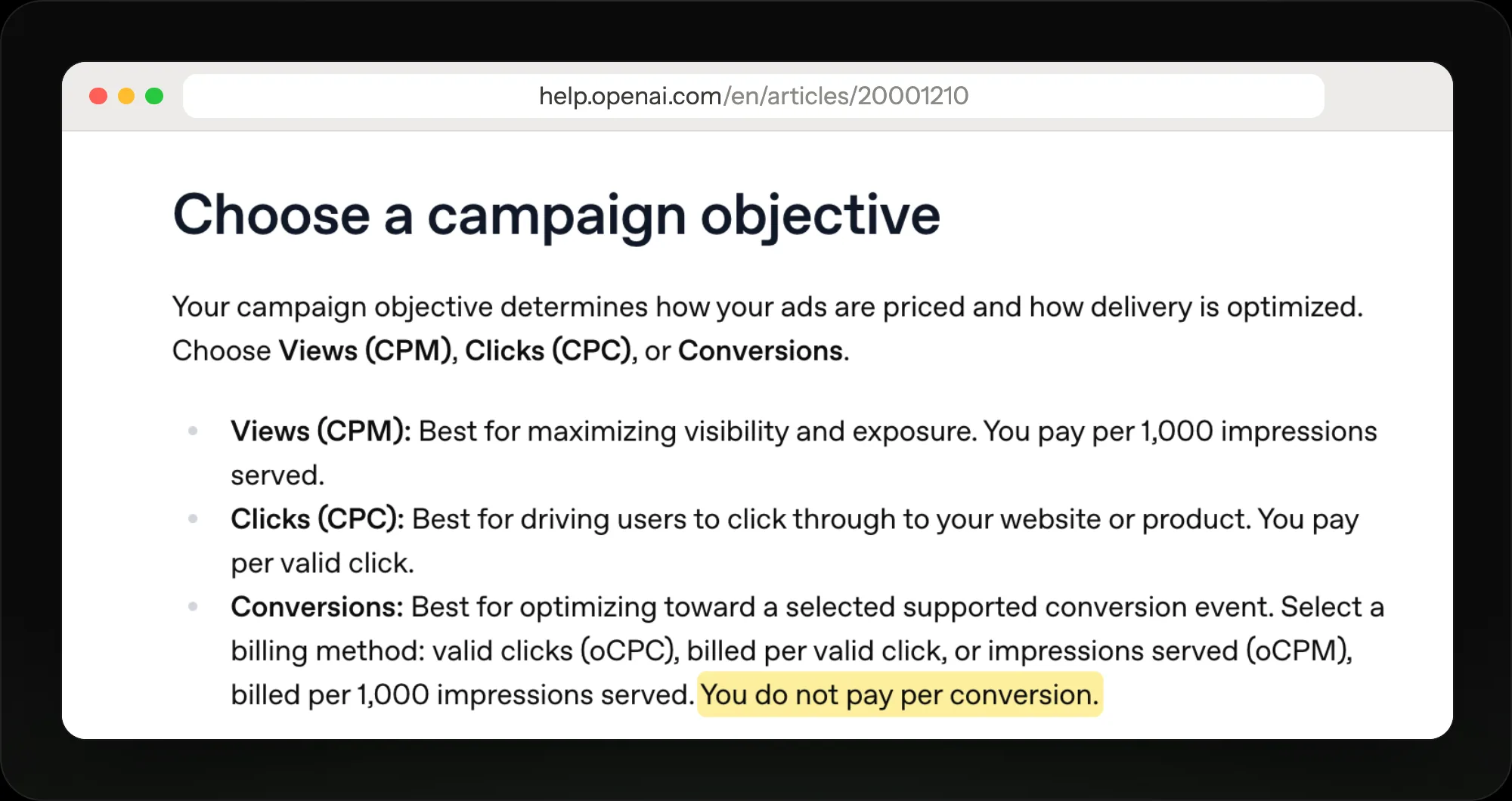
Even a Conversions campaign bills clicks or impressions; OpenAI never charges per sale.
Set a bid, or let OpenAI bid
Bids live on each ad group: a maximum CPM for Views or a maximum CPC for Clicks. OpenAI suggests $3 to $5 a click to start, and Ads Manager can show whether a bid looks too low to deliver. The auction weighs relevance as well as price, and the winner pays based on the next bid, not its own.
New ad groups default to Maximize results where eligible, which sets bids for you to get the most clicks or conversions from the budget. It doesn't promise a cost per click or sale, so pick Manual: Max bid when you need a hard limit.
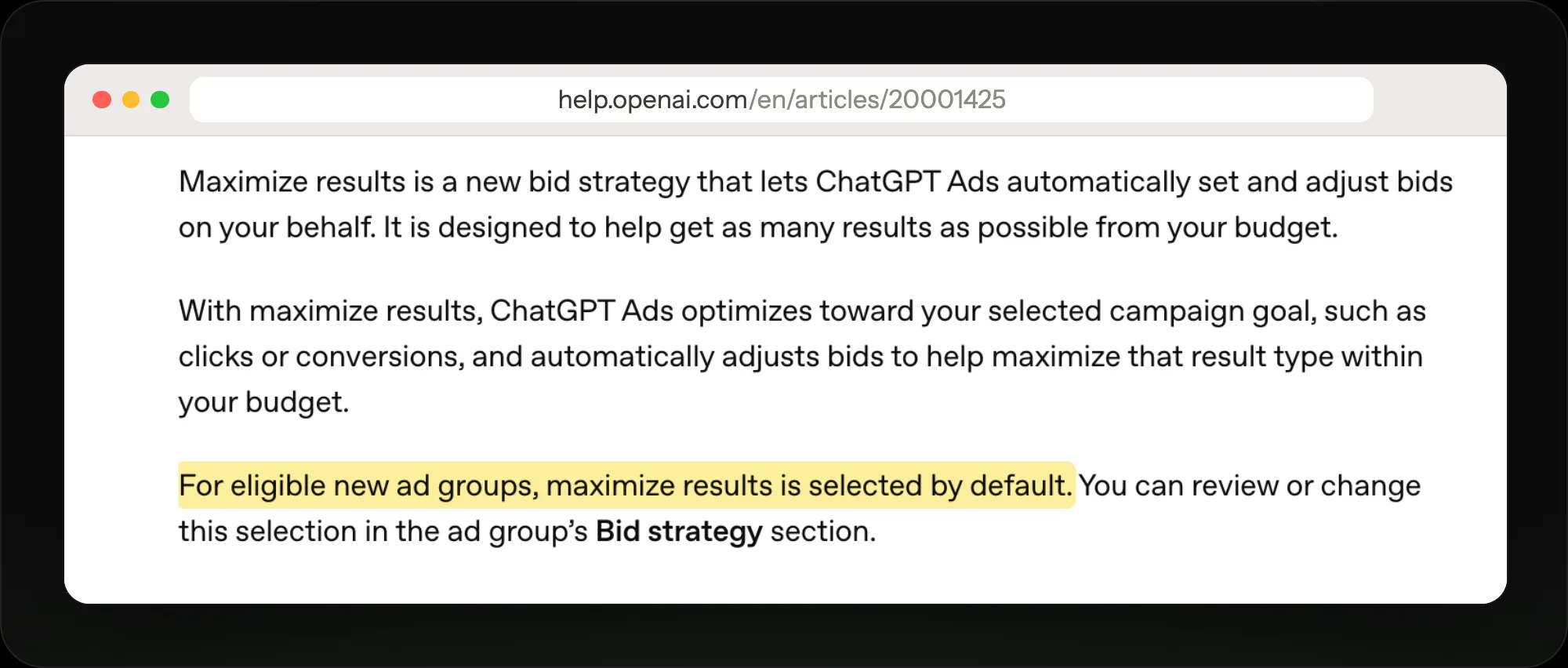
New ad groups start on Maximize results; switch to Manual: Max bid if you need a ceiling.
Choose a daily or total budget
A daily budget is the average you want to spend each day over a Sunday-to-Saturday week. One day can spend up to twice it, and the week never spends more than seven times it: a $100 daily budget can't bill more than $700 in a week.
A campaign-total budget caps spend over the whole campaign and is the stricter control. OpenAI suggests starting with a daily budget while you learn. Switching a total budget to daily can't be undone.
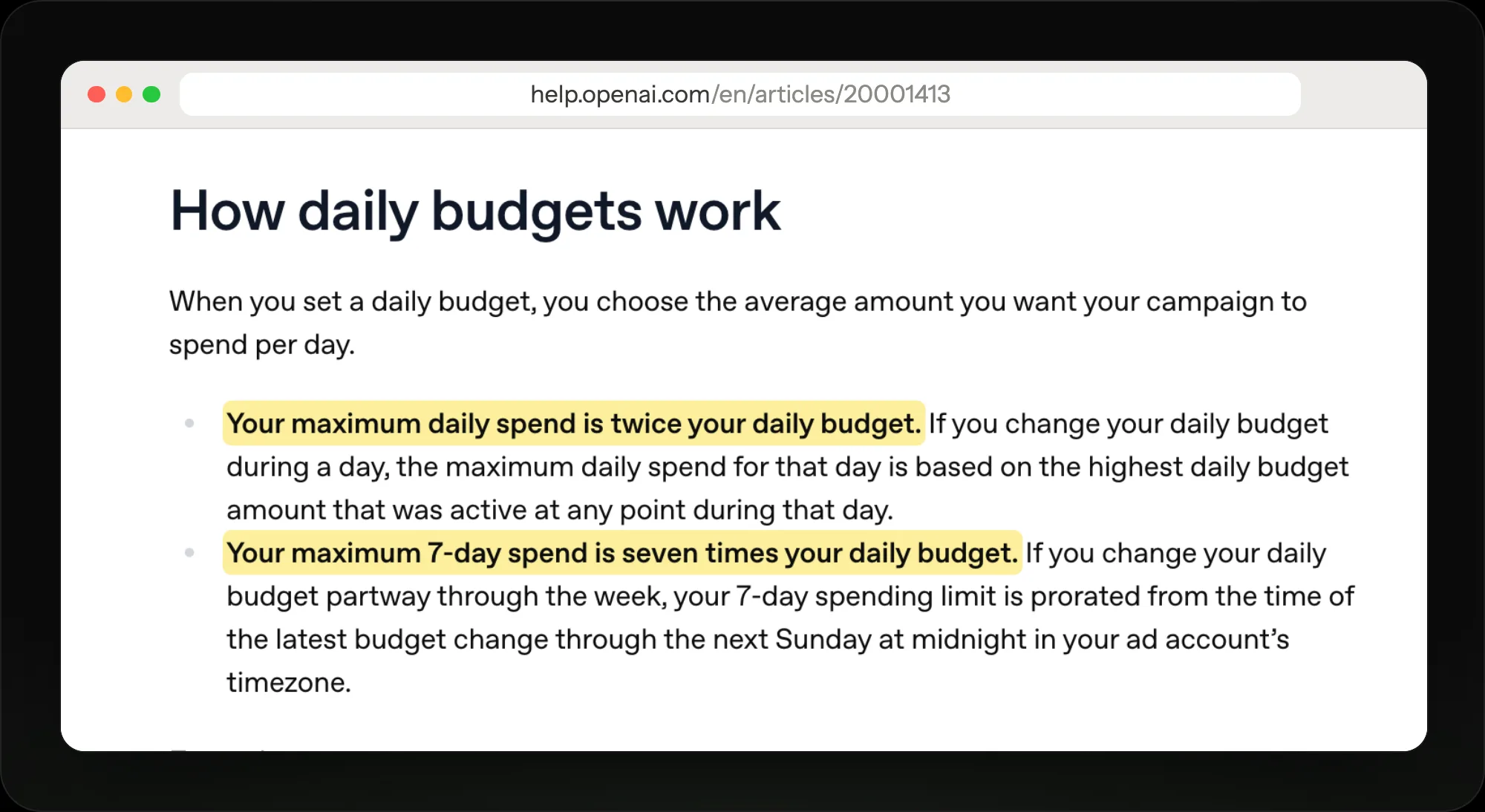
One day can spend double the daily budget, but the week never goes past seven times it.
Know when your card is charged
Self-serve accounts pay by card. Each account gets a payment threshold, and your card is charged whenever unpaid spend reaches it, plus any balance left at month end. With a $25 threshold, every $25 of spend is a charge, so several equal charges in a row aren't duplicates.
New accounts start with a low threshold that rises after successful payments. Neither you nor OpenAI support can change it by hand. Adding a card may place a small temporary hold to verify it.
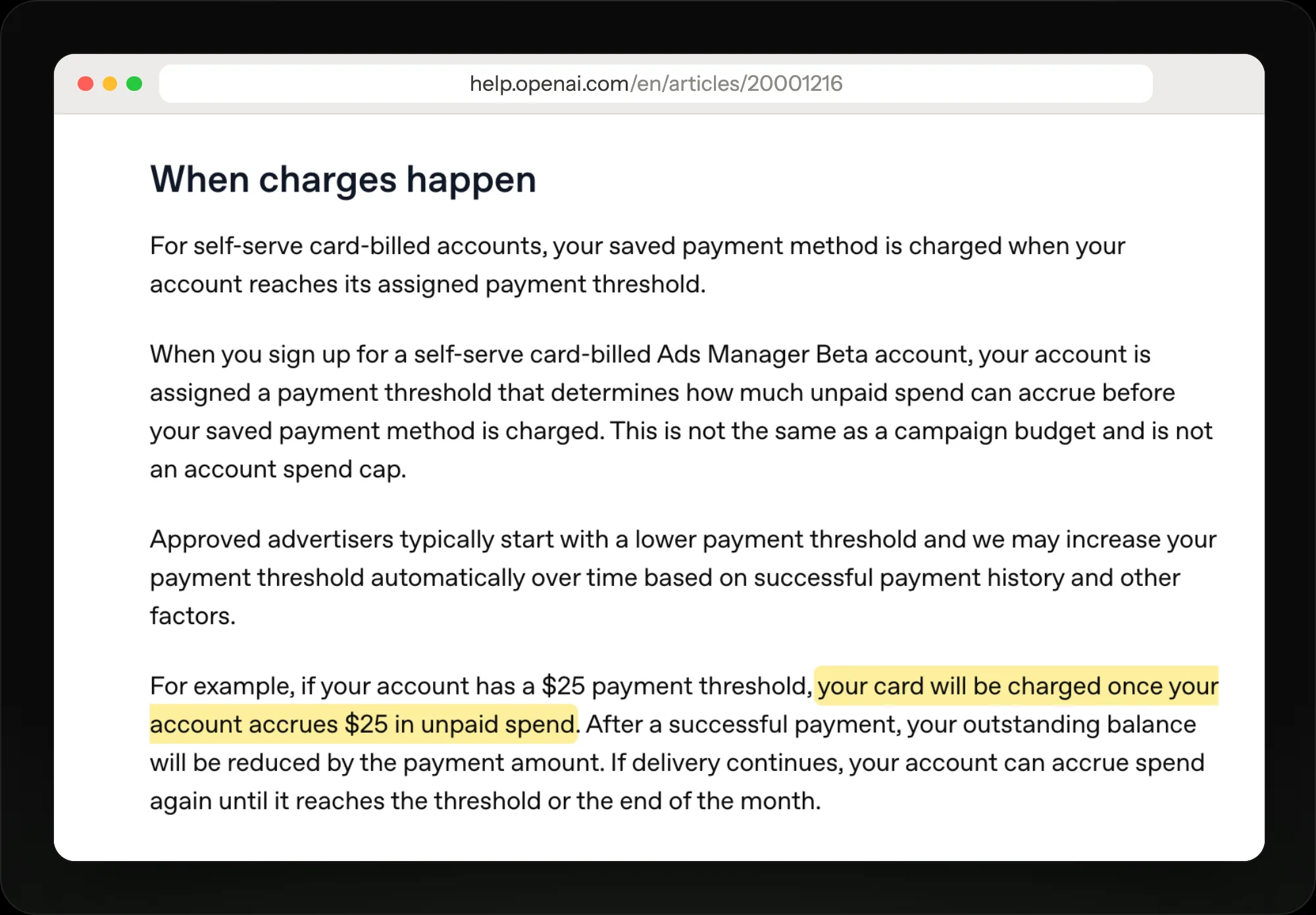
Your card is charged each time unpaid spend hits the threshold, so equal charges in a row are normal.
Read spend with the delay in mind
Views, clicks and click-through rate refresh about every 15 minutes, but spend can lag 7 to 8 hours, so $0 early in the day doesn't mean nothing was charged. Visits from OpenAI's review crawler can show up as paid traffic in your analytics, but they aren't billed as clicks. If a card payment fails, ads stop until it's paid.
Make each paid click count
Replo builds the landing page your ChatGPT ad opens and A/B tests it, so the same clicks bring more sales.
The prompt Replo starts from
Build a landing page for my ChatGPT ad about [product], for people asking ChatGPT [the question]. Put the price, reviews and shipping above the fold with one buy button, so every paid click has a clear next step.
Edit the words in brackets once Replo opens.
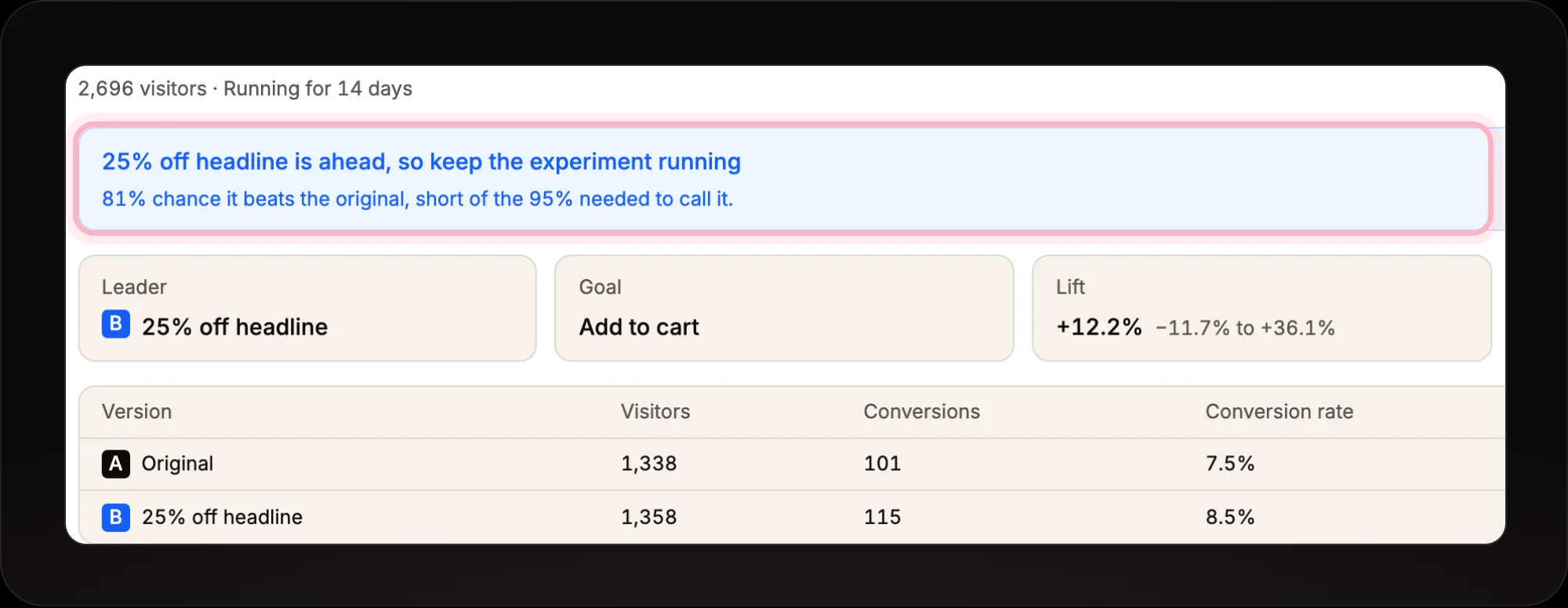
Replo keeps a test running until one page is clearly ahead, then keeps the winner.
Frequently asked questions
- What is the minimum budget for ChatGPT ads?
- $25 a day per campaign in the US. Other currencies have their own minimum, such as €15 or £15 a day. A campaign with a fixed bid also needs a daily budget at least as high as its highest bid.
- Do you pay per conversion on ChatGPT ads?
- No. Conversion campaigns bid toward a purchase or signup, but OpenAI bills them per valid click or per 1,000 impressions. You never pay per conversion, so your landing page decides what each sale really costs.
- What is a good CPC for ChatGPT ads?
- OpenAI hasn't published one. Its FAQ says ChatGPT Ads has no performance benchmarks across advertisers, industries or campaign types yet. It suggests starting click campaigns at a $3 to $5 maximum bid and adjusting from your own results.
- Why did ChatGPT ads spend more than my daily budget?
- Because a daily budget is an average. One day can spend up to twice it, but over a Sunday-to-Saturday week the campaign never spends more than seven times it. For a hard cap on total spend, use a campaign-total budget.
- Can Replo lower what I pay for ChatGPT ads?
- Not the price of the ad: Replo doesn't buy or bid on ChatGPT ads. It builds and A/B tests the pages your ads open, so more of the clicks you already pay for turn into sales.