ChatGPT ads vs Meta and Google ads
Google Search ads match the keywords you bid on, and Meta ads match the audiences you choose. ChatGPT ads match the conversation: OpenAI weighs the chat, your ad, your context hints and your landing page, then runs an auction. Tracking feels familiar, with a pixel, a server-side API and UTM tags.
- Matched on
- The conversation
- Keywords
- None; context hints instead
- Tracking
- Pixel, Conversions API, UTMs
ChatGPT, Google and Meta ads side by side
The biggest difference is what decides who sees the ad; buying and tracking work much the same.
| What differs | ChatGPT ads | Google Search ads | Meta ads |
|---|---|---|---|
| Who sees it | People whose chat fits your ad | People searching your keywords | People in audiences you pick |
| What you write | Context hints per ad group | Keywords per ad group | Audience settings per ad set |
| Where it shows | Below ChatGPT's answer | Search results | Feeds, Stories and Reels |
| How you pay | Per view or per click | Mostly per click | Mostly per view |
| Click id in the link | oppref | gclid | fbclid |
What changes when you add ChatGPT ads
Swap keywords for context hints
OpenAI says ChatGPT needs a different approach from keyword-based platforms. Instead of a keyword list, each ad group gets context hints: plain phrases about what you sell, who it helps and when. A person doesn't need to type your words for the ad to fit, and hints never guarantee a placement.
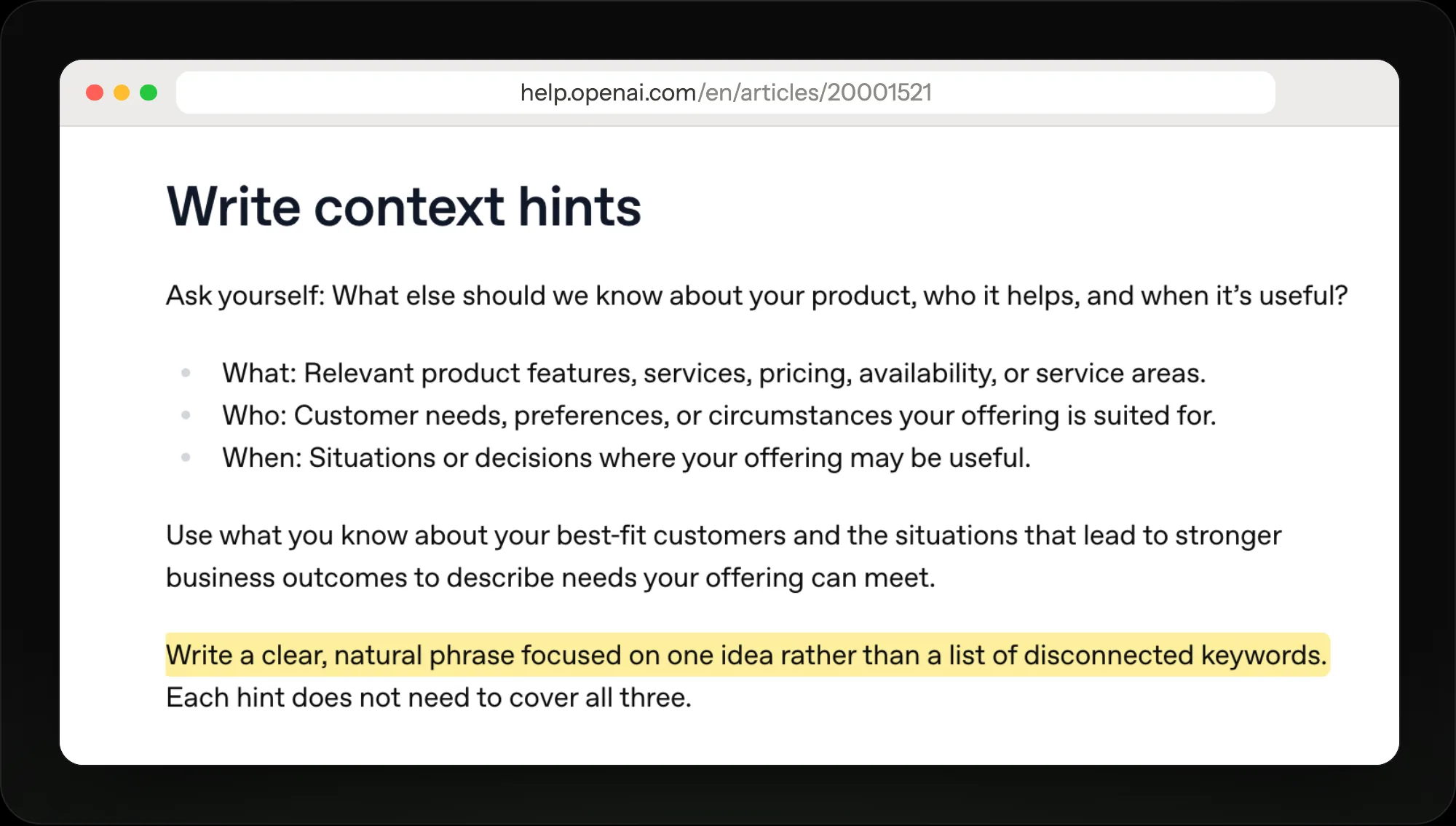
Where Google wants a keyword list, OpenAI asks for one natural phrase per idea.
Swap audiences for conversations
Campaign targeting covers countries, regions, cities, platforms and custom audiences, which need at least 25,000 matched people to include. Beyond that, OpenAI picks the chat. Where people turn on ads personalization, it can also use signals from their wider ChatGPT use; that isn't offered in the EEA or Switzerland.
Write for a question, not a scroll
A Meta ad has to stop a scroll; a ChatGPT ad sits under an answer to a question the person just asked. OpenAI favors copy that says plainly what the product does, who it's for and when it helps, over a catchy line. Write several distinct ads per offer so the system can match more chats.
- Say who it's for
- Say when it helps
- Three or more angles per offer
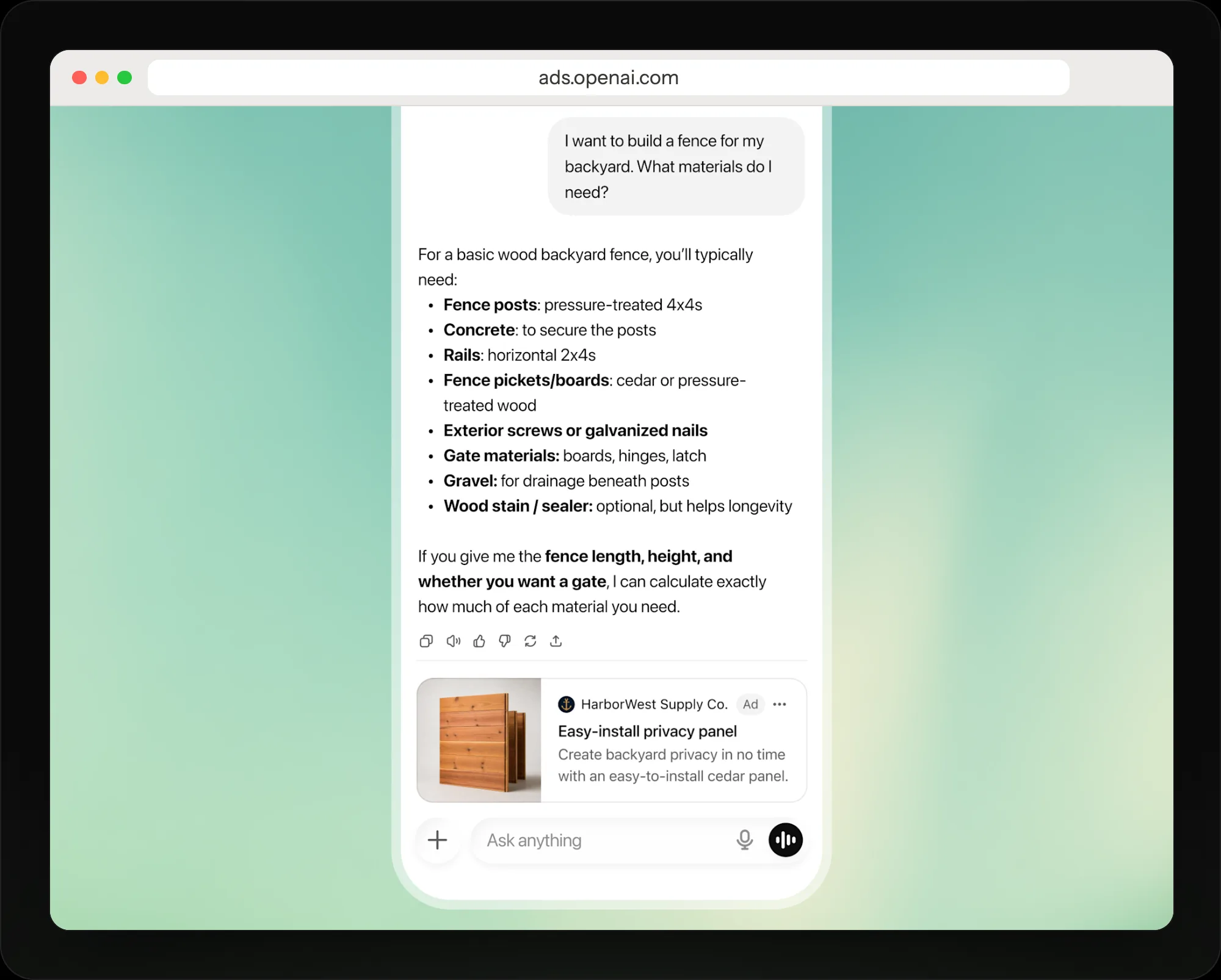
OpenAI's example: the ad answers the question just asked, not a scroll it has to interrupt.
Reuse your tracking setup
If you run Meta's pixel and Conversions API, the OpenAI setup will look familiar: install the OpenAI Pixel, send the same events from your server, and share an event id so they're counted once. Keep OpenAI's click id, oppref, through redirects, and add UTM tags so your analytics can split ChatGPT traffic out.
Expect different totals in each tool. OpenAI lists attribution windows, time zones, consent and modeled conversions as normal reasons Ads Manager and your analytics disagree.
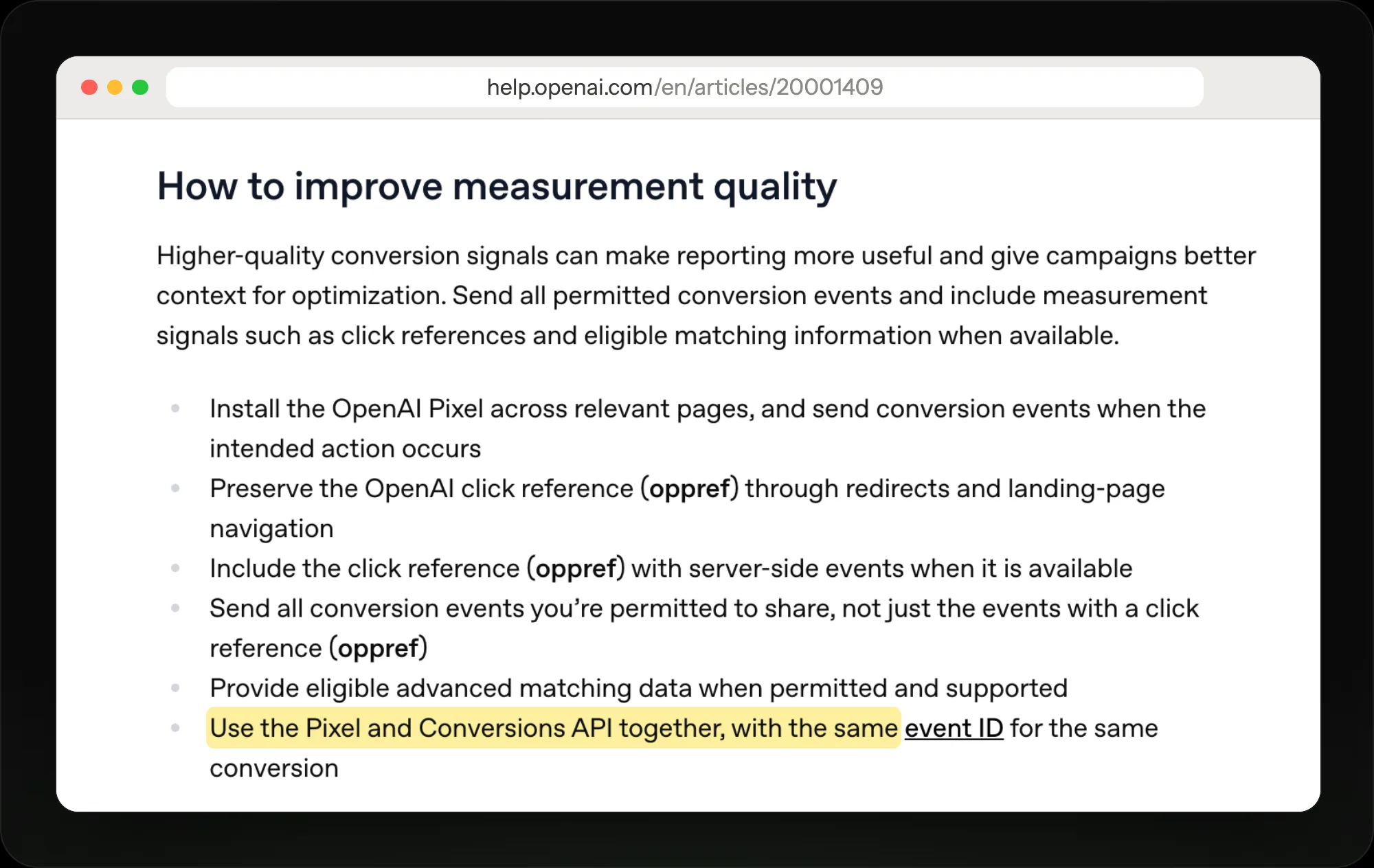
The same pixel-plus-server setup you run for Meta, with OpenAI's oppref click id kept through redirects.
Send the click to a specific page
OpenAI advises linking to a product, collection or content page rather than a generic homepage, and reads that page to decide when your ad fits. Most brands already do this on Meta: in our study of over 375,000 live Meta ads, 67% opened a product or collection page and 9% a homepage.
Budget for a test, not a benchmark
Google and Meta have years of benchmarks; ChatGPT ads have none published yet. OpenAI says delivery and spend can swing during the beta while it changes its systems. Start with a daily budget you'd spend on any channel test, track cost per sale with the same rules as your other channels, and compare after a few weeks.
Build a page for each channel
Replo builds a version of your landing page for ChatGPT, Meta and Google traffic and A/B tests each one against the page you run now.
The prompt Replo starts from
Make a version of my landing page for [product] for visitors from ChatGPT ads. They arrive after asking [the question]. Lead with a direct answer to it, keep my brand, prices and buy button, and set it up as an A/B test against my current page.
Edit the words in brackets once Replo opens.
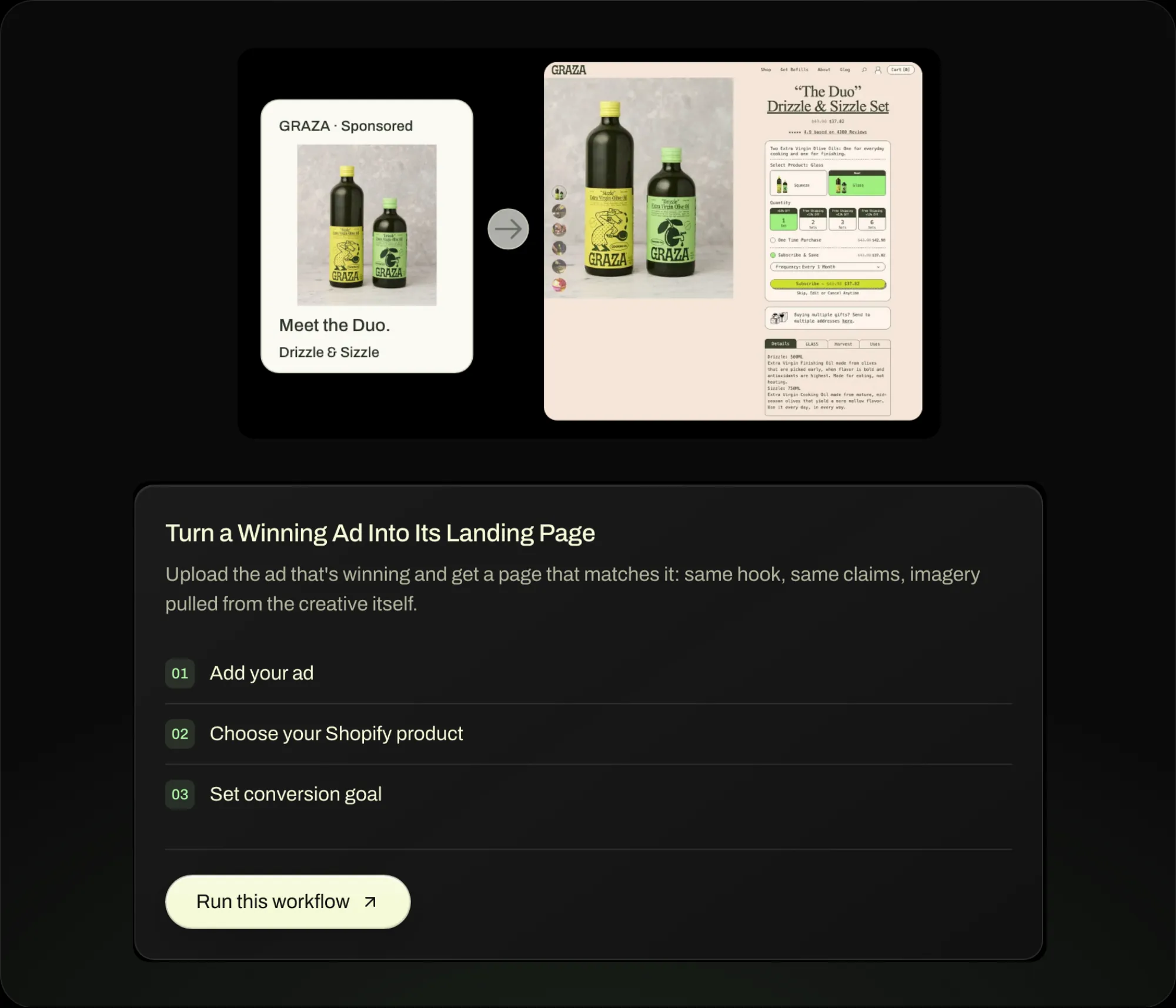
In Replo, add the ad and the product, and the page picks up the ad's hook and images.
Frequently asked questions
- Are ChatGPT ads better than Google ads?
- Nobody can say yet. OpenAI hasn't published performance benchmarks, and results depend on your goal, ads, landing page and how well they match the chat. Run ChatGPT ads as a test beside Google and Meta, with the same tracking, and compare cost per sale.
- Can I target an audience on ChatGPT like on Meta?
- Partly. You can choose countries, regions, cities and platforms, and include custom audiences of at least 25,000 matched people or exclude smaller ones. Beyond those settings, OpenAI matches ads to the conversation rather than to interests you pick.
- Do ChatGPT ads use keywords like Google Ads?
- No. You write context hints per ad group that describe who your product helps and when. They guide matching but aren't exact-match keywords, and a person doesn't need to type your words for the ad to fit.
- Can I use the same landing page for ChatGPT, Meta and Google ads?
- Yes, if it answers what the person asked. OpenAI reads the page to decide when your ad fits, so a page that matches the ad group's conversation helps. Replo can build a version for each channel and A/B test them.