How to write a business plan

Say what you sell and to whom, price it from real costs, add up what it takes to open, then work out what year one brings in and when it breaks even. A small business's plan fits on a few pages in eight sections, and you write the summary last.
Example plan, page 1
[Business name]: business plan for a candle business
Executive summary
[Business name] is a new candle business in Austin, selling hand-poured soy candles to [who it's for].
It opens for $441 up front, then $200 a month of ads.
At $24 a sale and 40 sales a month, year one brings in $11,520 and ends at $6,425 after every cost in this plan.
The first 30 days: order supplies and pour tests, then burn-test and choose wicks, then label, price and photograph, then pour the first batch and launch.
- Sections
- Eight, from summary to numbers
- Write first
- Startup costs and pricing
- Write last
- The executive summary
How to write a business plan, section by section
Each step shows that section of a finished plan for a candle maker in Austin, priced from our candle business guide. The brackets are the parts only the owner can write.
Write the executive summary last
The summary sits first and gets read first, so it has to hold the whole plan in four or five sentences: what you sell, to whom, where, what it costs to open, and what year one should bring in. You can't write those until the sections below are done.
If a bank or investor will read it, end with what you're asking for. If the plan is for you, end with the one number that decides the year, such as sales a month to break even.
Describe the business
Say where it runs, what kind of business it is and how it's set up. Most new businesses start as a sole proprietor with a free EIN from the IRS and form an LLC later; if you form one now, the filing fee goes in your startup costs.
Add the facts that shape the business: what a first batch costs, how long the first sale takes, what the hardest part is. Our guide to each business opens with three of these.
Example plan, page 2
[Business name]: business plan for a candle business
The business
- What it is: a candle business selling hand-poured soy candles
- Where: Austin
- Structure: LLC formed in Texas ($300 in the first year: $300 for the certificate of formation).
- Startup cost: About $141 in first-batch supplies
- Cost per candle: About $3.70 in materials
- Hardest part: Getting wick size right
Owner: [your name, and the experience that makes you good at this].
Name the customer and the competition
Describe one kind of customer, not everyone. Then name three businesses they buy from today, read those businesses' reviews, and write down the complaint that comes up most. That complaint is your reason to exist, and it goes in the summary.
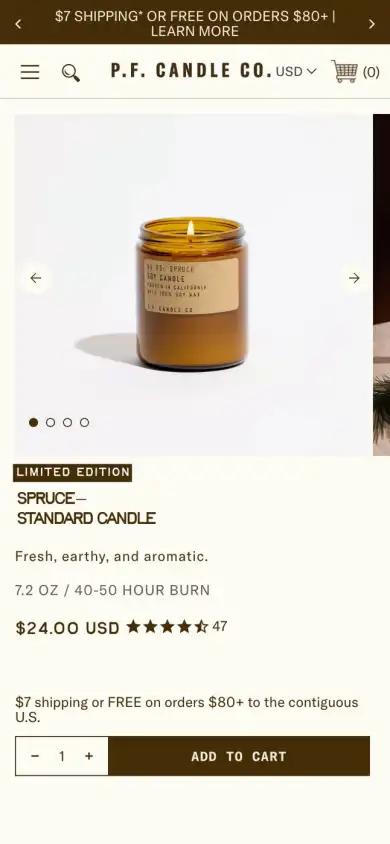 9:41pfcandleco.com
 P.F. Candle Co.: Spruce soy candle, 7.2 oz, $24
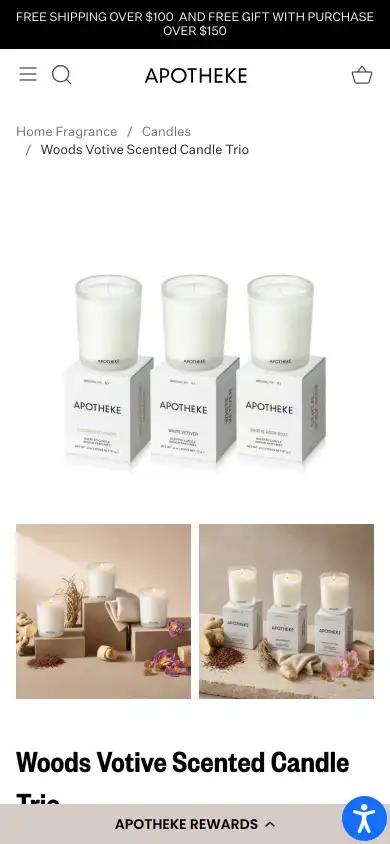 9:41apothekeco.com
 Apotheke: Woods votive candle trio, $60
For a candle maker, the stores customers already buy from look like these. Read their reviews for the complaint you can fix.
Example plan, page 3
[Business name]: business plan for a candle business
Market and customers
- Customers: [who it's for]
- What they buy today: [three businesses your customers already use]
- What those businesses get wrong: [the complaint that shows up in their reviews]
- Why they'll buy from you: [the one thing you do better]
Price the offer from real costs
Write the price, then the cost to make or deliver one, then the fees each payment pays. What's left is what each sale keeps, and every later number depends on it. Stripe charges 2.9% + 30¢ a card payment, so on a $24 candle that's about $1.
Example plan, page 4
[Business name]: business plan for a candle business
Offer and pricing
- What you sell: hand-poured soy candles
- Price: $24 a sale
- Cost to make or deliver one: $3.70
After $1.00 in fees, each sale keeps $19 (80% of the price).
Plan where the first customers come from
List two or three places your customers already look: Instagram and TikTok for products, Google and Nextdoor for local services, your own network for skills. Every one of them should send people to the same site, with your prices, proof and a way to buy or book.
If you'll pay for ads, put the monthly budget here and again in the costs.
Example plan, page 5
[Business name]: business plan for a candle business
Marketing and sales
Every channel sends people to one site with prices, proof and a way to buy.
- Instagram and TikTok posts that show the product in use
- Friends, family and their friends for the first orders and reviews
- A small test ad budget once one product page sells
- Ads: $200 a month, $2,400 in year one
Set out the steps and the first 30 days
Operations is how the work gets done: what you buy, what you make, which licenses you need and in what order. Break the first month into weeks with three tasks each, so the plan says what to do on Monday.
Example plan, page 6
[Business name]: business plan for a candle business
Operations and first 30 days
How the business opens, from Replo's guide to starting a candle business:
- Pick one wax and one jar
- Burn-test until it burns clean
- Get fragrance amounts right
- Add a fire safety label
- Cost each candle from real prices
- Cover licenses and insurance
- Build a store for your scent line
The first 30 days:
- Week 1, order supplies and pour tests: Order one wax, one jar, two wick sizes and two fragrance oils. Pour test candles of each wick and scent combination and label them. Let the test candles cure before you light any of them.
- Week 2, burn-test and choose wicks: Burn each test candle in sessions and record melt pool, flame and soot. Pick the wick that gives a full melt pool without smoke for each scent. Write down your final recipe: wax weight, fragrance percent and wick.
- Week 3, label, price and photograph: Design labels with the scent, weight, your name and the safety warning. Cost each candle from supply prices and set a price that pays you. Photograph candles lit in a real room and unlit on a plain background.
- Week 4, pour the first batch and launch: Pour your first sellable batch and let it cure fully before shipping. List the line on Etsy or your own store with scent notes and burn time. Book a local craft market and bring a sign pointing to your store.
Add up the startup costs
List everything you pay before the first sale and every monthly bill after it, each priced from the page that sells it: the supplier, the platform, your state's filing office. Guessed costs are where most plans go wrong.
Example plan, page 7
[Business name]: business plan for a candle business
Startup costs
What you pay for First year Soy wax, 10 lb bag $29 Fragrance oil, 16 oz $31 8 oz mason jars, 12 $9.06 Pretabbed wicks, 100 $9.19 Roll labels, 200 $63 LLC in Texas $300 Ads $2,400 ($200 a month) First year, before fees on sales $2,841 Prices are from Replo's candle business guide, each linked to the supplier, platform or government page that sets it. Your city's permits and insurance quotes come on top. Any stock here is the first batch, which cost per sale counts again, so the plan errs high.
Work out the first-year numbers
Multiply price by sales a month by 12 for year-one sales. Take away the cost of each sale, the fees and the startup and running costs, and what's left is year one's profit before your own pay and taxes.
Then work out break-even: monthly bills divided by what each sale keeps. If you can't see yourself making that many sales a month, change the price or the costs before you spend anything.
Example plan, page 8
[Business name]: business plan for a candle business
First-year numbers
Year one Amount Sales $11,520 (480 sales at $24) Cost of each sale $1,776 ($3.70 each) Fees on sales $478 Startup and running costs $2,841 Profit or loss $6,425 Break-even: 11 sales a month cover the monthly bills. At 40 sales a month, the up-front cost is paid back in month 1.
What the example plan earns in year one
The example prices at $24, spends $200 a month on ads and expects 40 sales a month. The price and sales are the example’s own picks; every cost comes from CandleScience, StickerApp, Stripe and the Texas Secretary of State.
Where the example’s $11,520 in first-year sales goes
| Line | Year one |
|---|---|
| Materials | $1,776 |
| Fees on sales | $478 |
| Startup and running costs | $2,841 |
| Profit | $6,425 |
Write yours in the template
Pick one of 30 businesses, answer a few questions, and copy the plan into Google Docs or Word.
What each business costs to open, for your plan
The startup costs section is where most plans guess. These are the first-year totals from each guide’s priced list, before ads, an LLC and fees on sales. Open any business’s plan to start from its list, or change the lines in the startup cost calculator.
Build the site your plan points to
Every marketing channel in the plan sends people to one site with your prices, proof and a way to buy or book. Describe the business and Replo builds that site, free to start.
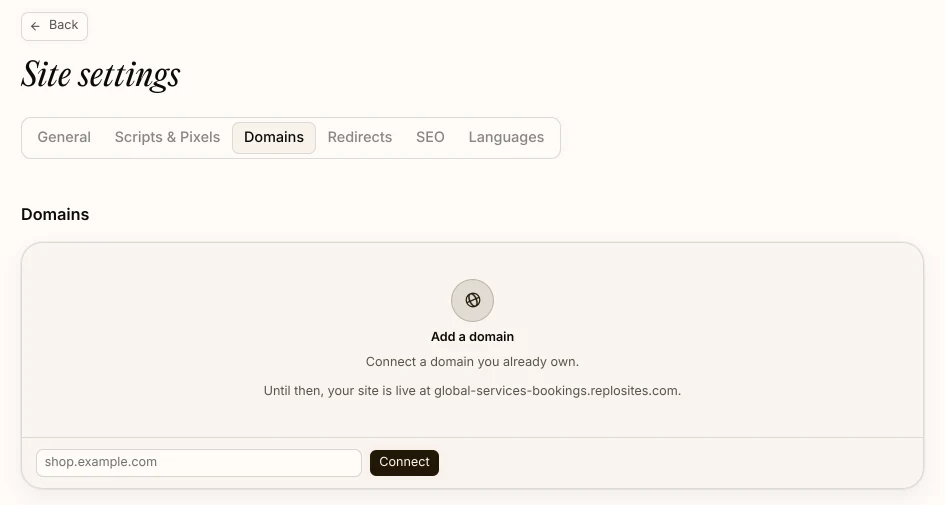
Connect your own domain in Site settings. Until then, the page is live on a replosites.com address.
Frequently asked questions
- How long should a business plan be?
- Long enough to answer its reader. A plan for yourself or a small loan fits on a few pages, in the eight sections above. A traditional plan for investors runs longer, with a management team, detailed projections and a funding request.
- What are the main parts of a business plan?
- An executive summary, a description of the business, the market and customers, the offer and pricing, marketing and sales, operations, startup costs and first-year financial numbers. Plans for investors add management and a funding request.
- Do I need a business plan to start a small business?
- No law asks for one, and no state asks for one to form an LLC. Banks and SBA lenders usually do before a loan. Even without a lender, a short plan shows whether your price covers your costs before you spend.
- Can ChatGPT write a business plan?
- It can draft the words, but it guesses the numbers. Start from real prices, such as the free template's startup costs, then ask ChatGPT to tighten the wording and keep every number as it is.
- Is $3,000 enough to start a business?
- Often, yes. On our 30 guides' priced lists, 27 businesses cost $3,000 or less for the first year before ads and an LLC. A food truck business (about $26,080), a laundromat business (about $91,314) and a trucking business (about $12,127) cost more.